
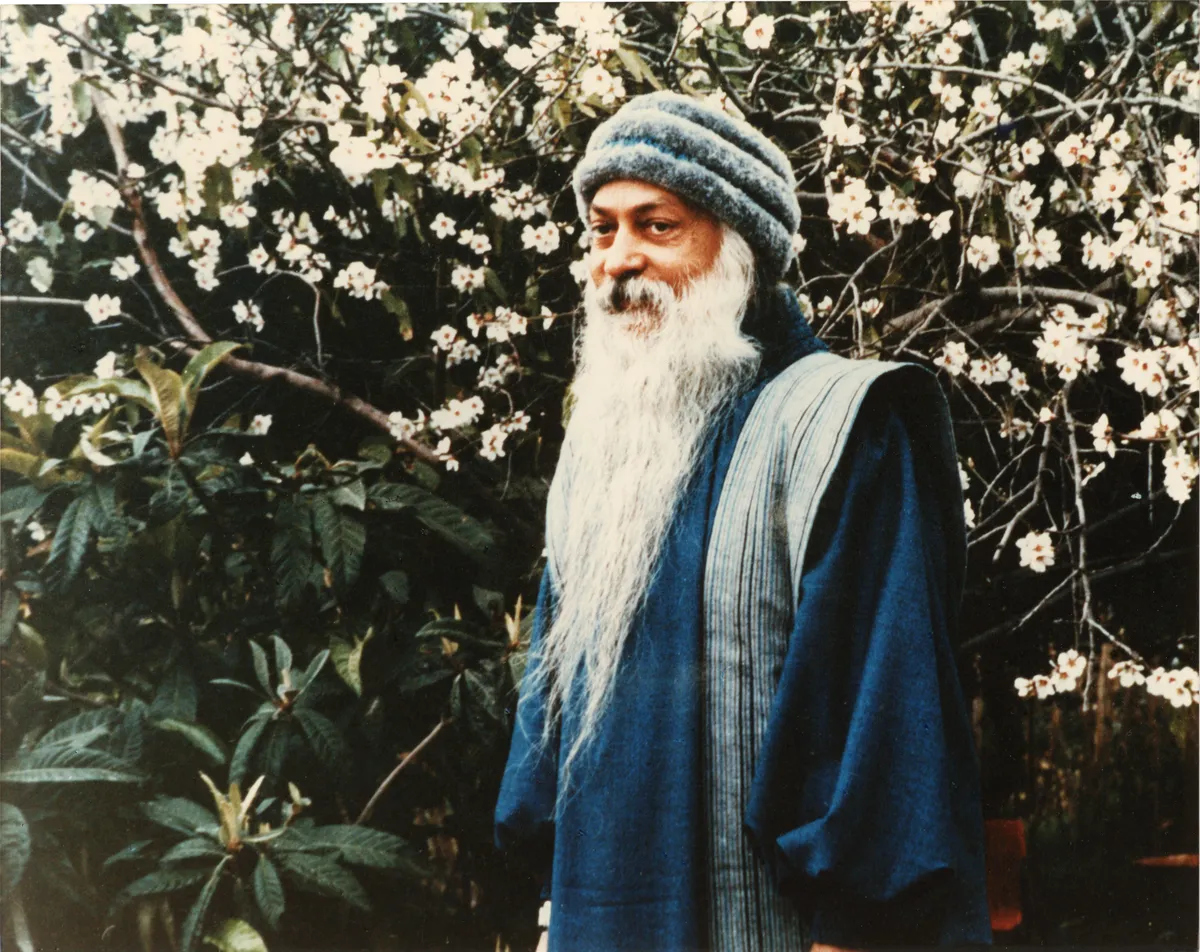
They use big, confusing words to cover up not knowing, and people pretend to understand.
From the Discourses
Passages where Osho speaks to this question — each links to the complete discourse.
Beloved master, I have heard many spiritual saints in my life -- why do they all speak a very difficult language?
Kamla Kant, they have to, because they know nothing. If they speak simple language as I am speaking to you, the day-to-day language, they will not be able to hide their ignorance. Behind the camouflage of big words they can hide their ignorance; that is one of the trade secrets. And people are so foolish that if they can't understand what is being said to them, they think it must be something great. The incomprehensible looks to them as if it is something profound. The comprehensible seems to be superficial. Hence, down the ages your so-called saints have been using very complicated, complex, difficult language, using big words, using dead languages, so nobody understands. Latin, Sanskrit, Arabic -- that's what is being used by your so-called saints. When you hear them you can't figure it out, what it is all about, and, naturally, you cannot say, "I don't understand your…
Osho, why has human faith in religion waned?
Then there is a further fall. This is when, around Buddha, people hear, oppose, accept. Then two-and-a-half thousand years pass. One generation hands it to the next. Those who had heard from Buddha, or at least seen him—some hint of truth must have reached their ears; some touch of Buddha’s presence must have touched them; some color of Buddha must have fallen upon their souls—however slight, it fell. Then their sons and their sons’ sons believe because the fathers believed, the forefathers believed, people have always believed—and then belief becomes blind belief. What you call religions are superstitions. They should have been bid farewell long ago. New editions of truth descend from the sky every day. A new Koran descends every day. God has not grown tired, has not exhausted Himself with Mohammed. Jesus is not God’s only son—as Christians say, the only begotten. Nor did God come to an…
पहला प्रश्न: ओशो, मनुष्य की आस्था धर्म से क्यों उठ गई है?
फिर और एक पतन होता है। यह तो तब की बात है जब बुद्ध के आस-पास लोग सुनते हैं, विरोध करते हैं, अंगीकार करते हैं। फिर बुद्ध को बीते ढाई हजार साल हो गए, फिर एक पीढ़ी दूसरी पीढ़ी को देती चली जाती है। जिन्होंने बुद्ध से सुना था, या जिन्होंने कम से कम बुद्ध को देखा था, उन्हें कुछ भी सत्य की भनक कान में पड़ी होगी, बुद्ध के व्यक्तित्व का थोड़ा सा स्पर्श हुआ होगा, बुद्ध का रंग थोड़ा उनकी आत्मा पर पड़ा होगा, छाया पड़ी होगी--कितनी ही कम, लेकिन पड़ी होगी। फिर उनके बेटे और उनके बेटों के बेटे इसलिए मानते हैं कि पिता मानते थे, पिता के पिता मानते थे, सदा से लोग मानते रहे हैं, तब विश्वास अंधविश्वास हो जाता है। और जिनको तुम धर्म कहते हो, वे अंधविश्वास हैं। उन्हें कभी का विदा हो जाना चाहिए। सत्य के रोज नये संस्करण आकाश से उतरते हैं। रोज नई कुरान उतरती है। परमात्मा थक नहीं गया है, मोहम्मद पर चुक नहीं गया है। न ईसा परमात्मा के अकेले बेटे हैं--जैसा ईसाई कहते हैं, इकलौते बेटे। …
Why do the mystics speak a language of their own?
Gurdjieff used to force people who were not drinkers, he would force them to drink as much as possible. Now, that was his device. When a man is utterly drunk, he becomes very very real and honest. This is a very bad state of affairs, but this is how it is. People have become so false that to see their original face you have to wait... only when they are absolutely drunk. Then their masks slip by; they cannot hold them, they are so drunk. Everything becomes shaky and they start coming up in their true colors. So each disciple had to go through that torture. It was torture for somebody who had not been drinking too much or who was against alcohol. Just think of Morarji Desai: if he had gone to Gurdjieff...! He would force people to drink so much that they would fall on the ground, start…
Question: First question: Osho, truth cannot be spoken—then why do saints speak? ... Before my lamp goes out, I would like many of your lamps to be lit. And before you depart, distribute the light. You must fade; everyone must fade. But the light can keep burning—from one lamp to another; a chain can be formed. This word “silsila” is lovely. We have an almost identical word, but it has spoiled—“parampara,” tradition. It has become stale, fixed. Its real meaning is simply that which passes from one to another. One breathed a mantra into another’s ear. One gave his life-breath to another. Before the knower departs, let him awaken some, ignite some. Before departing, they will awaken others. Thus the chain continues. The chain that Buddha started—lamps still burn in it. The chain Muhammad started—lamps still burn in it. The light has not been lost.
इसके पहले कि मेरा दीया विदा हो जाए, मैं चाहूंगा कि तुममें से बहुतों के दीये जल जाएं। और इसके पहले कि तुम विदा होने लगो, बांट जाना रोशनी। तुम्हें तो बुझना होगा; सभी को बुझना होगा। लेकिन रोशनी जल सकती है--एक दीये से दूसरे दीये में; सिलसिला बन सकता है। यह ‘सिलसिला’ शब्द प्यारा है। हमारे पास भी ठीक वैसा ही शब्द है, लेकिन खराब हो गया--‘परंपरा’। खराब हो गया। उसका मतलब तो कुछ हो गया--जड़, पुराना। उसका मतलब इतना ही होता है कि जो एक से दूसरे को मिला। एक ने दूसरे के कान में फूंका--मंत्र। एक ने अपना प्राण दूसरे प्राण को दिया। इसके पहले कि जानने वाला विदा हो, कुछ को जगा जाए, कुछ को जला जाए। विदा होने के पहले वे किसी और को जगा देंगे। ऐसा सिलसिला चलता है। बुद्ध ने जो सिलसिला शुरू किया था, अब भी उसमें दीये जलते हैं। मोहम्मद ने जो सिलसिला शुरू किया था, अब भी उसमें दीये जलते हैं। रोशनी खो नहीं गई। मोहम्मद गए, बुद्ध गए, महावीर गए, कृष्ण गए, कबीर गए, नानक गए--रोशनी नहीं खो गई।
Osho, what kind of Indian guru are you? We’ve heard you don’t even know Sanskrit!
English, therefore, is the most alive language on earth today--every year it digests eight thousand new words. No other language has such digestive power. It digests everything. You’ll be surprised: English even digested the Sanskrit word “pandit.” “Pandit” is used in English; the meaning is the same as in Hindi--a pompous pundit, hollow, stuffed with cow-dung. Digestive power is the mark of a living being. They can’t even digest “railgadi,” though it has caught on! Millions use it. The whole country understands “railgadi.” Neither Tamil nor Marathi nor Gujarati nor Punjabi nor Hindi has any difficulty with it. But he coined a word, and it didn’t fly. He tried very hard to make it fly--“lohpathgamini” (iron-path-goer)! It just doesn’t sit right; it sounds stupid. You’re going to the station, someone asks, “Where are you going?” You say, “I’m going to catch the lohpathgamini!” He’ll think your wife has run away…
पहला प्रश्न: ओशो, आप किस प्रकार के भारतीय गुरु हैं, हमने सुना है कि आपको संस्कृत भी नहीं आती!
अंग्रेजी इसीलिए सबसे ज्यादा जिंदा भाषा है आज पृथ्वी पर, प्रतिवर्ष आठ हजार नये शब्द पचाती है। दुनिया की किसी भाषा की इतनी पाचन-क्षमता नहीं है। सब पचा जाती है। तुम जान कर हैरान होओगे संस्कृत का ‘पंडित’ शब्द अंग्रेजी पचा गई। अंग्रेजी में पंडित शब्द का उपयोग होता है। मतलब वही होता है जो हिंदी में होता है--पोंगा पंडित, थोथे, गोबर भरे। मगर पाचन-शक्ति जीवित व्यक्ति का लक्षण है। ‘रेलगाड़ी’ को भी नहीं पचा सकते, जब कि चल पड़ा शब्द! लाखों लोग, करोड़ों लोग उपयोग कर रहे हैं। पूरा देश रेलगाड़ी शब्द समझता है। न तमिल को दिक्कत है, न मराठी को दिक्कत है, न गुजराती को दिक्कत है, न पंजाबी को दिक्कत है, न हिंदी को दिक्कत है। मगर उन्होंने एक गढ़ लिया शब्द, वह चला नहीं। बहुत चलाने की कोशिश की--लोहपथगामिनी! बात ही कुछ जंचती नहीं, बुद्धूपन सी लगती है। जैसे तुम जा रहे हो स्टेशन, कोई तुमसे कहे कहां जा रहे हो, तुम कहो लोहपथगामिनी को पकड़ने जा रहे हैं! तो वह समझेगा कि तुम्हारी पत्नी भाग गई या क्या बात है? लोहपथगामिनी! …