
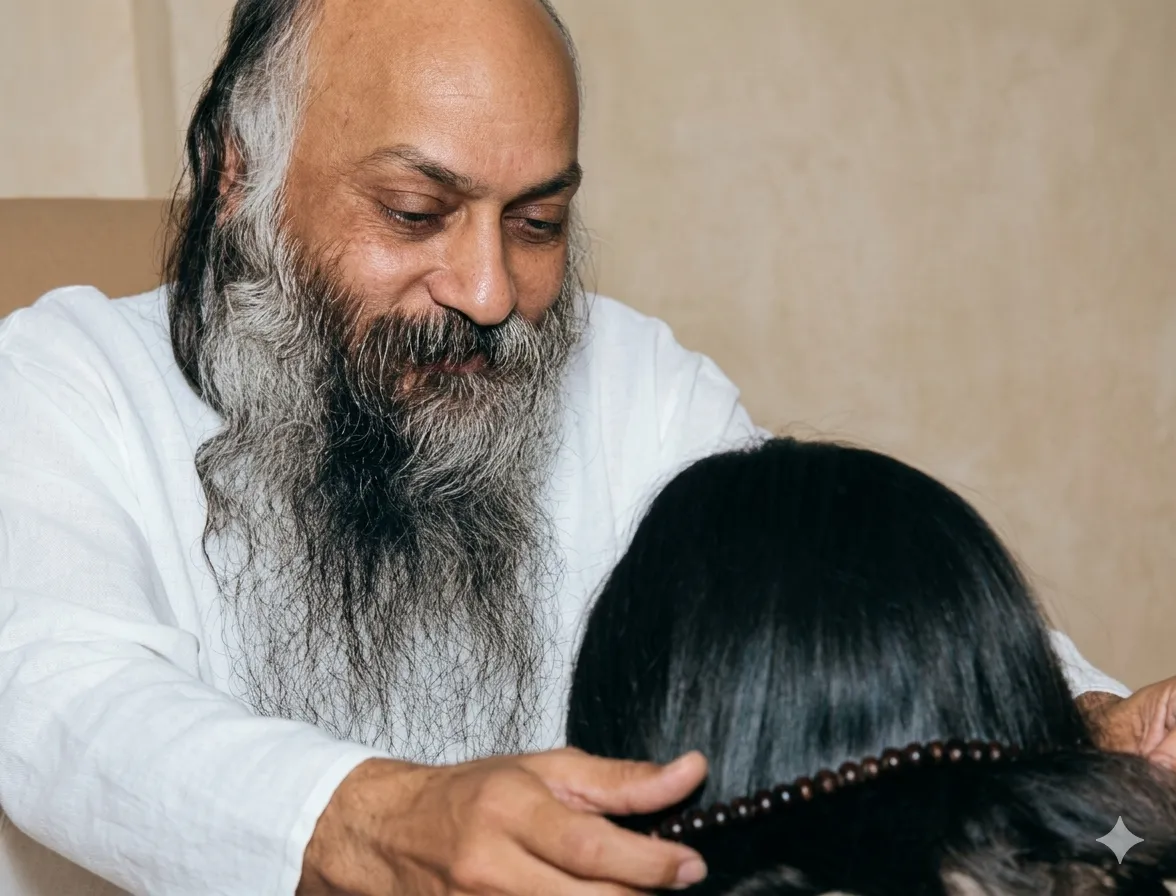
He left to drop the “this is mine” feeling and live in the big open home of everything, where he could be truly free.
From the Discourses
Passages where Osho speaks to this question — each links to the complete discourse.
Osho, why didn’t Mahavira do his spiritual practice while remaining at home? What need was there to go out?
In Gandhi’s ashram a hymn was sung: “Call only that person a Vaishnava who knows the pain of the other.” Someone once recited it to me and I said it needs a slight correction. In truth, a Vaishnava is one who does not even know that anyone is “other.” Knowing the pain of the other is a second thing. To know the other’s pain, you must first accept that there is “other” and there is “mine.” A Vaishnava is one who does not know anyone as other—and only then can the pain of the other be felt as one’s own, because there is no “other” left. We live within the circle of “I,” of “mine.” That is our home: my house, my wife, my father, my son, my friend—an entire world fabricated by “mine.” Around this “mine” we have raised many kinds of walls: of stone, of love, of hatred,…
प्रश्न: ओशो, महावीर ने घर में ही रह कर साधना क्यों नहीं की? बाहर जाने की क्या आवश्यकता थी?
गांधी जी के आश्रम में एक भजन गाया जाता था: वैष्णव जन तो तेने कहिए जे पीर पराई जाने रे। कोई मुझे पढ़ कर सुना रहा था तो मैंने कहा कि इसमें थोड़ा सुधार कर लेना चाहिए। असल में वैष्णव जन तो वह है, जो पराए को ही नहीं जानता, पराए की पीर बहुत दूसरी बात है। पराए की पीर भी जाननी हो तो पराए को मानना जरूरी है और अपने को भी मानना जरूरी है। …
Osho, what family or social discontent did Mahavira have? Isn’t his renunciation an escape from responsibilities?
Such a person can rightly be called an escapist—not a person like Mahavira. He raises no new entanglements and flees from no fear; out of understanding, out of a knowing consciousness, he changes staircases—he goes to another step. I see it like this: if someone runs out of fear from something, that is one thing; if someone runs to gain something, that is entirely different. The man with a gun at his back runs; and the man who has seen a diamond mine runs. Both run. But one runs out of fear of the gun; the other runs because he has seen diamonds. You cannot call the second one an escapist. You can call him one who is in motion, running—but not fleeing. He is not running from something; he is running to something. The emphasis of his vision is not on what he leaves but on where he goes.…
प्रश्न: ओशो, महावीर को पारिवारिक या सामाजिक कौन सा असंतोष था? क्या उनका गृह-त्याग जवाबदारियों से पलायन नहीं है?
ऐसा आदमी तो एस्केपिस्ट कहा जा सकता है, पलायनवादी, महावीर जैसा व्यक्ति नहीं। क्योंकि वह कोई नई झंझट खड़ी ही नहीं करता है और किसी भय से नहीं भागता है, किसी समझ, किसी ज्ञानपूर्ण चेतना में सीढ़ी बदल देता है, दूसरी सीढ़ी पर चला जाता है। इसको मैं ऐसा मानता हूं कि अगर कोई आदमी भाग रहा हो किसी से डर कर तो एक बात है, और एक आदमी भाग रहा हो कुछ पाने को, तो बिलकुल दूसरी बात है। वह आदमी भी दौड़ता है जिसके पीछे बंदूक लगी है और वह आदमी भी दौड़ता है जिसे हीरों की खदान दिखाई पड़ गई है। लेकिन एक के पीछे बंदूक का भय है, इसलिए भागता है; एक को हीरों की खदान दिख गई, इसलिए भागता है। दूसरे आदमी को भी आप भागने वाला नहीं कह सकते, एस्केपिस्ट नहीं कह सकते, पलायनवादी नहीं कह सकते। गतिवान कह सकते हैं, दौड़ने वाला कह सकते हैं; भागने वाला नहीं। किसी चीज से भाग नहीं रहा है वह, कहीं जा रहा है। कहीं से नहीं जा रहा है, कहीं जा रहा है। …
None of us desires to be mean and low because our nature is the Lord. If this is understood, then whatever we do not desire points toward our nature, gestures toward it. Whatsoever we do not desire—our nature will be other than that. If this contemplation is born in someone, if his inner being is churned by this, seized by this pain and longing, seized by this thinking—if he begins contemplating each truth of life, Why do I not want suffering! If this contemplation arises— I am searching for bliss, but where did I lose it! If this contemplation begins, from its result an astonishing thirst will begin to arise in one’s life. That tendency which blindly sought outside will, because of the questioning, fall away; obstacles will arise in outward seeking, and a leaning will begin toward the inner.
अगर दुख स्वरूप के विपरीत है, तो स्वरूप आनंद होगा। हम आनंद को चाहते हैं, क्योंकि हमारा स्वरूप आनंद है। हममें से कोई मृत्यु को नहीं चाहता, क्योंकि हमारा स्वरूप अमृत है। हममें से कोई अंधेरे को नहीं चाहता, क्योंकि हमारा स्वरूप प्रकाश है। हममें से कोई भय को नहीं चाहता, क्योंकि हमारा स्वरूप अभय है। हममें से कोई दीन-हीन नहीं होना चाहता, क्योंकि हमारा स्वरूप प्रभु है। अगर इस बात को समझें तो जो-जो हम नहीं चाहते हैं, वह हमारे स्वरूप की ओर संकेत है, वह हमारे स्वरूप की ओर इशारा है। जो-जो हम नहीं चाहते, उससे भिन्न हमारा स्वरूप होगा। यह चिंतन जिसमें जन्म पाए, जिसका अंतस्तल इस मंथन, इस आंदोलन से ग्रसित हो जाए, यह पीड़ा और व्यथा पकड़ ले, यह सोच-विचार पकड़ ले, यह एक-एक जीवन के सत्य को पकड़ कर चिंतना शुरू हो जाए, मैं दुख क्यों नहीं चाहता! यह चिंतन हो जाए, मैं आनंद को खोज रहा हूं, लेकिन मैंने आनंद को खोया कहां है! …
Osho, in the third discourse on non-possession (aparigraha) you said that Mahavira, by entering the life of sannyas, became an emperor, while his elder brother, though living amid affluence, remained impoverished and enslaved. Attaining inner wealth yet staying beyond material wealth—that is, becoming free of possession—does this not amount to a one-sided, unilateral life? Why can they not accept both inner and outer prosperity together?
Mahavira left everything, not because it was wealth; he left precisely because it was not wealth. Mahavira left everything, not because there was something worth abandoning; he left because there was nothing worth holding. But what do we see? We see that he left palaces; we see that he left diamonds and jewels; we see that he left riches. That is what we notice. As far as Mahavira is concerned, he left nothing but pebbles and stones. We see diamonds and jewels; Mahavira saw pebbles in those diamonds and jewels. And in such diamonds and jewels there is nothing other than pebbles and stones anyway! Yes, those who wrote Mahavira’s story recorded how many diamonds, how many rubies, how many emeralds, how many pearls he left. If someone were to ask Mahavira, he would say, “How foolish you are! You’ve even given different names to pebbles?” Had Mahavira left only…
ओशो, आपने अपरिग्रह के तीसरे प्रवचन में कहा है कि महावीर संन्यास के जीवन में आकर बादशाह हो गए, लेकिन उनके बड़े भाई संपन्नता के बीच रह कर भी विपन्न और गुलाम ही रहे। महावीर का आत्मिक समृद्धि उपलब्ध करना, लेकिन भौतिक समृद्धि से परे रहना अर्थात परिग्रह से मुक्त हो जाना, क्या एकांगी व एकपक्षीय जीवन नहीं है? वे अंतर और बाह्य दोनों समृद्धियों को एक साथ क्यों नहीं स्वीकार कर पाते?
… महावीर सब छोड़ कर चले गए, इसलिए नहीं कि वहां कुछ छोड़ने योग्य था; बल्कि इसीलिए कि वहां कुछ भी पकड़ने योग्य न था। लेकिन हमें दिखाई पड़ता है, उन्होंने महल छोड़ा; हमें दिखाई पड़ता है, हीरे-जवाहरात छोड़े; हमें दिखाई पड़ता है, धन-दौलत छोड़ी! यह हमें दिखाई पड़ता है। महावीर ने तो कंकड़-पत्थरों के अतिरिक्त कुछ भी नहीं छोड़ा है। हीरे-जवाहरात हमें दिखाई पड़ते हैं। महावीर को हीरे-जवाहरात में कंकड़-पत्थर दिखाई पड़ गए हैं। ऐसे हीरे-जवाहरात में कंकड़-पत्थरों के अतिरिक्त कुछ है भी नहीं! हां, जिन्होंने महावीर की कथा लिखी है, उन्होंने लिखा है कि इतने हीरे, इतने जवाहरात, इतने माणिक, इतने मोती छोड़े। अगर कोई महावीर से पूछे, तो वे कहेंगे, बड़े पागल हो, कंकड़-पत्थरों के भी अलग-अलग नाम रख लिए हैं? हां, अगर महावीर ने कंकड़-पत्थर छोड़े होते, तो हम भी न कहते कि कंकड़-पत्थर छोड़ रहे हैं! हम सबने छोड़े हैं।
Leaving the house is easy; leaving the attitude of lack is difficult. Whatever I have, if I die this very moment, at the moment of death it should not feel that something is lacking — that there was something more to get; if I had lived till tomorrow I would have gotten it. Such a state that if death suddenly arrives she finds you utterly willing and you say, “I am ready.” For whatever was to be has happened; whatever was to be attained is attained; whatever could be received has been received — I am content. There was no demand for more. Life has opened its full meaning. Think: if death comes now, will she find you willing? Or will you say, “Wait for two days!
कठिन बात है! घर छोड़ना बड़ा आसान है, अभाव की दृष्टि छोड़ देना बड़ा कठिन है। जो मुझे मिला है, अगर मैं इसी वक्त मर जाऊं तो मरते क्षण में मुझे ऐसा नहीं लगेगा कि कोई चीज की कमी रह गई, कि कुछ और पाने को था, अगर कल जिंदा रह जाता तो उसे भी पा लेता। ऐसी भावदशा कि मृत्यु अचानक आ जाए तो आपको बिलकुल राजी पाए, और आप कहें कि मैं तैयार हूं। क्योंकि जो भी होना था हो चुका, जो पाना था पा लिया, जो मिल सकता था मिल गया, मैं संतुष्ट हूं। इससे ज्यादा की कोई मांग न थी। जीवन अपने पूरे अर्थ को खोल गया है।