
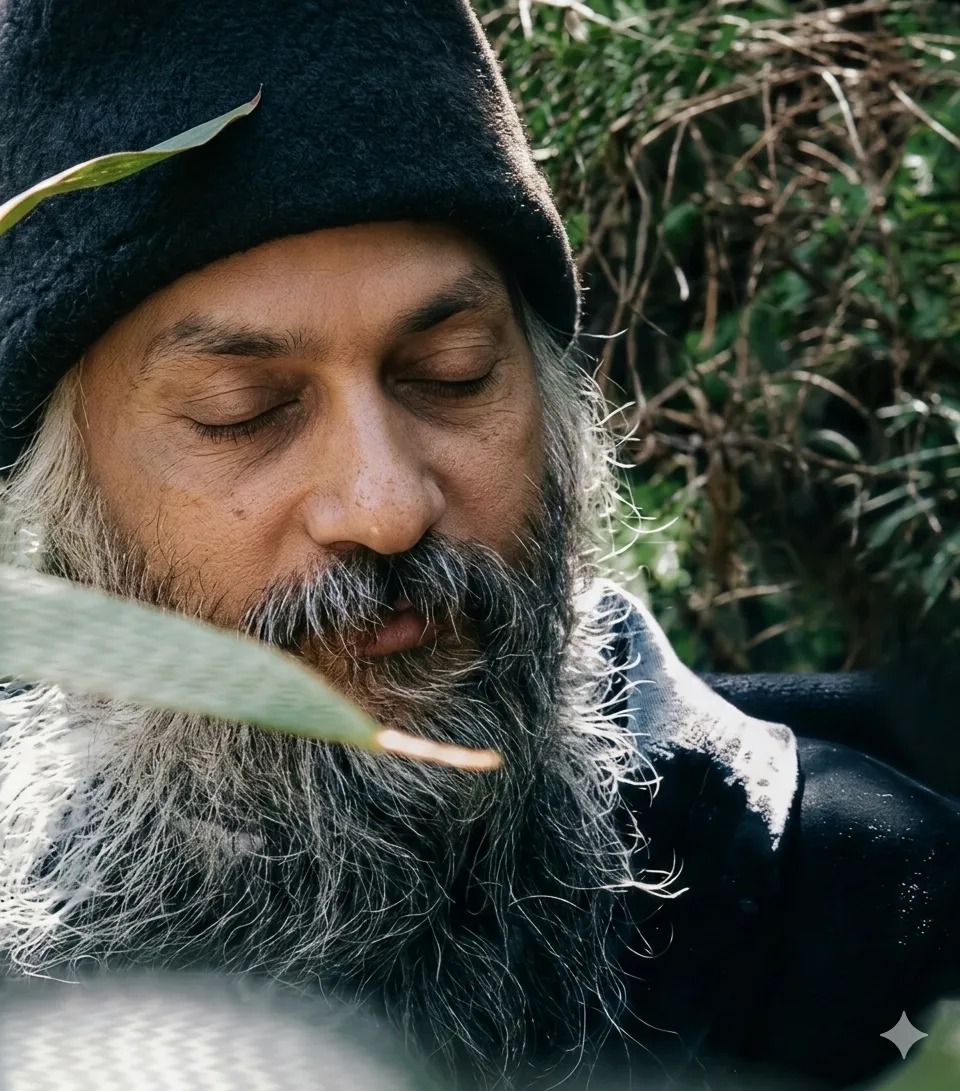
We needed “no” to grow up, but once grown we should use “no” only when wise and let a trusting “yes” lead us back to peace.
From the Discourses
Passages where Osho speaks to this question — each links to the complete discourse.
What stands in the way of my saying yes to life, to surrendering totally, and is it always right to say yes?
No, not always. No has its own utility. One should not be addicted to it, that's all. No is not bad in itself. There are moments when you have to say no, there are moments when you have to say yes. One should be free to say yes or no; that's what I have been telling you. One should not be addicted to either. A free person is one who looks at each situation and says yes or no -- whatsoever the response is, whatsoever he feels like in that moment. That yes and no should not come from the past, should not come from the memory. It should not be a reaction, it should be a response. A man was alone out in a rowboat on the Potomac, shouting, "No! No! No!" Somebody was watching: "Why is this man saying, 'No! No! No!'?" And there was nobody else, he…
Osho explains the meaning of veet nisadha: beyond no, beyond negation.... Drop no-saying; become more and more of a yea-sayer.] Yes, say yes to life. And if one is aware, then one will be surprised that many times we unnecessarily say no... and we harm nobody except ourselves by saying that. No is fear-oriented; yes is love. When you say yes, you are in a loving mood; whenever you are in a loving mood, you say yes -- they both go together. When you say no, you reject life, and when you reject life, life rejects you. Then one becomes more and more sour, more and more bitter, and then there is a vicious circle. When you are bitter you say no more; when you say no more, life goes on rejecting you.
Osho, yesterday you said that when anger is watched consciously, it dissolves. But why is it that when sexual desire arises, even in awareness its intensity persists? Why is it so?
There is no entanglement in the breath. If you try to practice on anger… Anger is not happening every moment; it happens sometimes. And when it happens, it happens with such intensity that you are already going deep into it; so much is at stake in those moments that you may think, “We will look into awareness later; first let’s settle this now.” Lust is very deep, because existence has made it so deep; life depends on it. If lust were so easy that you decided and were freed, perhaps you would not even have been born—because many before you would have become free, and the possibility of your being would have been almost nil. But your parents, and their parents, did not become free; therefore you are. You too will not get free so easily, because your children are also to be—they are waiting: “Do not run away midway.”…
Beloved master, what is yes? I find that I have no real understanding of it. I have seen that whenever I say yes, there is a hint of surprise, as if I am amazed that there is no reason to say no. My yes is always instead of no. Where is the seat of this experience, yes...?
Just the other day Buddha was talking about trust: Trust, meditate, and see. Yes means trust, and trust is the beginning of meditation. Meditation means relaxing with existence. Unless you trust, unless you can say yes to existence, how can you relax? People cannot relax because they are afraid. People cannot relax because they fear that if they relax they may be cheated. People can relax only with others whom they trust. With a stranger in your room you may not be able to sleep in the night. Who knows, he may cut your throat. Who knows, he may steal your money and escape. But with your wife or husband you go into deep sleep, you can trust. The child can go with his father or mother anywhere. Even if the father is going into fire, the child can go singing a song, dancing, inquiring, questioning, unafraid, because he knows…
Osho, all my life I have said yes and now that I am here with you and the yes seems really right, there comes only no. What is this no?
And the Master said, 'That's all that I can say or that I am allowed to say. You ask about the goal, I talk about the way, because the goal is so incomprehensible, so mysterious, that nothing can be said about it. I can simply sit in silence. If you have eyes to see, see! If you have ears to hear, hear! Hear my silence, and the song that my silence is, and the music that arises in it. If you cannot hear it, that simply shows you need meditation. So meditate.' The man said, 'Just this much -- one word, "meditation"? Won't you elaborate on it a little?' He wrote again in bigger letters: MEDITATION. That was his elaboration . The man was puzzled and he said, 'But you are simply repeating. Just writing it in bigger letters won't help.' So he wrote again in even bigger letters: MEDITATION.…