
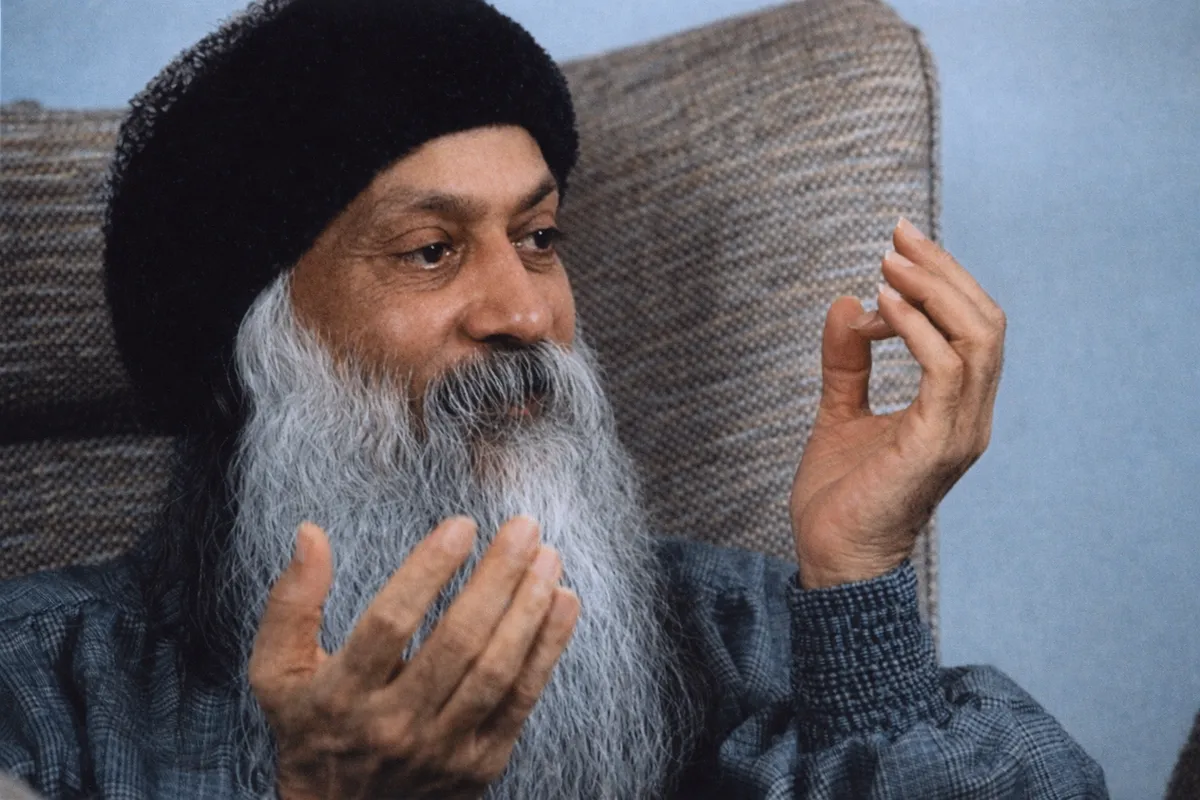
When someone is truly enlightened, they aren’t a separate person calling God anymore—like a hollow flute, God plays through them, so it’s God calling, not them.
From the Discourses
Passages where Osho speaks to this question — each links to the complete discourse.
The second and last question: Osho, when all the realized, perfected ones call out to God, I cannot understand—what remains of them to do the calling?
Anand Bharti! Your question is right, but it stands on a misunderstanding, on a small mistake. You asked: “When all those who have arrived, the perfected ones, call out to God, then I cannot understand—what remains of them to do the calling?” Keep two things in mind. First: the devotee calls to God only until he has not yet reached God; therefore he calls to God. When he arrives—and the devotee becomes God—then it is no longer the devotee who calls to God. Then, through the devotee, God calls to the world. Then it is God who calls from within him. These are two different callings. One is the devotee’s cry: “Come, take me into yourself; it has been so long; I can bear no more delay; I weep, I implore you; do not be estranged; be gracious; open the door; how long it has been—I have been weeping and…
Question: First question: Osho, how does the call of the Divine become audible? This question is auspicious. Many ask how to call upon God; only now and then someone asks how to hear God’s call. So the question is important, rare, a little incomparable—and closer to truth. The real question is not how to call God. What tongue do we have with which to call the Divine? And what is the power of our speech? It will go a little way and be lost in the void. How far can our words travel? And whatever we say will carry, somewhere, the imprint of our desires. Our prayers are our desires; and how will desires reach Him? If desire is hidden in prayer, it is as if someone tied a stone to a bird’s throat—flight is no longer possible. All our prayers are filled with desire.
Osho, Sahajo, who has realized nonduality, says, “Practice devotion without desire.” But then the question arises: how can the devotee and God remain separate? Kindly clarify.
Practice devotion without desire! Nishkama bhakti—desireless devotion. So devotion can be of two kinds: one with desire, one without desire. With desire means: some demand. Without desire means: no demand. Without desire means: the joy is in devotion itself. You dance and sing; dance, kirtan, bhajan are themselves the goal. You sing because singing is bliss. You dance because dancing is bliss. There is no reward beyond the dance. After dancing we will not wait before God saying, “We danced so long; now give us a prize, now let us go home.” A devotee’s dance is not the dance of a courtesan, who dances while waiting for a payoff. A devotee’s dance is the dance of existence—there is nothing further to ask for. The dance is the final moment of joy, ahobhava—a sense of wonder. So desireless devotion means: devotion itself is bliss. Devotion with desire means: devotion is a…
Osho, I call out to the Lord—I have been calling for years. I pray regularly, but my calls never receive any answer. Am I making some mistake somewhere?
But now enough! For years you have been calling; nothing has happened. Now learn a new way of calling—one in which there is no name, no outer formality. You have been doing regular prayer just as you do other regular things—bathing, eating, sleeping. Now learn another kind of prayer that has nothing to do with routine. That abides in no limitation. That is like the breath. That goes on day and night—while getting up and sitting down, sleeping and waking, working or not working. But do not take such prayer to mean that I am asking you to go on, for twenty-four hours, muttering “Ram-Ram, Ram-Ram.” If you do that, you will go insane. If you do that, whatever little intelligence you have will be lost; it will rust. That is why you do not see any sign of intelligence among those so-called chanters of the divine name. There is…
Osho, what is the relationship between meditation and patience?
If you sit to meditate to remove mental restlessness, you will keep looking back again and again: “Has it gone yet?” And the irony is that when you begin to meditate, restlessness will increase. Because what has been repressed will start surfacing; catharsis will begin. The rubbish you have kept hidden within and never allowed to express—meditation will break open those doors too. It will clean the house. Dust piled up for years, for births, will rise again; there will be gusts and storms. For a while even the little peace you had will be lost. Then you will panic: “I came for peace, and even what I had is gone.” Without patience, you could even become unhinged, because meditation brings such a great storm. The disease is not from a day or two; it’s from lifetimes. Meditation will break through all the layers to reach your innermost core. In…