
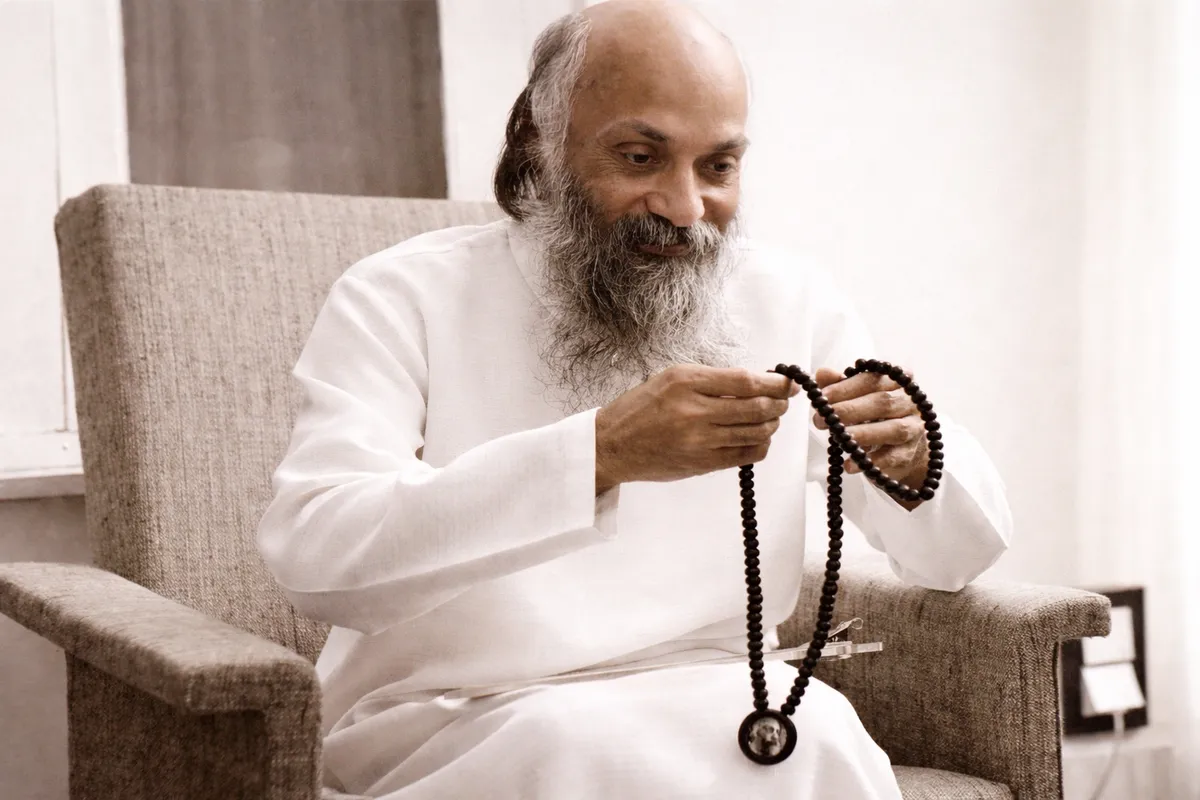
Food is just fuel for your body so your mind can be calm and aware—don’t glorify it or ignore it; meet your needs and use that strength to look within.
From the Discourses
Passages where Osho speaks to this question — each links to the complete discourse.
Osho, please tell me: after realization, is taking food also attachment to the body? After realization, can life continue without food?
A mahatma has arrived, it seems! What grudge do you have against food? What enmity with the body? The body too is His form. Taste is His taste. The relish of food is also a hymn to Him. What sickly mind are you carrying! You have fallen into the wrong company—into the company of the perverse—which people mistake for satsang. You’ve been spoiled by the friendship of someone of a twisted nature. Your so‑called sadhus and mahatmas are anti‑life, anti‑body, anti‑joy. Their God is not the creator, the celebrant of life; their God is life’s enemy. In their reckoning, God and His creation are at odds—an idea stuffed with sheer foolishness. If God is the Creator, then creation is His unfolding. How can the Creator be opposed to His creation? Is a poet against his poem? Is a musician against his music? And if a musician is against music, why…
ओशो, यह बताने की कृपा करें कि उपलब्ध होने के बाद भोजन लेना भी शरीर का मोह है? क्या उपलब्ध हो जाने के बाद भोजन के बिना जीवन चल सकता है?
कोई महात्मा का आगमन हो गया है! भोजन से ऐसी क्या नाराजगी? शरीर से ऐसी क्या दुश्मनी? शरीर भी उसका रूप है। स्वाद भी उसका स्वाद है। भोजन का रस भी उसका भजन है। यह तुम कैसा रुग्ण-चित्त लिए बैठे हो! तुम गलत आदमियों के साथ पड़ गए हो। तुम दुष्ट-संग में पड़ गए। हालांकि दुष्ट-संग को ही लोग सत्संग समझ रहे हैं। तुम किसी दुष्ट-प्रकृति आदमी की दोस्ती में बिगड़े हो। तुम्हारे तथाकथित साधु-महात्मा जीवन-विरोधी हैं, शरीर-विरोधी हैं, आनंद विरोधी हैं। उनका परमात्मा जीवन का नियंता, रचयिता नहीं है; उनका परमात्मा जीवन का शत्रु है। उनके हिसाब में परमात्मा और उसकी सृष्टि में विरोध है, जो कि बात बड़ी ही नासमझी से भरी है। अगर परमात्मा स्रष्टा है तो सृष्टि उसका फैलाव है। तो सृष्टि के विपरीत उसका स्रष्टा कैसे हो सकता है? कोई कवि अपनी कविता के विपरीत होता है? …
Our beloved master,
YOU WERE JUST TALKING ABOUT FOOD, AND NOW IN THE WEST FOOD IS A BIG CULT. IT'S ONE OF THE THINGS COMING IN AS A BASIS OF SPIRITUALITY. YOU SAID IF WE'RE NATURAL, WE'LL KNOW WHAT TO EAT AND WHEN TO EAT, BUT NOW WE ARE OUT OF TOUCH WITH OUR CHILDLIKE NATURE. ALSO, MANY RELIGIONS SAY THAT THE FOOD YOU EAT DOES MAKE A DIFFERENCE TO ONE'S SPIRITUAL PATH. IS THERE ANYTHING YOU CAN TELL US ABOUT FOOD AS A GUIDE FOR THE WEST? It is the other way round: food cannot make you spiritual, but if you are spiritual your food habits will change. Eating anything will not make much difference. You can be a vegetarian and cruel to the extreme, and violent; you can be a non-vegetarian and kind and loving. Food will not make much difference. In India there are communities who have lived totally with…
Osho, does diet have an effect on the mind?
Some foods are stimulating; they create excitement. All of them are obstacles in spiritual life. Some foods are non-stimulating; they do not arouse excitement. They support spiritual life. Some foods are intoxicating, giving a kind of inebriation; some are non-intoxicating. Intoxicating and stimulating foods are obstacles in spiritual life. But our craving for intoxicating, stimulating foods—the taste for them, the urge within to take them—will dissolve through meditation. As the mind begins to grow quiet, the diet will begin to change accordingly. Recently such incidents have occurred around me. Some friends were meat-eaters. When they first came to me they immediately asked, “We eat meat; you won’t make it a condition of meditation that we must give it up? We can’t give it up.” I told them, I don’t talk about diet at all. Eat whatever you like, enjoy it; I have nothing to do with it. But begin meditation.…
प्रश्न: ओशो, क्या आहार का मन पर असर होता है?
कुछ आहार उत्तेजक आहार हैं, उत्तेजना देते हैं। वे सब बाधा हैं आध्यात्मिक जीवन में। कुछ आहार अनुत्तेजक हैं। वे कोई उत्तेजना नहीं देते। वे आध्यात्मिक जीवन में सहयोगी हैं। कुछ आहार हैं जो मादक हैं, जो नशा देते हैं; कुछ आहार गैर-मादक हैं, नशा नहीं देते हैं। मादक आहार, उत्तेजक आहार, बाधा हैं आध्यात्मिक जीवन में, लेकिन मादक आहार के प्रति हमारी जो आकांक्षा है, जो रस है, उत्तेजक आहार को लेने की जो हमारे भीतर वासना है, वह ध्यान से विलीन होगी। जैसे-जैसे चित्त शांत होने लगेगा, वैसे-वैसे आहार में परिवर्तन होने लगेगा। अभी मेरे पास ऐसी कुछ घटनाएं घटी हैं। कुछ मित्र थे, जो मांसाहारी थे। वे जब शुरू-शुरू में मेरे पास आए, तो उन्होंने मुझसे आते से ही यह पूछा कि हम मांसाहारी हैं, कहीं आप इस ध्यान में यह बाधा तो नहीं डालते हैं कि मांसाहार छोड़ना पड़ेगा। हम लोग यह नहीं छोड़ सकते। तो मैंने उनसे कहा कि मैं आहार की तो कोई बात ही नहीं करता। आपको जो खाना है, मजे से खाओ। …
Osho, please shed some light on this clear method of returning.
There are a few things to understand here as well. Ordinarily we have no idea that every touch of ours is a magnetic touch. When we touch someone filled with love, the one who is touched senses the difference. When we touch filled with hatred, that too is sensed. When we touch with indifference, even that is felt. In all three states our magnetic element flows in different currents. And if, with the whole mind and a firm resolve, one concentrates entirely in the hands, the magnetic currents become very intense—what Mesmer called magnetic passes. If we lay a person down naked, do not touch the body, and hold both our hands above the head at a distance of about four inches, keeping that gap, and then, while vibrating the hands strongly, move them the same four inches above the body down to the feet, and do this for fifteen…
ओशो, कृपया यह जो वापस लौट आने की स्पष्ट विधि है, इस पर कुछ प्रकाश डालें।
इस संबंध में भी कुछ समझने जैसी बात है। चूंकि हमें साधारणतः कोई अनुमान नहीं है कि हमारा प्रत्येक स्पर्श चुंबकीय स्पर्श है। जब हम प्रेम से भरकर किसी को छूते हैं, तो स्पर्श का भेद जिसको स्पर्श किया है उसे पता चलता है। जब हम घृणा से भरकर किसी को छूते हैं, तब भी पता चलता है। जब हम उपेक्षा से छूते हैं, तब भी पता चलता है। तीनों स्थितियों में हमारा चुंबकीय तत्व अलग-अलग धाराओं में प्रवाहित होता है। फिर अगर पूरे मन से और पूरे संकल्प से हाथ पर ही स्वयं को पूरा केंद्रित किया गया हो, तो चुंबकीय धाराएं बड़ी तीव्र हो जाती हैं, जिनको मैसमर ने मैग्नेटिक पासेज कहा है। अगर एक व्यक्ति को हम नग्न सुला दें, उसके शरीर को न छुएं, चार इंच दूर अपने दोनों हाथों को उसके सिर पर लें। …
Osho, you said that the Hindu genius was once supremely intelligent and succeeded in touching the ultimate heights of religion. As a result there came into being devas, dvijas, gurus and gnanis; the Upanishads, the Gita, the Dhammapada and the Jina-vani. Then what is the reason that the same people have fallen into the great abyss of decline for a thousand years, with no sign of rising?
The West too produces, once in a while, an Einstein—knower of the outer. But even that does not solve anything. The masses remain full of tension and anxiety. Is it not possible to accept the outer and the inner together? Both are; your acceptance or rejection makes no difference—only you get into trouble. Take breathing: it goes out and it comes in. If you insist, “I will only draw it in; I will not let it go out,” you will die. Another insists, “I will not let it go in; I will hold it out here”—he too will die. The East died; the West died—because both embraced only half. I call courageous the one who accepts both together, who says, “I will keep both pans of the scale in balance.” The East has lost; the West has lost. And the danger is: when you lose one thing, a craving arises…
पहला प्रश्न: ओशो, आपने कहा कि हिंदू मनीषा कभी आत्यंतिक रूप से बुद्धिमान थी और धर्म की परम ऊंचाइयों को छूने में वह सफल हुई। उसके ही परिणाम में देवता, द्विज, गुरु और ज्ञानी हुए; उपनिषद, गीता, धम्मपद और जिन-वाणी हुई। फिर क्या कारण है कि वही जाति हजार वर्षों से पतन के महागर्त में गिरी और उसके उठने के कोई आसार नजर नहीं आते?
ऐसा समझो कि तुम श्वास लेते हो; वह बाहर आती है, भीतर जाती है। तुम अगर जिद्द कर लो कि हम तो भीतर ही ले जाएंगे, बाहर न जाने देंगे, तो भी तुम मरोगे। या दूसरा आदमी जिद्द कर ले कि हम भीतर न जाने देंगे, बाहर ही रोककर रखेंगे; वह भी मरेगा। पूरब भी मरा, पश्चिम भी मरा, क्योंकि दोनों ने आधे को अंगीकार किया। मैं उसी को साहसी कहता हूं, जो दोनों को एक साथ स्वीकार कर ले। जो कहे, हम तराजू के दोनों पलड़ों को बराबर रखेंगे। पूरब ने भी गंवाया, पश्चिम ने भी गंवाया। और डर यह है कि जब एक चीज को तुम खो देते हो, तो दूसरी अति पर जाने की आकांक्षा पैदा होती है।