
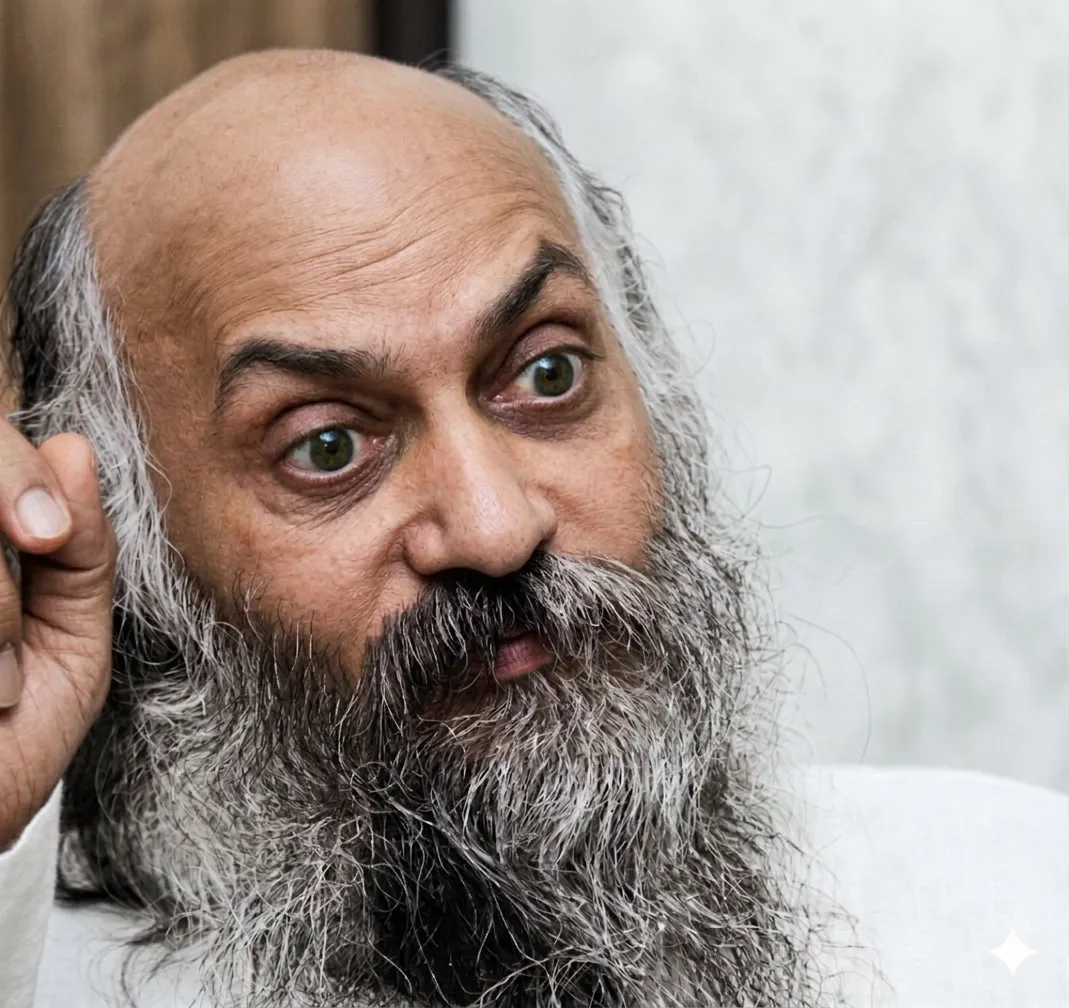
Going mad means your awareness turns off, you stop making new memories, and you just replay old ones, so you can’t meet the present.
From the Discourses
Passages where Osho speaks to this question — each links to the complete discourse.
Osho, when a person goes mad, what is his state?
Yes—when a person goes mad, only memory is left of the man. He has no awareness of his own self at all; only memory remains. You will be surprised: from the day he becomes mad, he retains no memory of anything after that day. All the memories from before remain. If a person went mad this morning, whatever he talks about will be from before this morning; he will say nothing of after this morning. No memory of what happens after this morning is being formed. Now only the memories from before this morning are there; he will keep repeating them. He will speak them, babble them, go on with the same things. He has completely lost awareness. And from the very moment he lost awareness, the memories up to that moment will go on repeating. That is why he appears mad to us: he will always be incongruent, out…
प्रश्न: ओशो, आदमी जब मैड हो जाता है, उसकी क्या हालत होती है?
हां अगर इसको, आदमी जब पागल हो जाता है तो आदमी अकेला स्मृति रह गया। उसे अब बिलकुल भी होश नहीं है अपने स्व का। केवल मेमोरी रह गई। आप हैरान होंगे, वह जिस दिन पागल होता है, उस दिन के बाद की उसे कोई मेमोरी नहीं रहती। उसके पहले की मेमोरी रहती हैं सब। अगर एक आदमी आज सुबह पागल हो गया तो वह जितनी बातें करेगा, वह आज की सुबह के पहले की हैं। आज की सुबह के बाद की कोई बात नहीं करेगा। आज की सुबह के बात की कोई मेमोरी नहीं बन रही है। अब आज से सुबह के पहले की सब मेमोरी हैं, उन्हीं को दोहराएगा। …
Question: BELOVED OSHO, WHAT IS MADNESS? There are two possibilities: Madness literally means going out of the mind; hence the two possibilities. You can go out of the mind either below the mind or above the mind. Ordinarily, people go below the mind because it needs no effort, you don't have to do anything. Any shock can shatter the stability of your mind: somebody you loved died, your business has gone bankrupt -- the shock is so much that you cannot keep your normality. You fall below the mind, your behavior becomes irrational. But you go beyond the misery -- if you had remained in the normal mind the shock would have created immense misery. It is a natural way to avoid the shock. It simply pulls you down; now you don't know what has happened.
Osho, what is the difference between surrender and blind imitation?
So be careful: the freedom you allow yourself, allow the other too. You have no right to judge another as blindly credulous or as a surrendered being. Drop that concern. You cannot judge anyway—how will you enter another’s heart? How will you know? Think only about yourself. See within whether, up to now, you have lived by blind belief or by surrender. Decide only there; leave worrying about others. Otherwise, all your judgments will be wrong. Jesus said: Judge not; do not set yourself up as a judge in relation to another. To the friend who has asked: if you are asking for yourself, good. Drop worrying about others. Look within and see: whatever I have been clinging to till now—have I ever staked my life to hold it? Have I meditated for it? Have I loved for it? Or am I just clutching what culture, society, civilization handed me?…
चौथा प्रश्न: ओशो, समर्पण और अंधानुकरण में क्या अंतर है?
इसलिए खयाल रखना, जो तुम अपने लिए मौका देते हो, वह दूसरे को भी देना। तुम्हें कोई हक नहीं है किसी दूसरे के बाबत निर्णय करने का कि वह अंधविश्वासी है, या समर्पित हुआ व्यक्तित्व है। तुम इसकी चिंता छोड़ो। तुम कर भी नहीं सकते निर्णय। तुम दूसरे के हृदय में उतरोगे कैसे? जानोगे कैसे? तुम तो अपनी ही सोच लो। इतना ही देखो अपने भीतर कि अब तक तुम अंधविश्वास से जी रहे हो, या समर्पण से जी रहे हो। बस, वहीं निर्णय कर लो, दूसरों की फिकिर छोड़ दो। अन्यथा तुम्हारे सभी निर्णय गलत होंगे। जीसस ने कहा है, निर्णय करो ही मत; दूसरे के संबंध में न्यायाधीश बनो ही मत। तो जिन मित्र ने पूछा है, अगर अपने लिए पूछते हों, तो ठीक। दूसरों की चिंता छोड़ दें। अपने भीतर ही देख लेना है कि अब तक जो मैं पकड़े हुए हूं, उसको पकड़ने के लिए मैंने कोई जीवन दांव पर लगाया है? कोई ध्यान किया है? कोई प्रेम किया है? या सिर्फ संस्कृति ने, समाज ने, सभ्यता ने जो दिया है, उसे पकड़े हुए हूं! दूसरों ने दिया है। …
A friend has asked: Osho, is the samadhi attained when consciousness is lost a state of swoon? Sri Ramakrishna Paramhansa would lie for days as if near death!
In the West they have invented new ways: even blows are not enough; so they set up many lights, rapidly changing, deafening sound, assorted dances and songs; a completely deranged atmosphere is created. After an hour in that derangement one feels: ah, there is some life, some experience of living! We have died so much that unless the blow is enormous, there is no experience of life. Soft tones we cannot hear at all. Yet the natural tones of life are all soft. We cannot hear the night’s silence, nor the heart’s own beat. Have you ever heard the sound of your blood’s flow? It is very soft; you cannot hear it; but there is a sound. Buckminster Fuller wrote that for the first time he went into a building—a scientific laboratory—completely soundproof, where no sound from outside could enter. Inside he began hearing two kinds of sounds. He asked…
एक मित्र ने पूछा है कि ओशो, चेतना के खो जाने पर प्राप्त समाधि क्या मूर्च्छा की अवस्था है? रामकृष्ण परमहंस कई दिनों तक मृतप्राय अवस्था में लेटे रहते थे!
पश्चिम में उन्होंने नए रास्ते निकाले हैं। केवल चोट से भी काम नहीं चलता, तो बहुत तरह के प्रकाश लगा लेते हैं। प्रकाश बदलते रहते हैं तेजी से। बहुत जोर से शोर मचता रहता है। कई तरह के नाच, कई तरह के गीत चलते रहते हैं। एक बिलकुल विक्षिप्त अवस्था हो जाती है। तब घंटेभर उस विक्षिप्त अवस्था में रहकर किसी आदमी को लगता है, कुछ जिंदगी है; कुछ जीवन का अनुभव होता है! हम इतने मर गए हैं कि जब तक बहुत चोट न हो, तो जीवन का भी कोई अनुभव नहीं होता। धीमे स्वर तो हमें सुनाई ही न पड़ेंगे। और जीवन के नैसर्गिक स्वर सभी धीमे हैं। वे हमें सुनाई नहीं पड़ेंगे। रात का सन्नाटा हमें सुनाई नहीं पड़ेगा। हृदय की अपनी धड़कन हमें सुनाई नहीं पड़ेगी। आपने कभी अपने खून की चाल की आवाज सुनी है? वह बहुत धीमी है; वह सुनाई नहीं पड़ेगी। लेकिन आवाज तो हो रही है। बक मिनिस्टर फुलर ने लिखा है कि मैं पहली दफा एक ऐसे भवन में गया, एक विज्ञान की प्रयोगशाला में, जो पूर्णरूपेण साउंड-प्रूफ थी, जहां कोई आवाज बाहर से भीतर नहीं जा सकती थी। …
A friend has asked: Osho, people often think that only those who are mentally disordered, overly emotional, or tormented by life's difficulties turn toward yoga or spirituality. Madness or frenzy is often assumed to be the starting point of spiritual practice!
Those who think so are right—up to a point. Their mistake is not in seeing that people troubled and tormented by the mind are drawn toward meditation, yoga, and spirituality; that much is true. But those who believe themselves to be mentally untroubled are just as afflicted—and they, too, should bow toward it. To be human is to be afflicted. The very way man is constituted carries pain. Human existence is sorrowful. So the truly foolish one is the person who imagines they will attain bliss without turning toward the spiritual. There is no other way to bliss. And the sooner one bows, the better. It is true that those who incline toward spirituality are mentally troubled. But note the other side: the very moment they bow, their mental pain begins to dissolve. With that bowing, the frenzy begins to disappear. Passing through the process of spirituality, they become healthy,…
एक मित्र ने पूछा है कि ओशो, प्रायः लोग ऐसा सोचते हैं कि योग या अध्यात्म की ओर वे ही झुकते हैं, जो मस्तिष्क के विकार से ग्रस्त हैं, भावुक हैं या जीवन की कठिनाइयों से संत्रस्त हैं। प्रायः पागलपन या उन्माद को साधना का प्रस्थान बिंदु मान लिया जाता है!
जो ऐसा सोचते हैं, वे थोड़ी दूर तक ठीक ही सोचते हैं। भूल उनकी यह नहीं है कि जो लोग मन से पीड़ित और परेशान हैं, वे ही लोग ध्यान, योग और अध्यात्म की ओर झुकते हैं; यह तो ठीक है। लेकिन जो अपने को सोचते हैं कि मानसिक रूप से पीड़ित नहीं हैं, वे भी उतने ही पीड़ित हैं और उन्हें भी झुक जाना चाहिए। मनुष्य का होना ही संत्रस्त है। मनुष्य जिस ढंग का है, उसमें ही पीड़ा है। मनुष्य का अस्तित्व ही दुखपूर्ण है। इसलिए असली तो नासमझ वह है, जो सोचता है कि बिना अध्यात्म की ओर झुके हुए आनंद को उपलब्ध हो जाएगा। आनंद पाने का कोई उपाय और है ही नहीं। और जो जितनी जल्दी झुक जाए, उतना हितकर है। यह बात सच है कि जो लोग अध्यात्म की ओर झुकते हैं, वे मानसिक रूप से पीड़ित और परेशान हैं। लेकिन दूसरी बात भी खयाल में ले लेना, झुकते ही उनकी मानसिक पीड़ा समाप्त होनी शुरू हो जाती है। झुकते ही मानसिक उन्माद समाप्त हो जाता है। और अध्यात्म की प्रक्रिया से गुजरकर वे स्वस्थ, शांत और आनंदित हो जाते हैं।