
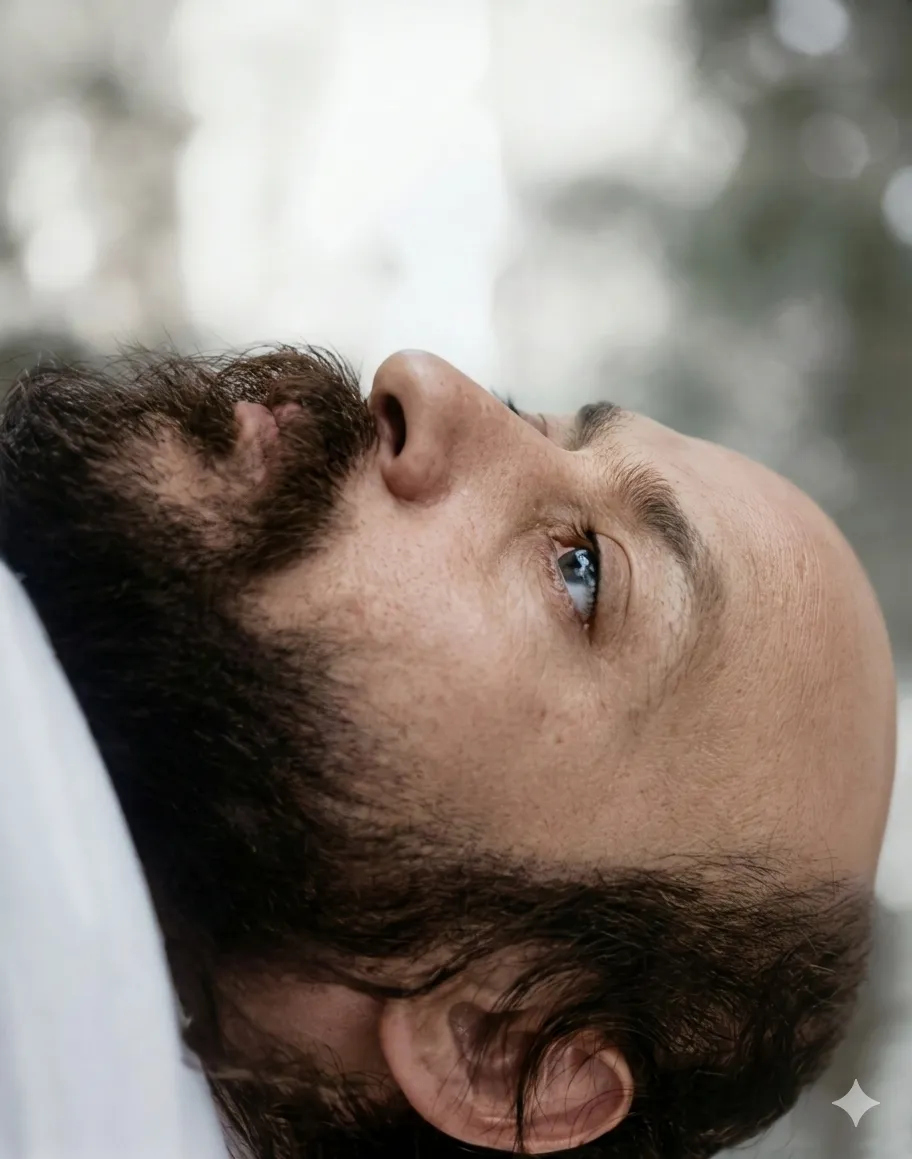
When your mind feels like it’s breaking, meditation can help turn that crisis into a fresh, healthier you instead of gluing the old you back together.
From the Discourses
Passages where Osho speaks to this question — each links to the complete discourse.
Beloved master, I have come across a statement by r.d. Laing that madness is not breakdown, it is breakthrough. Our meditation camps, whenever they are conducted, are seen as a breakdown, even by psychiatrists. Is it justified and ethical for patients of depression to be given dynamic meditation? Please advise. I am merely a surgeon.
Krishna Teertha Bharti, R.D. Laing is bringing a radical change into the world of therapy. He is not an ordinary psychiatrist, he is a revolutionary psychiatrist. He understands me and what I am doing here. He goes on sending his books to me. He reads what is happening here, what I am saying, what I am teaching. He has been meeting with sannyasins in London -- he is immensely interested. But he is a revolutionary and his insight is great, and I agree with him in toto. He is right: madness is not a breakdown, it is a breakthrough. But one thing I would like to say: all madnesses are not breakthroughs. But every madness can be transformed into a breakthrough -- and that should be the work of the therapist. Even if the madness is a breakdown, the function of the therapist is to help the breakdown to be…
SOMEONE HAS SAID THAT THE MEDITATION WE ARE DOING HERE SEEMS TO BE SHEER MADNESS. It is. And it is that way for a purpose. It is madness with a method; it is consciously chosen. Remember, you cannot go mad voluntarily. Madness takes possession of you. Only then can you go mad. If you go mad voluntarily, that's a totally different thing. You are basically in control, and one who can control even his madness will never go mad. You can go mad at any moment because you have accumulated everything that is necessary to become mad. Everyone is just on the verge of madness. I am reminded of one incident: One of the greatest psychologists of this century, William James, once went to visit a madhouse, a mental asylum.
Question: BELOVED OSHO, WHAT IS MADNESS? There are two possibilities: Madness literally means going out of the mind; hence the two possibilities. You can go out of the mind either below the mind or above the mind. Ordinarily, people go below the mind because it needs no effort, you don't have to do anything. Any shock can shatter the stability of your mind: somebody you loved died, your business has gone bankrupt -- the shock is so much that you cannot keep your normality. You fall below the mind, your behavior becomes irrational. But you go beyond the misery -- if you had remained in the normal mind the shock would have created immense misery. It is a natural way to avoid the shock. It simply pulls you down; now you don't know what has happened.
What's the difference between a madman and a devotee?
Now he is no longer fighting; there is no more conflict. He is surrendered, he is in a let-go. He trusts life, he has faith, and he knows that nothing wrong is going to happen. He's not afraid. Even in death he will go laughing and singing, ecstatic, because even in death God is waiting for him. Death also becomes a door. Of course to the logical mind this man looks mad and he is mad, in a sense, because whatsoever he is doing is beyond the comprehension of reason. But to me, he is not mad. Ask Jesus -- to him he is not mad. Ask Buddha -- to him he is not mad. In fact, he's the only sane person, because now he no longer thinks, he lives; now he is no longer divided, but total; now there is no duality in him -- he is a unity.…
Osho, what is the difference between surrender and blind imitation?
So be careful: the freedom you allow yourself, allow the other too. You have no right to judge another as blindly credulous or as a surrendered being. Drop that concern. You cannot judge anyway—how will you enter another’s heart? How will you know? Think only about yourself. See within whether, up to now, you have lived by blind belief or by surrender. Decide only there; leave worrying about others. Otherwise, all your judgments will be wrong. Jesus said: Judge not; do not set yourself up as a judge in relation to another. To the friend who has asked: if you are asking for yourself, good. Drop worrying about others. Look within and see: whatever I have been clinging to till now—have I ever staked my life to hold it? Have I meditated for it? Have I loved for it? Or am I just clutching what culture, society, civilization handed me?…
चौथा प्रश्न: ओशो, समर्पण और अंधानुकरण में क्या अंतर है?
इसलिए खयाल रखना, जो तुम अपने लिए मौका देते हो, वह दूसरे को भी देना। तुम्हें कोई हक नहीं है किसी दूसरे के बाबत निर्णय करने का कि वह अंधविश्वासी है, या समर्पित हुआ व्यक्तित्व है। तुम इसकी चिंता छोड़ो। तुम कर भी नहीं सकते निर्णय। तुम दूसरे के हृदय में उतरोगे कैसे? जानोगे कैसे? तुम तो अपनी ही सोच लो। इतना ही देखो अपने भीतर कि अब तक तुम अंधविश्वास से जी रहे हो, या समर्पण से जी रहे हो। बस, वहीं निर्णय कर लो, दूसरों की फिकिर छोड़ दो। अन्यथा तुम्हारे सभी निर्णय गलत होंगे। जीसस ने कहा है, निर्णय करो ही मत; दूसरे के संबंध में न्यायाधीश बनो ही मत। तो जिन मित्र ने पूछा है, अगर अपने लिए पूछते हों, तो ठीक। दूसरों की चिंता छोड़ दें। अपने भीतर ही देख लेना है कि अब तक जो मैं पकड़े हुए हूं, उसको पकड़ने के लिए मैंने कोई जीवन दांव पर लगाया है? कोई ध्यान किया है? कोई प्रेम किया है? या सिर्फ संस्कृति ने, समाज ने, सभ्यता ने जो दिया है, उसे पकड़े हुए हूं! दूसरों ने दिया है। …