
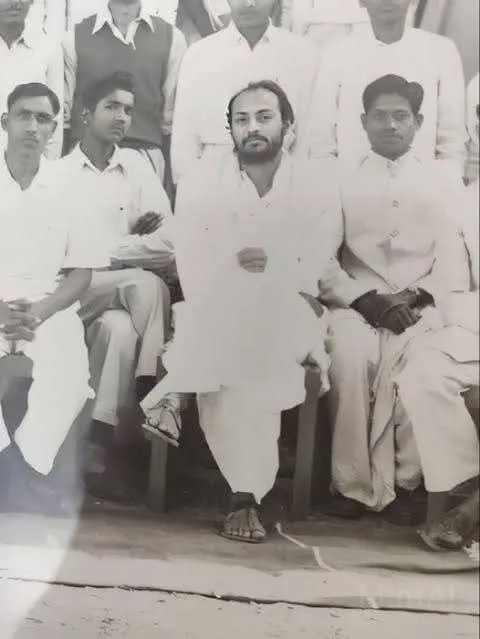
According to Osho, he reluctantly uses the word 'religion' as a strategic bridge: though he rejects organized religions’ ugly history, calling himself atheist/irreligious made communion with true seekers impossible. To share his experience and reach those already involved in religions yet genuinely searching for truth, he adopted the term, redefining it toward individual exploration rather than dogma.
He used the word ‘religion’ so real truth-seekers would listen, even though he rejects organized religion.
From the Discourses
Passages where Osho speaks to this question — each links to the complete discourse.
Osho, wouldn't it have been much easier for you to work without being associated with the word religion? What is the secret behind your choosing to do it this way?
The people who were interested were either Christians, or Hindus, Mohammedans, Jainas, Buddhists: they were already following some ideology, some religion. Then it was obvious to me that I would have to play the game of being religious; there was no other way. Only then could I find people who were authentic seekers. I hate the word religion, I have always hated it, but I had to talk about religion. But what I was talking about under the cover of religion was not the same as people understood by religion. Now, this was simply a strategy. I was using their words -- God, religion, liberation, moksha -- and I was giving them my meaning. In this way I could start finding people; and people started coming to me. It took a few years for me to change my image in people's eyes. But people only listen to words, they don't…
Osho, what is the definition of God?
Words are very small. If you say God is light, then what of darkness? The scriptures have said that God is light. Suppose we accept this as a definition—then what about darkness? Where will darkness go? Darkness is too; in fact it is far more than light. Light sometimes is and sometimes is not; darkness is always, eternal. Where will you place darkness? If you say God is light, darkness is left out. If you say God is darkness, then light is left out. If you say God is both darkness and light, a contradiction arises: they cannot be together. Try to have both darkness and light in the same room. If you bring in light, darkness disappears; if you preserve darkness, you cannot have light. Then how can both be together? That becomes an impossibility. So you cannot say “both” either. Then the fourth device is to say: it…
Osho, what is the definition of God?
Words are very small. If you say God is light, then what of darkness? The scriptures have said that God is light. Suppose we accept this as a definition—then what about darkness? Where will darkness go? Darkness is too; in fact it is far more than light. Light sometimes is and sometimes is not; darkness is always, eternal. Where will you place darkness? If you say God is light, darkness is left out. If you say God is darkness, then light is left out. If you say God is both darkness and light, a contradiction arises: they cannot be together. Try to have both darkness and light in the same room. If you bring in light, darkness disappears; if you preserve darkness, you cannot have light. Then how can both be together? That becomes an impossibility. So you cannot say “both” either. Then the fourth device is to say: it…