
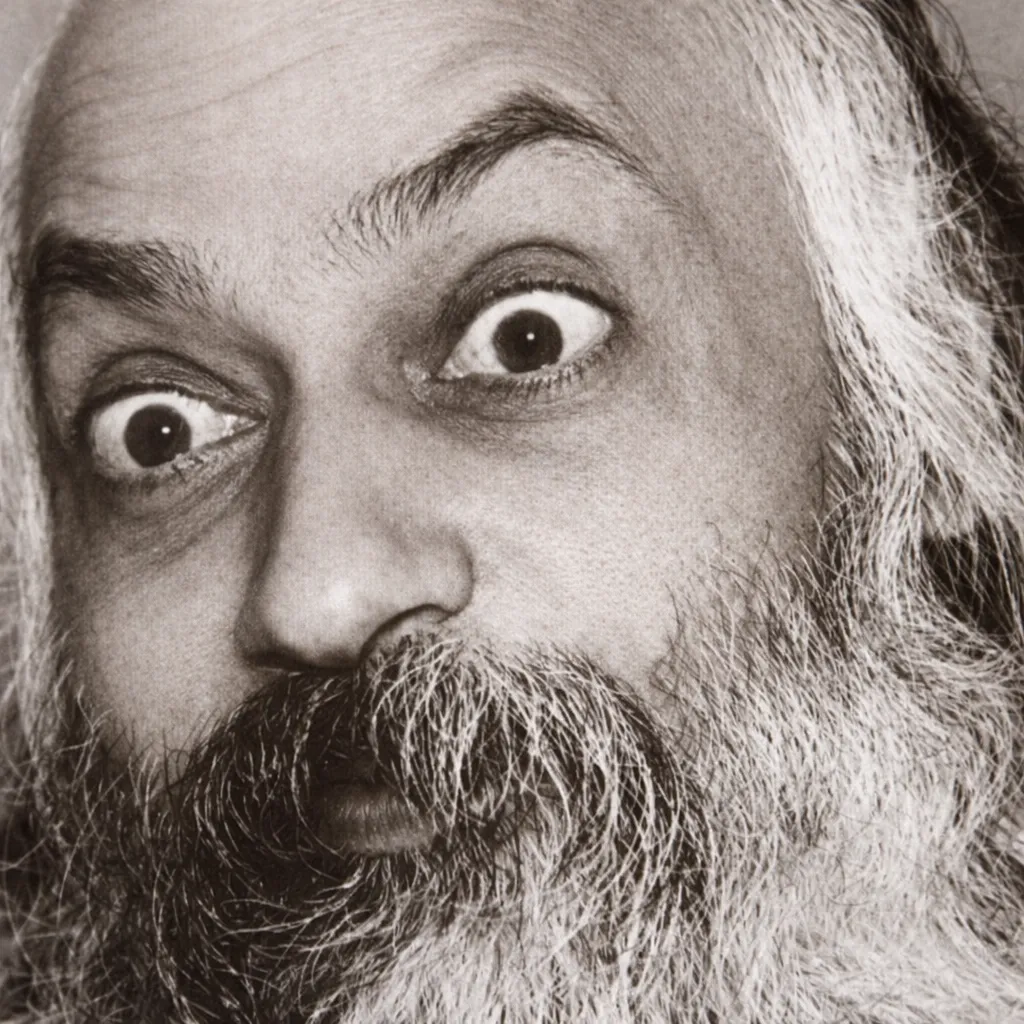
When you let yourself cry, laugh, or even yell without shame, the stuck stuff leaves and it’s easier to feel peaceful and aware.
From the Discourses
Passages where Osho speaks to this question — each links to the complete discourse.
It is asked: Why does the voice burst out of the mouth, why does crying break out, why does laughter come with such intensity—are we somehow outside our awareness?
We have mistreated our mind a great deal. Many times we wanted to cry loudly, but we held it back; it remained stuck. Many times we wanted to laugh loudly, we suppressed that too; it got stuck. We wanted to scream, but couldn’t; that too remained stuck. Civilization has made man incomplete on all sides. He neither laughs fully, nor cries fully, nor lives fully, nor loves fully, nor gets angry fully, nor enters friendship fully, nor can he even fight wholeheartedly. Everywhere there is incompleteness. All of it has remained stuck. The depth of meditation becomes available only when all that stuck residue breaks up and flows out. If you block it, going into meditation’s depth is impossible. So don’t stop it. If the inner state to scream arises and your whole life-energy is bursting to scream, let it scream. In a little while those voices will pass out…
Osho! While listening to you I start to weep. Now, even in the celebration of active meditation, tears burst forth. What is this? In the midst of meditation a feeling arises that this body is a hindrance now; how can it be shed—the feeling keeps growing more intense. Why? Please explain out of compassion.
Akshay Vivek! Human beings have been given such wrong conditioning that they have neither ever cried to their heart’s content nor laughed to their heart’s content. They have never really lived to their heart’s content. In no aspect, in no dimension, have they ever done anything totally; everything remains half-done! So many things hang inside, suspended like Trishanku. I say meditation is a celebration, but what is happening to you happens to others as well. While celebrating, suddenly tears arise from some unknown corner! They must have been suppressed somewhere—perhaps for lifetimes. Especially in men. Because from childhood we tell boys: Don’t cry! Girls cry. You are a man; crying is not for you. This is false. It is utterly false. Nature has made the tear glands in the eyes of men and women just the same. Men’s tear glands are not smaller than women’s. So one thing is certain—nature…
[A visitor says that before he came here he found it difficult to cry. Over the past few days he has been crying a lot.] Mm mm, something has broken inside and you should be happy about it. Some ice has broken, some coldness has broken, some dead layer has broken. Whenever it happens, one starts crying because one again becomes a child. The cry is the first thing that the child does. That is his first entry into the world. Everybody enters the world crying. So if you can really cry deeply, it can become a rebirth. That's why you are feeling so full of change. Your old self will dissolve into crying. So don't stop it -- allow it, and on the contrary, enjoy it. It has a tremendous beauty in it.
A friend has asked, Osho, will jumping around like monkeys make meditation possible?
Because you are a monkey, there is no getting rid of the monkey within you without some jumping around. It’s not that jumping is needed for meditation; it’s needed because of your monkey-ness. Whatever is hidden inside you—suppress it for lifetimes if you like—you won’t be free of it. It has to be shaken off, thrown out. Burying garbage brings no liberation; it must be swept out. There are two ways to quiet the monkey. One is to force him to sit still with the fear of a stick: don’t move, don’t sway, don’t dance, don’t jump. On the surface the monkey will control himself—but what about the monkey within? Outwardly he may restrain himself, but inside even more energy will build up. And if you suppress the monkey like this, he will go mad. Many people have gone mad in just this way. The madhouses are full of them.…
[Osho tells an initiate to close her eyes and to feel a sound arising from her heart. Let yourself be possessed by the sound. If it starts coming -- any sound -- allow it. If you start saying it loudly, go with it; go into it. Osho then explains the meaning of prem bhajan -- worship through sound. Bhajan is offering god your heart's song... ] And it is there -- you have just to cooperate with it and it will come. A thousand and one songs will burst out in you. Everybody carried the possibility more or less, but your predominant character is the possibility of going into god through sound; sound is your element. So don't be afraid. Join all the music groups here -- dance, singing -- and get in tune with them.