
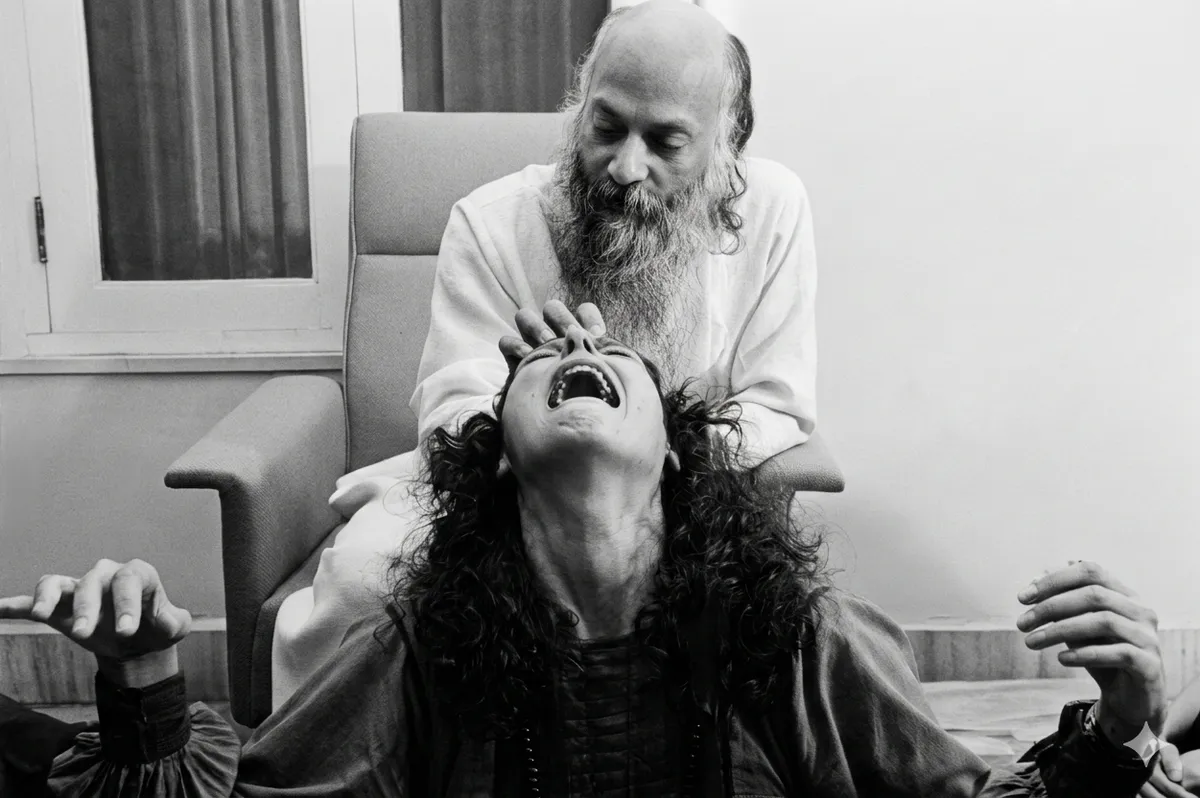
Your heart feels but can’t speak, so your mind speaks for it—and often gets the message wrong.
From the Discourses
Passages where Osho speaks to this question — each links to the complete discourse.
Beloved Osho, if the heart cannot ask questions, then is it my mind that bleeds like a heart when I ask you certain things?
The heart cannot ask any questions, but it can trigger the mind to ask questions for it. The heart itself has no language, but it has a way of its own to trigger the mind to ask its questions. Of course in this transfer from heart to mind, the question changes its form; it is no more exactly the same. Sometimes it can even be the opposite. That's why the heart may weep and cry. It feels helpless. It cannot ask. It has to use the mind, and the mind can ask only in a way which is of the mind and not of the heart. It is like you give poetry to a mathematician and tell him to translate poetry into mathematics. If the mathematician is intelligent he will refuse: "This is nonsense. It cannot be done. How can poetry be translated into mathematics?" But if he is some…
Osho, before you even a word does not pass my lips. See, I have come with so many things thought out in my heart. Do not come because I say so, do not come because I call you—but do not dishonor these tears. Because I am Osho’s bride! The one who has asked has asked from the heart.
There are two kinds of questions—those of the intellect and those of the heart. Questions of the intellect have no real value—worth a couple of pennies; they are like an itch. Just as one feels like scratching an itch, the intellect too wants to be scratched. But questions of the heart have great value, because they arise from feeling and are closer to the soul. Thought is very far from the soul; action is even farther. Action is farthest, thought less far, feeling nearer—and beyond feeling is being itself. So feeling is the closest.
आखिरी प्रश्न: ओशो, बात भी आपके आगे न जुबां से निकली लीजिए आई हूं सोच के क्या-क्या दिल में मेरे कहने से न आ, मेरे बुलाने से न आ लेकिन इन अश्कों की तो तौहीन न कर। क्योंकि मैं तो ओशो की दुलहनियां! जिसने पूछा है, भाव से पूछा है।
प्रश्न दो तरह के होते हैं--एक तो बुद्धि के और एक हृदय के। बुद्धि के प्रश्नों का तो कोई मूल्य नहीं है--दो कौड़ी के हैं; खुजलाहट जैसे हैं। जैसे खाज खुजलाने का मन होता है ऐसे ही बुद्धि को भी खुजलाने का मन होता है। लेकिन हृदय के प्रश्नों का बड़ा मूल्य है। क्योंकि वे भाव के हैं और आत्मा के ज्यादा करीब हैं। विचार आत्मा से बहुत दूर; कर्म और भी दूर। कर्म सर्वाधिक दूर, विचार उससे कम दूर, भाव उससे कम दूर--और फिर भाव के बाद तो स्वयं का होना है। तो भाव निकटतम है।
Osho, did the heart say anything? Nothing at all. Did the heart hear anything? Nothing at all. Do conversations happen like this? They happen exactly like this!
That is why people have become frightened of love. They talk of love; they do not love. Talking can be done from the skull. But to do—to love—you have to enter life’s trackless forest. There are dangers upon dangers. People hear about love, they understand, they sing songs, they read stories—but they do not love. Because to love means to efface yourself. Only when the ego is lost does the sprouting of love happen. And one who has not known love—the unfortunate one who has not known love—how will he know prayer? Prayer is the culmination of love. It is love’s final distillation, its ultimate essence. “Did the heart say anything? Nothing at all. Did the heart hear anything? Nothing at all. Do conversations happen like this? This is exactly how they happen!” Within, such waves keep arising. There the distance between yes and no is not. There yes is…
दूसरा प्रश्न: ओशो, कुछ दिल ने कहा? कुछ भी नहीं कुछ दिल ने सुना? कुछ भी नहीं ऐसे भी बातें होती हैं? ऐसे ही बातें होती हैं!
इसीलिए तो लोग प्रेम से भयभीत हो गए हैं। प्रेम की बात करते हैं, प्रेम करते नहीं। बात खोपड़ी से हो जाती है। करना हो, तो जीवन के बीहड़ जंगल में प्रवेश करना होता है। खतरे ही खतरे हैं। प्रेम के संबंध में लोग सुनते हैं, समझते हैं, गीत गाते हैं, कथाएं पढ़ते हैं, प्रेम करते नहीं। क्योंकि प्रेम करने का अर्थ, अपने को मिटाना। अहंकार खो जाए, तो ही प्रेम का अंकुरण होता है। और जिसने प्रेम ही न जाना--जिस अभागे ने प्रेम ही न जाना--वह प्रार्थना कैसे जानेगा। वह तो प्रेम की पराकाष्ठा है। वह तो प्रेम का आखिरी निचोड़ है, आखिरी सार है।
Osho, you often tell us to listen to the heart rather than the mind. But how is one to know which voice is the mind’s and which is the heart’s? Please explain with compassion.
Renuka! The matter is absolutely straightforward. There is not the slightest confusion. The mind always points you outward; the heart always points you inward. When something within says, “Go out—earn money, gain position, prestige, ambition,” know it is the mind speaking, because these are not the heart’s longings. When something says, “Sit silently, close your eyes, dive within yourself, take a plunge into your own being, listen to your life-breath, step into the inner sound that is rising,” then know the heart has spoken. The inner journey is the heart’s message; the outer journey is the mind’s. There is no reason for mistake here. When hatred arises, know the mind has spoken; when love arises, know the heart has spoken. When thoughts surround you, know the mind has seized you; when waves of feeling rise, know you are in the heart. When negation arises—an urge to say “no,” when doubt…
Osho, which is the voice of the mind and which is the voice of the heart? What is the criterion to know? Please explain.
All voices are of the mind; the heart has no voice. Where voices disappear, there is the heart. Silence is the heart’s voice. Emptiness is the heart’s tone. So there is no complication at all. You think one voice is of the heart and another of the mind; you are falling into a great mistake. All voices are of the mind. It is the mind. It is the mind that wants to grasp wealth, and the mind that wants to renounce wealth. The mind is very complex. On one side it says, “Grab it, plunder it, enjoy!” On the other it says, “What’s the point? It’s all insubstantial.” But both are the mind. On one side it says, “Run! Life is only for a few days—win some position.” From the other side it says, “What’s in positions? Look at those who have arrived.” The mind keeps talking to itself, keeps…
पांचवां प्रश्न: ओशो, मन की आवाज कौन-सी है और हृदय की आवाज कौन-सी है? जानने की कसौटी क्या है? कृपया समझाएं।
… तुम सोचते हो, कोई आवाज हृदय की और कोई मन की; तो तुम बड़ी गलती में पड़े जा रहे हो। सब आवाजें मन की हैं। यह मन ही है। धन को भी मन ही पकड़ना चाहता है और धन को मन ही त्यागना चाहता है। मन बड़ा जटिल है। एक तरफ कहता है, पकड़ लो, लूट लो मजे। दूसरी तरफ कहता है क्या रक्खा? सब असार है। पर दोनों मन हैं। एक तरफ कहता है दौड़ लो। चार दिन मिले जिंदगी के, कुछ पा लो पद। दूसरी तरफ से कहता है, क्या रखा है पदों में? जो पहुंच गए उनको तो देखो। …