
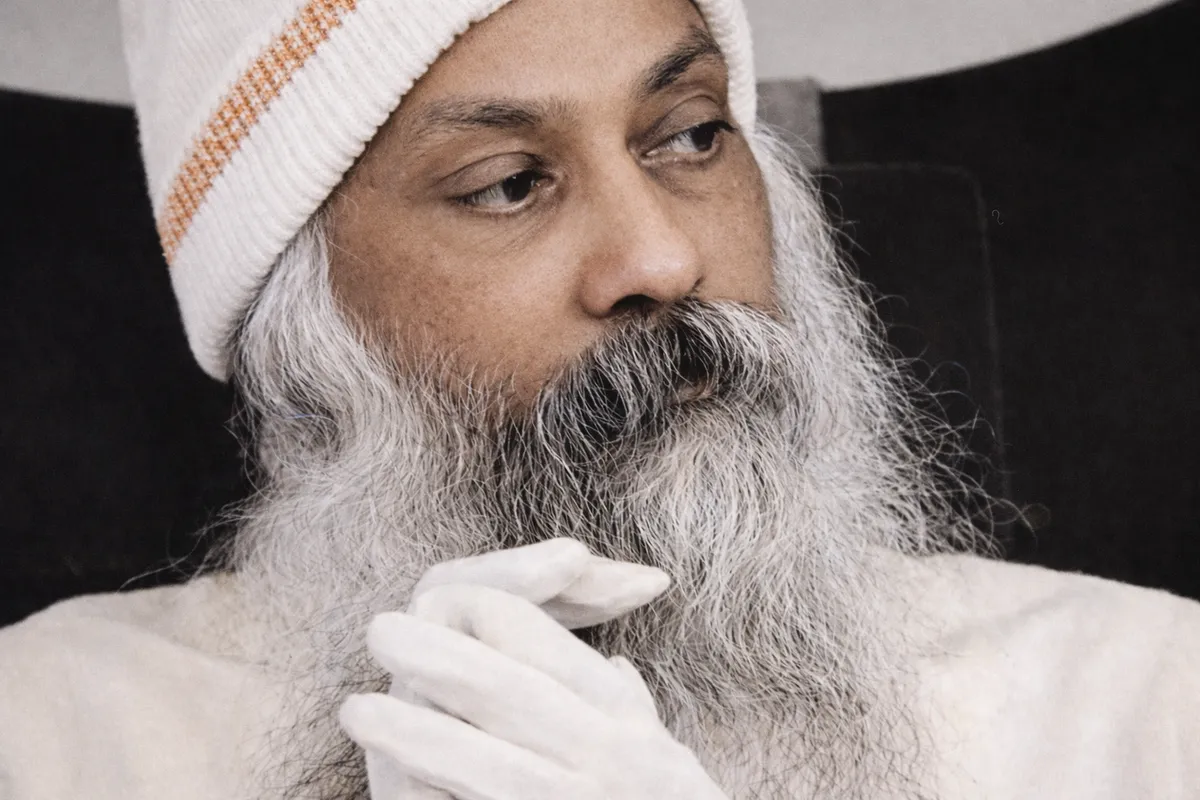
Devotion drops the ‘me’ in one brave jump, while awareness lets it go slowly—both reach the same truth.
From the Discourses
Passages where Osho speaks to this question — each links to the complete discourse.
Osho, yesterday Dariya Sahib’s aphorisms were paeans to awareness. By changing just one word—replacing “lover” with “meditator”—those aphorisms could quite easily be called the sutras of Jineshwar Mahavira. Is devotion really so combative? And is that the only difference between devotion and meditation?
On the path of religion, whichever method you choose, courage is indispensable. Without courage there is no religion. Whether it is devotion or meditation, there is no path for the weak and the timid. The timid cannot muster the courage for meditation, because meditation means the effort to become complete. Meditation means the endeavor to realize oneself. Meditation means an unprecedented resolve. Courage is needed; struggle is needed. On the path of love, just as much courage is needed. Let no one think, “Why should courage be needed on the path of love or devotion?” In fact, perhaps a little more courage is required, because devotion is surrender. Devotion is dissolution. Meditation says: Become yourself. Devotion says: Efface yourself. Efface yourself utterly. To disappear demands even greater courage. The meditator still keeps a little hope that “I will remain.” The devotee cannot even keep that much hope. The meditator too…
पहला प्रश्न: ओशो, दरिया साहिब के कल के सूत्र सूरता की प्रशस्ति के सूत्र थे। केवल एक शब्द-प्रेमी को ध्यानी से बदल कर वे सूत्र बहुत मजे में जिनेश्वर महावीर के सूत्र कहे जा सकते हैं। भक्ति भी क्या इतनी जुझारू होती है? और क्या भक्ति और ध्यान में इतना ही फर्क है?
धर्म के मार्ग पर चाहे कोई भी विधि चुनी जाए, साहस तो चाहिए ही होगा। साहस के बिना तो धर्म नहीं है। भक्ति हो या ध्यान, कमजोर और भीरु के लिए कोई मार्ग नहीं। भीरू न तो हिम्मत कर पाता है ध्यान की। क्योंकि ध्यान का अर्थ है पूर्ण होने का प्रयास। ध्यान का अर्थ है स्वयं को उपलब्ध करने की चेष्टा। ध्यान का अर्थ है अपूर्व संकल्प। साहस चाहिए, संघर्ष चाहिए। प्रेम के मार्ग पर भी उतना ही साहस चाहिए। कोई ऐसा न सोचे कि प्रेम या भक्ति के मार्ग पर साहस की क्या जरूरत? शायद थोड़ा और ज्यादा ही साहस चाहिए, क्योंकि भक्ति है समर्पण। भक्ति है विसर्जन। ध्यान कहता है: स्वयं हो जाओ। भक्ति कहती है: स्वयं को मिटा दो। स्वयं को बिलकुल मिटा दो। मिटने के लिए तो और भी साहस चाहिए। …
Osho, you have earlier said, “Live moment to moment, live in the present.” Now you are saying, “Return to the past.” What should we do?
So it is with the mind—there are ruts. The past means endless grooves. However much you understand, your intellect agrees, you make decisions, you resolve—at the moment of resolve you feel something is going to change. But not even an hour passes before your decision breaks. Then only self-condemnation is produced, nothing else. Your saints, your fakirs, your priests and pundits—most of the time they only succeed in producing self-condemnation in you, nothing else. Their words are logically correct. You cannot even say they are wrong; you have to admit they are right. In that admission you take a decision. But against what are you deciding? Inside are grooves carved since who knows when, deep tracks. Walking in them has become a habit. It is easy to walk in them. They will pull you again and again. The meaning of returning into the past is: these grooves must be erased.…
दूसरा प्रश्न: ओशो, आपने पहले कहा है, क्षण-क्षण जीयो, वर्तमान में जीओ। अब आप कह रहे हैं, अतीत में लौटो। हम क्या करें?
ठीक मन पर लीकें हैं। अतीत का अर्थ है, अनंत लीकें। तो आप कितनी ही बातें समझ लेते हैं; बुद्धि सहमत हो जाती है; निर्णय ले लेते हैं; संकल्प कर लेते हैं। और जब संकल्प करते हैं, तब सोचते हैं कि कुछ होने-जाने वाला है। घड़ी भी नहीं बीत पाती कि जो आपने निर्णय लिया था, वह टूट जाता है। और तब सिर्फ आत्मग्लानि पैदा होती है, और कुछ भी नहीं। आपके संत, आपके फकीर, आपके पंडित-पुरोहित, आप में सिर्फ आत्मग्लानि पैदा करवा पाते हैं और कुछ भी नहीं। क्योंकि उनकी बातें तो तर्कयुक्त हैं। आप भी कह नहीं सकते कि वे गलत कह रहे हैं। स्वीकार करना पड़ता है कि ठीक कह रहे हैं। उस स्वीकृति में आप निर्णय लेते हैं। लेकिन निर्णय किसके खिलाफ ले रहे हैं! न मालूम कितनी लंबी लकीरें भीतर हैं, गहरे खांचे हैं। उनमें चलने की आदत हो गई है। उनमें चलना सुगम है। …
Osho, to cross the ocean of becoming and dissolve into the Supreme Self, which should one rely on—insensate devotion, foolish devotion, or blind devotion?
So drop this worry—whether insensate devotion, foolish devotion, blind devotion, or deranged devotion. Drop it; devotion is enough. And in devotion all these labels will take care of themselves. Become a devotee once, and “blind” you will automatically be—meaning: the whole world will call you blind. You will not become blind; rather, you will gain eyes. You will begin to see what ordinary eyes cannot see. The invisible will become visible; the imperceptible will come within perception. That which no one has ever touched will be felt as touch. But the world will call you blind. The world will not be able to accept it—because the world is blind, and the blind call you blind. H. G. Wells has a story: somewhere in Mexico there is a valley where children go blind within three months of birth. The story is based on fact. The climate, the food—something there ruins the…
दूसरा प्रश्न: ओशो, भवसागर से पार उतरकर परम आत्मा में लीन होने के लिए जड़भक्ति, मूढ़भक्ति एवं अंधभक्ति में से किसका सहारा लिया जाये?
तो तुम यह फिक्र छोड़ो कि जड़भक्ति कि मूढ़भक्ति कि अंधभक्ति कि विक्षिप्त भक्ति, यह छोड़ो तुम फिक्र; भक्ति काफी है। और उस भक्ति में ये सब चीजें अपने आप आ जायेंगी। तुम एक दफा भक्त तो हो जाओ, अंधे अपने आप हो जाओगे। सारी दुनिया तुमको अंधा कहेगी, तुम नहीं अंधे हो जाओगे। तुम्हें तो आंखें मिल जायेंगी। तुम्हें तो वह दिखाई पड़ने लगेगा जो साधारण आंखों से दिखाई ही नहीं पड़ता। अदृश्य तुम्हारे लिए दृश्य बनने लगेगा। अगोचर गोचर हो जायेगा। जिसे कभी किसी ने नहीं छुआ उसका स्पर्श अनुभव होने लगेगा। लेकिन दुनिया तुम्हें अंधा कहेगी। दुनिया न मान सकेगी। क्योंकि दुनिया अंधी है। और दुनिया तुम्हें अंधा कहेगी।
Beloved Osho, the other day when you said something like, the more devoted one is the more one can absorb you, I got scared. I don't know what devotion is. In fact, I know it less now than I did five years ago. Osho, am I missing?
When love is so deep, the respect is so immense that everything is forgiven, the disciple can slap the master and yet the master simply laughs -- because he knows his devotion. He knows that this slap has not come from a logical mind, it has come from a loving heart. It is as if with his own hand he has slapped himself -- no distinctions are there anymore. Even to say that the devotee is close to the master is not right, because closeness is still a distance. The devotee is one with the master. His oneness is something not of this world. I will tell you another story -- because there is no other way to explain it. A master is staying in a temple. The night is cold. And in Japan the statues of Buddha are made of wood. There are many statues in the temple, so…
Osho, what attitude should a seeker of absorption and devotion (leenata and bhakti) have toward the Buddha’s insistence on awareness and the saying Appa Deepo Bhava—be a light unto yourself?
The bhakta does not worry about sin and merit. This does not mean he commits sins. The bhakta becomes so absorbed in the Divine that sins do not happen. One who has remembered God with such a heart—how will sins arise from him? Understand it this way: the bhakta does not drop sin; he takes hold of God, and sins drop by themselves. The seeker drops sin, and through the dropping of sin he finds God. The seeker must strive, grain by grain. The seeker is effort and resolve. The bhakta is surrender. The bhakta says, “Your compassion is so boundless—why should we be needlessly crushed, ‘this mistake happened, that mistake happened’? Will You really be concerned with such mistakes? Will You keep accounts of our faults? We are so small—we cannot even manage great faults!” What great wrong have you done—just think. And if God keeps accounts, then He…
पांचवां प्रश्न: ओशो, लीनता व भक्ति के साधक को बुद्ध के होश की और अप्प दीपो भव की बातों के प्रति क्या रुख रखना चाहिए?
भक्त पाप-माप की फिकर नहीं करता। इसका यह मतलब नहीं है कि पाप करता है। भक्त परमात्मा में ऐसा लीन हो जाता है कि पाप होते नहीं। जिसने परमात्मा को इतने हृदय से याद किया हो, उससे पाप कैसे होंगे? इसे तुम समझ लो। भक्त पाप छोड़ता नहीं। परमात्मा को पकड़ता है, पाप छूट जाते हैं। साधक पाप छोड़ता है। पाप के छूटने से परमात्मा को पाता है। साधक को चेष्टा करनी पड़ती है, रत्ती-रत्ती। साधक संघर्ष है, संकल्प है। भक्त समर्पण है। भक्त कहता है, तेरी करुणा इतनी अपार है कि हम क्यों नाहक दीन हुए जाएं कि यह भूल हो गई, वह भूल हो गई? …