
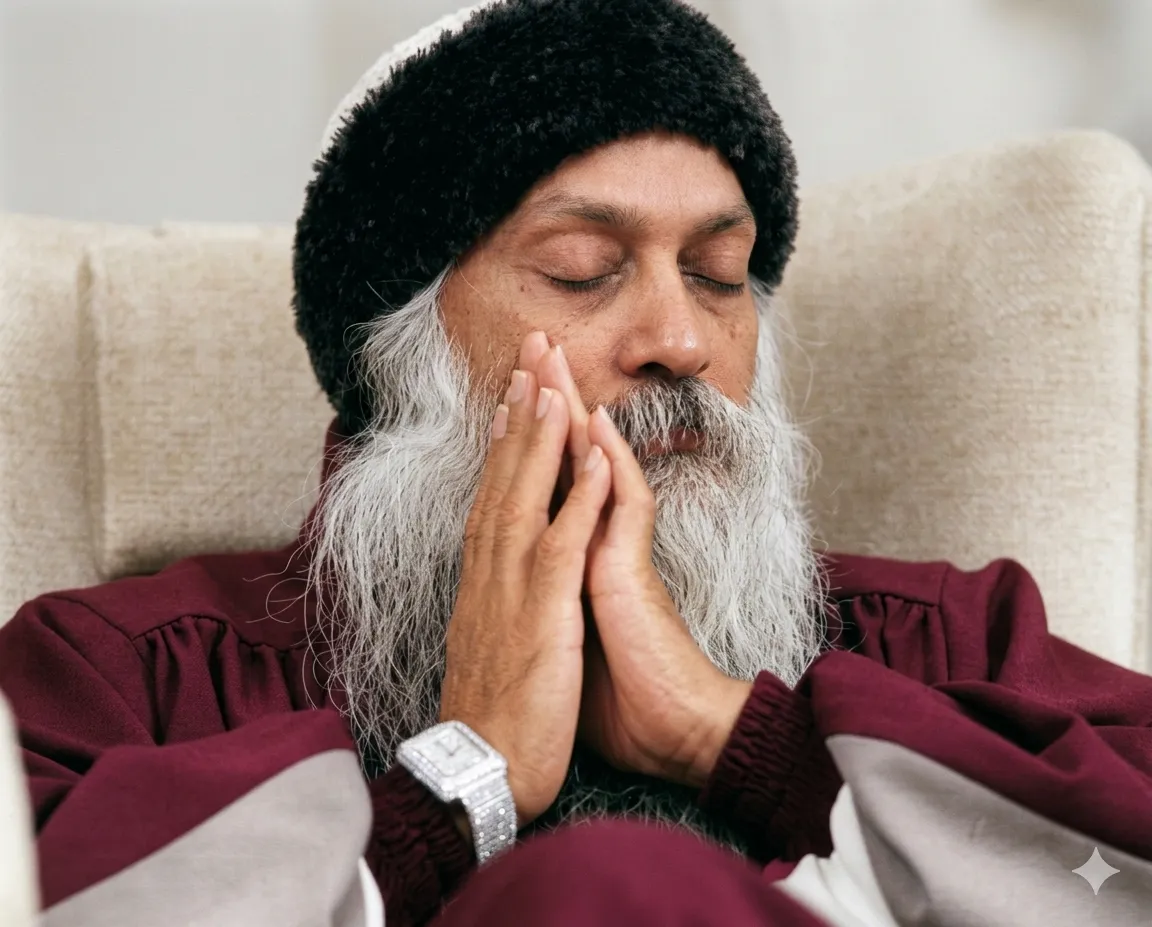
If you feel whole inside, you don’t need harsh practices; those only refine outer skills, not inner completeness.
From the Discourses
Passages where Osho speaks to this question — each links to the complete discourse.
Osho, you say that Mahavira had already become complete in a previous birth. But in this life he had to undertake austerities to find the means of expression. What kind of incompleteness is this within the complete? Doesn’t perfection itself include the acquisition of the means of expression?
No, the attainment of perfection does not include the means of expression. The perfection of expression is a perfection totally different from the perfection of realization. In fact, perfection is not one; there are innumerable perfections. This creates great difficulty for us. Perfection is not a single thing—there are infinite perfections. Mahavira even says “infinitely infinite.” If a person becomes perfect in one direction, it does not mean he has become perfect in all other directions. A person may paint and become perfect in painting; that does not mean he will be perfect in music, that he will be able to play the veena. The veena has its own perfection, its own direction. And if someone becomes perfect in playing the veena, it does not mean he will be perfect in dancing. Dancing has its own perfection. Perfection is multidimensional; it has many dimensions.
प्रश्न: ओशो, महावीर पूर्व-जन्म में ही पूर्ण हो गए, यह आपका कहना है। किंतु वर्तमान जीवन में अभिव्यक्ति के साधन खोजने के लिए उन्हें तपश्चर्या करनी पड़ी। पूर्ण में यह अपूर्णता कैसी? क्या पूर्णता में ही अभिव्यक्ति के साधनों की उपलब्धि शामिल नहीं है?
… इससे हमें बड़ी कठिनाई होती है। पूर्णता एक चीज नहीं है, अनंत पूर्णताएं हैं। पूर्णताएं भी अनंत हैं। अनंतानंत महावीर तो कहते हैं। एक दिशा में एक आदमी पूर्ण हो जाता है, इसका यह मतलब नहीं है कि वह और सब दिशाओं में पूर्ण हो गया। एक आदमी चित्र बनाता है और चित्र बनाने में पूर्ण हो गया। इसका यह मतलब नहीं है कि वह संगीत बजाने में पूर्ण हो जाएगा, कि वीणा बजा सकेगा। वीणा की अपनी पूर्णता है। वीणा की अपनी दिशा है। और कोई अगर वीणा बजाने में पूर्ण हो गया तो इसका यह मतलब नहीं है कि वह नाचने में पूर्ण हो जाएगा। …
Osho, there was a question about perfection. In the morning you said you regard emptiness as the fundamental hallmark of perfection. Then Buddha too was the ultimate void. So can he not be called complete? And along with that, is emptiness itself not multidimensional?
A few points. First, Buddha arrived at emptiness—as I was just saying, Buddha arrived at emptiness. That was his achievement; he attained it. He became empty. The emptiness that is attained becomes one-dimensional. It acquires a direction. It becomes dependent on the attainer. Understand it this way. In fact, whatever I negate within myself, whatever I cut off and set aside, will be finished, removed from within me. A certain kind of emptiness will be available. But that emptiness will come as the absence of something. There is another emptiness that we do not bring about; it is born in the very awareness of our being. We are emptiness—we do not become empty. Emptiness is our nature. That is how we are. The day emptiness is our nature—no discipline, no practice, no attainment—on that day emptiness becomes multidimensional. We have not emptied out anything to become empty; we have simply…
ओशो, पूर्णता के संबंध में एक प्रश्र्न था। आपने सुबह कहा कि पूर्णता का मूल लक्षण आप शून्यता मानते हैं। तो बुद्ध भी तो परम शून्य थे। तो क्या उन्हें पूर्ण नहीं कहा जा सकता? और उसी के साथ क्या शून्यता स्वयं में बहुआयामी नहीं है?
एक तो, बुद्ध शून्यता पर पहुंचे, जैसा मैं अभी कह रहा था, बुद्ध शून्यता पर पहुंचे। वह उनका अचीवमेंट है। वह उन्होंने पाया। वे शून्य हुए। जो शून्यता पाई जाएगी, वह वन डायमेंशनल हो जाती है। उसकी एक दिशा हो जाती है। वह पाने वाले पर निर्भर हो जाती है। इसको ऐसा समझें। असल में मैं अपने भीतर से जिस चीज को शून्य कर दूंगा, जिस चीज को काट डालूंगा, अलग कर दूंगा, वह समाप्त हो जाएगी, मेरे भीतर से हट जाएगी। एक तरह का शून्य उपलब्ध होगा। लेकिन वह शून्यता किसी चीज का अभाव होकर आएगी। एक और शून्यता है, जो हम लाते नहीं, जो हमारे होने के बोध में ही जन्मती है। हम हैं ही शून्य, हम होते नहीं शून्य। शून्यता हमारा स्वभाव है। ऐसे हम हैं ही। …
Question: ON CALM QUIETUDE: THE HIGHEST PERFECTION IS LIKE IMPERFECTION, AND ITS USE IS NEVER IMPAIRED. THE GREATEST ABUNDANCE SEEMS MEAGRE, AND ITS USE WILL NEVER FAIL. WHAT IS MOST STRAIGHT APPEARS DEVIOUS, THE GREATEST SKILL APPEARS LIKE CLUMSINESS, THE GREATEST ELOQUENCE APPEARS LIKE STUTTERING. MOVEMENT OVERCOMES COLD, (BUT) KEEPING STILL OVERCOMES HEAT WHO IS CALM AND QUIET BECOMES THE GUIDE FOR THE UNIVERSE. ... In fact, you can see only those people who are just near you, just like you -- you can understand them. They may be better in certain ways, but they are just like you. You may be more angry, they are less angry -- the difference is of quantity not of quality. You are a sinner, they are a saint. A saint only means one who has also condemned as sin all that you condemn and has dropped it into his own unconscious.
Osho, is it not true that as long as a person is incomplete, imperfect, the rhythms and melodies of life will not stop pursuing him? The question is: how is he to become complete?
If Buddha says it, it must be right. But don’t accept it as your belief. If Buddha says it, it must be right—there is no reason he would be wrong. He has passed through your state, gone beyond you; he too played with these games and toys. So whatever he says is likely to be right. But that is Buddha’s statement; do not make it your creed. You try to understand this play. In the very understanding of the play you will slowly see for yourself that Buddha is right. His rightness will become your experience. Suddenly you will find: the toys are slipping away, lying in a corner. One day every child’s toys lie in a corner; then they go to the trash heap; then they are not even remembered. Years pass, and you don’t even remember what happened to those toys without which even sleep was impossible. Surely…
आखिरी प्रश्न: ओशो, क्या यह सच नहीं है कि जब तक मनुष्य अधूरा, अपूर्ण है, तब तक जीवन के छंद-राग उसका पीछा नहीं छोड़ेंगे? प्रश्न यह है कि वह पूर्ण कैसे हो?
बुद्ध कहते हैं तो ठीक ही कहते होंगे। ठीक मान मत लेना। बुद्ध कहते हैं, ठीक ही कहते होंगे; गलत कहने का कोई कारण नहीं है। क्योंकि बुद्ध तुम्हारी अवस्था से गुजर चुके हैं, तुमसे आगे जा चुके हैं, इन खेल-खिलौनों में खुद भी रहे थे। इसलिए जो कहते हैं, ठीक ही कहते होंगे। लेकिन यह बुद्ध का वक्तव्य है, तुम्हारा मत बना लेना। तुम तो समझने की कोशिश करना इस खेल को। इस खेल की समझ में ही तुम्हें धीरे-धीरे दिखाई पड़ेगा कि बुद्ध ठीक कहते हैं। यह ठीक होना तुम्हारा अनुभव भी बन जाएगा। अचानक तुम पाओगे: खेल-खिलौने छूटने लगे, पड़े रह गए एक कोने में। एक दिन हर बच्चे के खेल-खिलौने कोने में पड़े रह जाते हैं। इसके पहले सो भी नहीं सकता था उनके बिना, रात भी छाती से लगाकर सोता था; फिर एक दिन कोने में पड़े रह जाते हैं, फिर कचरे-घर में चले जाते हैं, फिर याद भी नहीं आती। वर्षों बीत जाते हैं, याद भी नहीं आती कि क्या हुआ उन खिलौनों का, जिनके बिना सोना भी मुश्किल था।
This is the situation. We are in the middle — incomplete, half-done. The half-done mind longs to be filled, to be whole. Desire for perfection arises out of incompleteness. Remember, in completeness no desire for completeness can arise; it would be meaningless. Desire is always the opposite of what we are. We are poor, so we desire to be rich. We are ill, so we desire health. We are incomplete, so we desire wholeness. Desire is completely logical; in an incomplete mind the idea of becoming complete will naturally arise. Desire is logical — but its fulfillment will never happen. For the incomplete can never become complete — by any effort, by any practice, by any discipline or sadhana. Because all sadhanas, all practices, all efforts will arise from the incomplete. The stamp of incompleteness will remain upon them.
… मध्य में हम हैं--अपूर्ण, अधूरे। अधूरे मन की आकांक्षा है कि भर जाऊं, पूरा हो जाऊं। अपूर्णता से वासना पैदा होती है पूर्ण होने की। यह ध्यान रहे, पूर्णता में पूर्ण होने की वासना नहीं पैदा हो सकती, क्योंकि कोई अर्थ न होगा। अपूर्णता में पूर्ण होने की वासना पैदा होती है। वासना हमेशा विपरीत होती है। जो हम होते हैं, वासना उससे विपरीत होती है। हम गरीब होते हैं, तो अमीर होने की वासना होती है। हम रुग्ण होते हैं, तो स्वस्थ होने की वासना होती है। हम अधूरे हैं, तो पूरे होने की वासना होती है। वासना बिलकुल ही तर्कयुक्त है, क्योंकि अधूरे मन में पूरे होने का खयाल पैदा होगा। बिलकुल तर्कयुक्त है वासना, लेकिन परिणति कभी नहीं होने वाली है। क्योंकि अपूर्ण कभी पूर्ण नहीं हो सकता--किसी प्रयास से, किसी चेष्टा से, कैसे ही अभ्यास से, किसी साधना से। …