
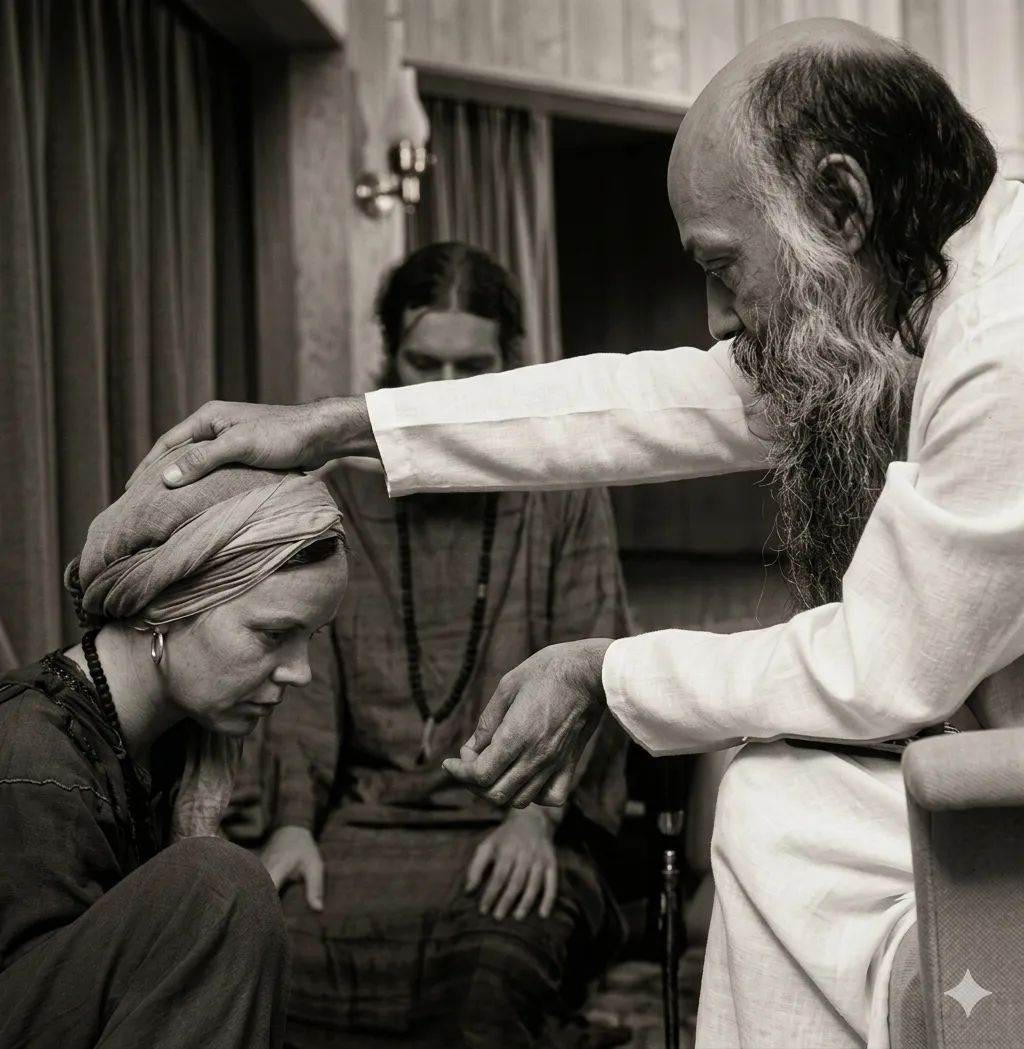
It’s like eyes trying to see themselves—you can’t; you are the seeing itself, and when thoughts and things fall quiet, what’s left is simply you, the silent awareness.
From the Discourses
Passages where Osho speaks to this question — each links to the complete discourse.
Osho, the one who sees all and dwells within everyone—why does he still not come to be known? How does that Seer and Witness of all come to be known? Please explain.
Only such a light, subtle sensing will be there—a faint intimation. But you will not be able to see it. You cannot hold it in your hand. It is inexorably the Seer and cannot become the seen. So what to do? Then what to do? Only one thing can be done: bid farewell to the seen. Whatever is seen, let it be dismissed. Let no scene remain upon the screen. Have you ever noticed? You go to the cinema to watch a film. It begins—the play of light and shadow starts upon a blank white screen—and you become absorbed. When you are completely absorbed in watching, when the story grips your very life, you lose awareness of yourself—you forget that you are the watcher. The seen becomes everything; the Seer becomes null. The Seer is forgotten; the scenes become all in all. If the scene is tragic, tears stream from…
पांचवां प्रश्न: ओशो, जो सब का देखनेवाला है और सबके अंदर में ही रहता है, फिर भी जानने में क्यों नहीं आता? वह सर्व का द्रष्टा और साक्षी जो है, वह कैसे जानने में आता है? कृपया समझायें।
उसकी तो सिर्फ ऐसी हल्की-हल्की प्रतीति होगी, आभास होगा। लेकिन तुम उसे देख न पाओगे। तुम उसे हाथ में पकड़ न पाओगे। वह अपरिहार्य-रूपेण द्रष्टा है और दृश्य नहीं हो सकता है। इसलिये क्या करें? फिर क्या करें? एक ही काम किया जा सकता है: दृश्य को विदा करो। जो-जो दृश्य है उसे विदा करते जाओ। दृश्य-पटल पर कोई दृश्य न रह जाये। कभी तुमने खयाल किया कि तुम सिनेमा गये फिल्म देखने, फिल्म चली, सफेद कोरे पर्दे पर धूप-छाया का खेल शुरू हुआ, तुम तल्लीन हो गये। जब तुम फिल्म को देखने में पूरे तल्लीन हो जाते हो, जब कथा तुम्हारे प्राणों को पकड़ लेती है, तब तुम्हें अपनी याद नहीं रह जाती...तब तुम भूल जाते हो कि मैं देखनेवाला हूं। तब दृश्य ही सब कुछ हो जाते हैं, द्रष्टा शून्य हो जाता है। द्रष्टा की विस्मृति हो जाती है, दृश्य सब कुछ हो जाते हैं। अगर दृष्य कोई दुखांत होता है, तुम्हारी आंखों से झर-झर आंसू टपकते हैं। अगर दृश्य कोई उत्तेजक होता है तो तुम कुर्सी को छोड़कर रीढ़ सीधी करके बैठ जाते हो। …
Different from all that constitutes the experiencer, bhokta, the experienced -- bhogya, and the experiencing -- bhoga, in the of waking, dream, and deep sleep. I am the witness, the ever-auspicious, the pure consciousness.
I AM THE NON-DUAL BRAHMAN. IN ME ALONE IS EVERYTHING BORN; IN ME ALONE THAT EVERYTHING EXISTS. AND IN ME ALONE, THAT EVERYTHING DISSOLVES. ... Find this witness; try to find this witness in everything you are doing, knowing, feeling. You are walking on the street; be a witness to it . See it, feel it, that the body is walking and the mind knows that the body is walking. Then be a witness of both; then be a witness that the mind knows that the body is walking, and the body is walking. The mind is the subject; the walking the object. ... Who are you? ... You can witness both body and mind -- WITNESS. Then suddenly you become aware that "the body is walking in me, the mind is knowing in me. And this me is not an "I" -- this is just a pure consciousness, a mirror in which
This seer or witness cannot be attained or realized by any action, by any kind of worship or adoration, by any mantra or technique, because he is the witness of all these things as well. He is different and apart from all these things. Whatever can be seen or whatever can be done is different from and other than the witness. He cannot be realized by action but by no-action; not by effort but by stillness. He will be realized only when there is no activity, when there is no object to be seen, when only the seer or witness remains, when only seeing remains. When we are seeing but nothing is being seen, when we know but nothing is being known, then in this consciousness-devoid-of-content the knower of all is known.
Knowing oneself as sakshi pratyagatma, the inner witnessing soul, of one's intellect and all its dispositions, and acquiring the disposition that "that am I," giving up the claim of 'mine' over all things.
GIVING UP FOLLOWING LOK, THE SOCIETY, HE GIVES UP FOLLOWING THE BODY ALSO. GIVING UP FOLLOWING THE SCRIPTURES, HE GIVES UP THE ILLUSION OF THE SOUL ALSO. BEING ROOTED IN HIS OWN SOUL, AND THROUGH TECHNIQUES, THROUGH LISTENING AND THROUGH SELF-EXPERIENCING, THE YOGIN COMES TO KNOW HIMSELF AS THE SOUL OF ALL AND HIS MIND IS ANNIHILATED. WITHOUT GIVING OPPORTUNITY TO SLEEP, TO SOCIETY'S TALKS, TO SOUND, TOUCH, FORM, TASTE, AND SMELL -- THE OBJECTS OF THE SENSES -- AND TO FORGETFULNESS OF THE SOUL, CONTEMPLATE THE SOUL WITHIN YOU. ... <q>GIVING UP FOLLOWING LOK, THE SOCIETY, HE GIVES UP FOLLOWING THE BODY ALSO.</q> Not only does he stop following others, as the realization of the witness deepens he drops the slavery of the body too. Then he does not do things because the body is saying so, now he does what he wants to and the body follows him like
Remember, you cannot even call your breath “mine”; thought is subtler still. And yet even that cannot be called “mine.” As one goes deeper in this analysis, where does one arrive? Where do the Upanishads arrive? Where do Buddha and Mahavira arrive? In this process of negation—this too I am not, that too I am not—when at last there is nothing left to cut away; when there is nothing left about which one can even think “is it mine or not?”—that which still remains; when all is cut away and there is no more cutting to do; when all connections are broken and no link remains to break—that which still remains, the Upanishads call the Witness. This vast world all around is not mine. Draw close: this body is not mine either. Go within: this mind is not mine. Then who is there whom I can call “I”?
ध्यान रहे, श्वास तक मेरी नहीं कही जा सकती, विचार और भी सूक्ष्म बात है। लेकिन उसे भी मेरा नहीं कहा जा सकता। इस विश्लेषण में गहरे उतरते-उतरते कहां पहुंचता है आदमी? उपनिषद कहां पहुंचे हैं? बुद्ध कहां पहुंचते हैं? महावीर कहां पहुंचते हैं? इस विश्लेषण को करते-करते, इस काट को करते-करते--यह भी मैं नहीं हूं, यह भी मैं नहीं हूं, यह भी मैं नहीं हूं--आखिर में जब काटने को कुछ भी नहीं बचता; जब कुछ भी नहीं बचता जिसको मैं सोच भी सकूं कि मेरा है या नहीं, तब भी जो बच रहता है; जब सब काट डाला जाता है और काटने का कोई उपाय नहीं रह जाता; जब सब तोड़ दिए जाते हैं संबंध और कोई संबंध बचता नहीं जिसे तोड़ा जाए, तब भी जो बच रहता है, उसी को उपनिषद साक्षी कहते हैं; वही है विटनेस। यह बड़ा संसार है चारों तरफ, यह मेरा नहीं है। और सिकुड़ कर पास आता हूं, यह शरीर भी मेरा नहीं है। और भीतर उतरता हूं, यह मन भी मेरा नहीं है। फिर कौन है जिसको मैं कहूं मैं? या कि मेरे भीतर कोई भी नहीं है जिसको मैं कहूं मैं! मैं हूं या नहीं हूं? …