
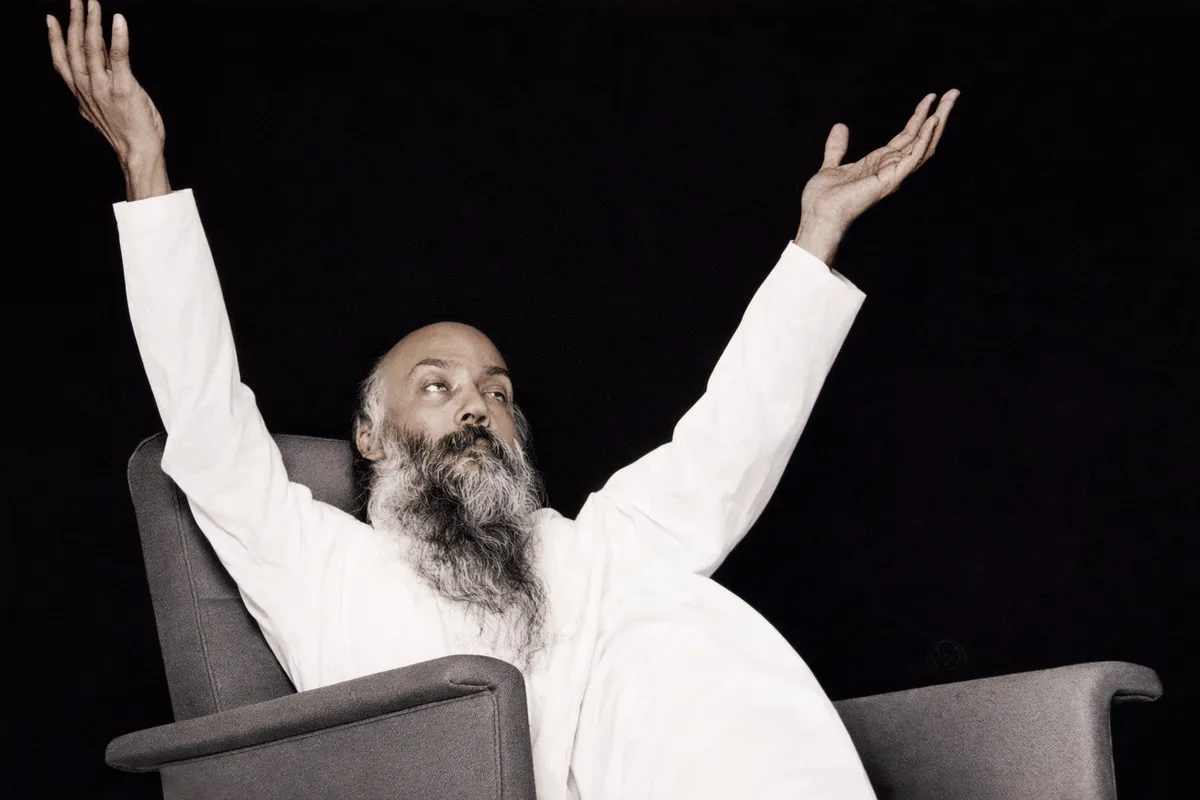
Real celebration feels joy like a gentle buzz, but you stay awake inside while you enjoy it.
From the Discourses
Passages where Osho speaks to this question — each links to the complete discourse.
Osho, “Sway on, sway on, O reveler; the clouds are dark, the air is ecstatic; lift the goblet and kiss, kiss, kiss—sway on, sway on, O reveler!” Is this your message?
Across a thousand cycles, flagons and goblets came again and again. Taverns opened time after time; wine was placed before you, cups were filled, the ewers overturned—and yet some misunderstanding persists: Those who were thirsty from the very beginning remained thirsty, Though the flagon and the goblet came a thousand times. Either you did not understand, or you misunderstood. Either you did not hear, or you heard something else. The likelihood of error is complete. This is the message I am giving: It is we who could not renew our longing—otherwise A thousand times the beloved’s messages arrived. I am sending the message, daily I send it—but you yourselves do not extend your cup. You do not muster the courage. Who knows in what weaknesses the mind is entangled, in what old beliefs it is stuck. When the dust clears from the eyes, the roof of Sinai appears; Drink the…
ओशो, झूम बराबर झूम शराबी झूम बराबर झूम काली घटा है, मस्त फिजा है जाम उठाकर चूम, चूम, चूम, झूम बराबर झूम शराबी क्या यही है आपका संदेश?
हमीं न कर सके तजदीदे-आरजू वरना हजार बार किसी के पयाम भी आए मैं तो संदेश दे रहा हूं, रोज दे रहा हूं, लेकिन तुम्हीं अपने प्याले को आगे नहीं बढ़ा पाते हो। तुम्हीं हिम्मत नहीं जुटा पाते हो। न मालूम कैसी-कैसी कमजोरियों में मन को उलझाए हुए हो। न मालूम कैसी-कैसी पुरानी धारणाओं में मन को अटकाए हुए हो। छटे गुबार नजर बामे-तूर आ जाए
Osho, you have titled this series of talks “Sahaj Yoga.” Do “sahaj” and “yoga” not seem mutually opposed?
Anand Maitreya! They don’t just seem opposed, they are opposed. But no ultimate truth of life can manifest without contradiction. Life is made of opposites—darkness and light, day and night, woman and man, negative electricity and positive electricity, birth and death. The very structure of life is woven of opposites. Hence the opposites are not only opposed; they are complementary to each other. If you have labored hard all day, you will be able to sleep deeply. Labor and rest are opposites, yet only the one who has worked can rest deeply—and the one who has not worked cannot. So the opposites are not only opposed, they complete each other. And only the one who has rested deeply at night can rise in the morning and engage in work again. One who has not rested through the night will not be able to work in the morning. Look closely at…
पहला प्रश्न: ओशो, आपने इस प्रवचनमाला का शीर्षक दिया है--सहज-योग। क्या सहज और योग परस्पर-विरोधी नहीं लगते?
आनंद मैत्रेय! विरोधी लगते ही नहीं, विरोधी हैं। लेकिन जीवन का कोई भी परम सत्य बिना विरोधाभास के प्रगट हो ही नहीं सकता। जीवन बना है विरोधों से--अंधेरा और प्रकाश, दिन और रात, स्त्री और पुरुष, ऋण विद्युत-धन विद्युत, जन्म-मृत्यु। जीवन की संरचना विरोधों से है। इसलिए विरोधी विरोधी ही नहीं हैं, एक-दूसरे के परिपूरक भी हैं। दिन भर श्रम किया खूब तो गहरी नींद सो सकोगे। श्रम और विश्राम विरोधी हैं, पर जिसने श्रम किया है वही गहरा विश्राम कर सकेगा। और जिसने श्रम नहीं किया वह गहरा विश्राम भी न कर सकेगा। तो विरोधी विरोधी ही नहीं हैं, एक-दूसरे के परिपूरक भी हैं। और जिसने रात्रि गहरा विश्राम किया है वही सुबह जागकर फिर श्रम में संलग्न हो सकेगा। जो रात-भर विश्राम नहीं कर सका वह सुबह श्रम में भी न लग सकेगा।
Osho, not only is there no tradition around revelers like Baba Malukdas; even companions are scarcely ever heard of! Why has there always been fear and objection to drinking with drunkards? Please speak.
When someone like Maluk appears in the world, he says: drop fear; come, let us talk of love. Drop fear—come, let us be intoxicated. Drop fear—come, let us hum the Beloved’s songs—in ecstasy, in love. Beyond God-love there is nothing else. Come, place your hand in God’s hand, embrace the Beloved; dance with God, play the rās. When a saint says something like this, you get frightened. Because the nets of fear woven over lifetimes—your chains, your habits, your notions, your conditioning—suddenly halt and stiffen: this is dangerous talk. You know that if you drop fear, your whole morality goes; your whole conduct goes. It is all false—that is why you fear its going. Maluk brings a new kind of conduct into the world—a conduct that rests on love; a conduct that rests on joy. You cannot do wrong because you are so blissful—how could you do wrong! You cannot…
पहला प्रश्न: ओशो, मलूक बाबा जैसे पियक्कड़ों की परंपरा तो क्या, संगी-साथी भी कम सुनाई पड़ते हैं! पियक्कड़ों के साथ पीने में सदा से क्या भय और एतराज रहा है? कृपा करके कहें।
जब मलूक जैसे व्यक्ति जगत में आते हैं, तो वे कहते हैं: छोड़ो भय; आओ, प्रेम की बात करें। छोड़ो भय--आओ, मस्त हों। छोड़ो भय--आओ, प्रभु के गीत गुनगुनाएं--आनंद में, प्रेम में। प्रभु-प्रेम के अतिरिक्त और कुछ भी नहीं है। आओ, प्रभु के हाथ में हाथ डालें, प्रभु को आलिंगन में लें; नाचें प्रभु के साथ, रास रचाएं। जब ऐसी कोई बात कभी कोई संत कहता है, तुम घबड़ा जाते हो। क्योंकि तुम्हारे भय के जन्मों-जन्मों के जाल, तुम्हारी जंजीरें, तुम्हारी आदतें, तुम्हारी धारणाएं, तुम्हारे संस्कार--सब एकदम घबड़ा कर, ठिठक कर खड़े हो जाते हैं कि यह तो बात खतरनाक है। तुम जानते हो कि तुमने भय छोड़ा, तो तुम्हारी सब नीति गई; तुम्हारा सब आचरण गया। सब झूठा है, इसलिए जाने का डर है। मलूक एक नये तरह का आचरण जगत में लाते हैं--एक आचरण जो प्रेम पर निर्भर है; एक आचरण जो आनंद पर निर्भर है। तुम बुरा इसलिए नहीं कर सकते, क्योंकि तुम इतने आनंदित हो कि बुरा कैसे कर सकोगे! तुम बुरा नहीं कर सकते, क्योंकि तुम इतने प्रेम से प्लावित हो कि बुरा कैसे कर सकोगे!
Osho, Buddha speaks of awareness, of waking up, and you, in between, also speak of merriment, intoxication, wine, and absorption. While speaking on Buddha, why is it necessary to discuss the opposite? Please explain.
When there is no vision, things look opposite. When there is vision, not even a trace of opposition remains. What Buddha calls awareness, the Sufis have called “unconsciousness”—a drunken swoon. What Buddha calls apramāda—heedfulness—devotees have called “wine.” There is not an inch of distance between Buddha’s sayings and Omar Khayyam. What Buddha called a temple, Omar Khayyam called a tavern. Buddha has not been understood, nor has Omar Khayyam. People thought Omar Khayyam was praising wine. Kuch apni karāmat dikha, ai Saki, Jo khol de āṅkh, vo pila, ai Saki. Hoshiyār ko dīwānā banāyā bhī to kyā? Dīwāne ko hoshiyār banā, ai Saki. You are already unconscious. You have already drunk the wine of the world. Someone has drunk the wine of wealth and is unconscious in wealth. Someone has drunk the wine of position and is unconscious in status. Someone has drunk the wine of fame. Those who couldn’t…
पहला प्रश्न: ओशो, बुद्ध बातें करते हैं होश की, जागने की, और आप बीच-बीच में मस्ती, नशा, शराब और लीनता की बातें भी उठाया करते हैं। बुद्ध पर बोलते समय विपरीत की चर्चा क्यों आवश्यक है? कृपया समझाएं।
दृष्टि न हो, तो विपरीत दिखाई पड़ता है। दृष्टि हो, तो जरा भी विपरीत दिखाई न पड़ेगा। जिसको बुद्ध होश कहते हैं, उसी को सूफियों ने बेहोशी कहा। जिसको बुद्ध अप्रमाद कहते हैं, उसी को भक्तों ने शराब कहा। बुद्ध के वचनों में और उमर खैयाम में इंचभर का फासला नहीं। बुद्ध ने जिसे मंदिर कहा है, उसी को उमर खैयाम ने मधुशाला कहा। बुद्ध तो समझे ही नहीं गए, उमर खैयाम भी समझा नहीं गया। उमर खैयाम को लोगों ने समझा कि शराब की प्रशंसा कर रहा है। कुछ अपनी करामात दिखा ऐ साकी जो खोल दे आंख वो पिला ऐ साकी होशियार को दीवाना बनाया भी तो क्या दीवाने को होशियार बना ऐ साकी तुम बेहोश हो। शराब तो तुमने पी ही रखी है। संसार की शराब। किसी ने धन की शराब पी रखी है और धन में बेहोश है। किसी ने पद की शराब पी रखी है और पद में बेहोश है। किसी ने यश की शराब पी रखी है। जिनको न पद, यश, धन की शराब मिली, वे सस्ती शराब मयखानों में पी रहे हैं। वे हारे हुए शराबी हैं।
Osho, we saw the cupbearer weeping in the tavern—ever since we saw the revelers turning Rajneeshee.
So I give sannyas to alcoholics too. And I tell them, take it without anxiety! You are better than the pundits—at least you are humble. At least you ask, with your head bowed, “Am I also eligible? Do I too have the worth? Will you accept me?” That pundit with the tilak does not bow his head; he stands stiff with pride. He is worthy already! He is a “fit vessel”! He was born in a Brahmin home! He was born knowing Brahman! The drunkard is a hundred thousand times better than that. At least his head is bowed; he is humble. He makes no claim to worthiness. There is no ego, no self-importance. I accept him. And it has been my experience that as soon as a person begins to descend into meditation, alcohol begins to drop away. I am not an advocate of prohibition. I want people to…
तीसरा प्रश्न: ओशो, मयकदे में साकी को हमने रोते देखा। रिन्दों को जबसे रजनीशी होते देखा।।
तो मैं शराबियों को भी संन्यास देता हूं। और उनसे कहता हूं, बेफिकरी से लो! पंडितों से तो तुम बेहतर हो। कम से कम विनम्र तो हो। कम से कम यह तो पूछते हो सिर झुका कर कि क्या मैं भी पात्र हूं? क्या मेरी भी योग्यता है? क्या आप मुझे भी अंगीकार करेंगे? वह जो तिलकधारी पंडित है, वह सिर नहीं झुकाता, वह अकड़ कर खड़ा है। वह तो पात्र है ही! वह तो सुपात्र है! वह तो ब्राह्मण घर में पैदा हुआ है! वह तो जन्म से ही ब्रह्म को जानता पैदा हुआ है! शराबी उससे लाख दर्जा बेहतर है। कम से कम सिर तो झुकाए है, विनम्र तो है। अपनी पात्रता का दावा तो नहीं कर रहा है। अहंकार तो नहीं है, अस्मिता तो नहीं है। मैं उसे अंगीकार करता हूं। और यह मेरे अनुभव में आया है कि जैसे ही व्यक्ति ध्यान में उतरना शुरू करता है, शराब छूटनी शुरू हो जाती है।