
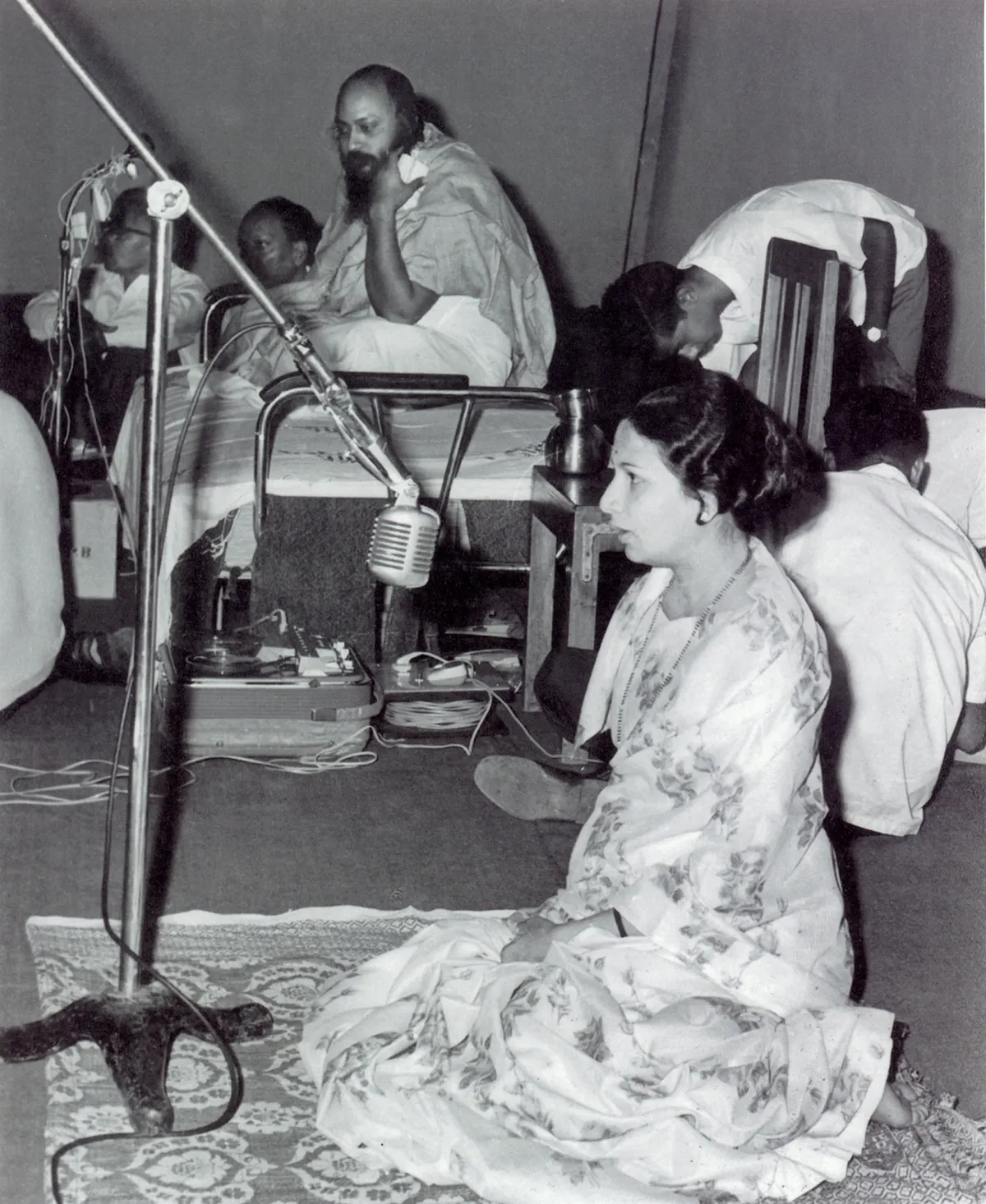
According to Osho, the supreme truth is never to be born; since we already are, the next truth is to “die”—to let the ego be utterly effaced. Life and suffering are one as long as the ‘I’ persists. Real vidya is the path that dissolves the self; avidya are counterfeit methods of forgetfulness promising escape without transformation.
The highest truth would be never being born, but since we are, the wise way is to let the ego fade instead of using easy, fake escapes.
From the Discourses
Passages where Osho speaks to this question — each links to the complete discourse.
Osho, you said the truth of life is death. Then what is the truth of death?
Buddha called this the state of suchness—accepting what is, as it is. No yes-and-no. No imposing your desire that it be like this or like that. As it is, let it be as it is. Kabir said: Just as it is—accept it as such. Because as long as you reject, you are fighting life—you are contending with God. You are trying to impose your will. You are not a seeker of truth; your ego is still thick. In accepting what is, as it is, the ego dissolves; there remains no place for it. The struggle is gone, the ego is gone. Ramana lay down. He consented: If death comes, it comes. What is in my hands? “Jih vidhi rākhe Rām, tih vidhi rahiye”—In whatever way Ram keeps you, remain that way. If death has come, it has come. This is how Ram wishes to take me—so be it. He was…
First you have to become a little happier, you have to learn to be a little more love-full, joyful; your life has to have the color of a little happiness. Then go into the search for truth and you will be moving in the right direction, because then no lie can ever deceive you. You are no more interested in lies, because you are no more interested in consolation and comfort. Now you are ready to know the naked truth as it is. And to be a seeker of truth is the greatest thing in life. Satbodh One cannot find truth by mere thinking. Thinking is not the process that leads you to the truth. It leads only to inference. And inferences are just inferences, they are hypothetical. They may be true, they may not be true. They are just conjectures, not real conclusions.
An earthquake is more destructive than creative, hence the so-called revolutions have destroyed much; they have not been really creative. Love is far more creative. In revolution destruction becomes the goal, in love creation is the goal. If something needs to be destroyed it is destroyed only in order to create. In revolution destruction becomes the goal and if something is needed for destruction then it is created, otherwise there is no question of creating. A revolution is a little bit upside-down, evolution is a natural course. A sannyasin has to change very silently without making any noise, without making any fuss -- and that happens through love. The very soul of sannyas is love. Love as deeply as possible, let your love be as multi-dimensional as possible. Love as many things as you can; love music, love poetry, love dancing, love people, trees, birds.
Question: Third question: Osho, is life true or false? Krishnatirtha! Life in itself is neither true nor false. In itself life is only an opportunity, a bare opportunity; it can become truth, it can become untruth. The greatest concern of Buddhas is that whatever they say can be misunderstood, because the listener stands somewhere else. Buddhas live on peaks, on Gaurishankar—snow‑clad, where the sun rains gold! And you live in dark valleys, in cellars. From their golden summits whatever they speak, by the time it travels to your dark alleys its meaning has changed. They say one thing; you hear another. Therefore Buddhas must speak with great care. Each word must be weighed. They know well that life is true! But their life is true. How many are like them? And those who are like them have no need to be told; they already know.
Osho, in the Chandogya Upanishad there is a sutra: na pashyato mṛtyuṁ pashyati na rogaṁ noto duḥkhatām, sarvaṁ ha paśyaḥ paśyati sarvam āpnoti sarvaśa iti. That is, the knower does not see death, nor disease, nor sorrow; he sees all as the Self and attains everything. You are a witness—does a buddha truly see even death, disease, and sorrow as the very Self? Kindly give us direction on this sutra.
Buddha uses nirvana in exactly this sense. When the flickering lamp of ego is extinguished, the whole sky is yours. The moons and stars are yours. When you are not, everything is yours. Understand this paradox well—here lies the secret of religion, the distilled essence of the mystics and seers. The sutra of the Chandogya is profound—very profound. Let the ego dissolve; you are no more; then all is yours. When you are not, nothing is “other.” It is the “I” that creates the “you,” the division. When the line of “I” disappears, the courtyard becomes the sky. Demolish the walls you have drawn around your yard—your courtyard is the open heavens. Na pashyato mṛtyum... To the knower death is not seen—he does not know death, he does not die—because whatever could die he let die in advance. Ego could die—and what is unreal alone can die. What is, is…