
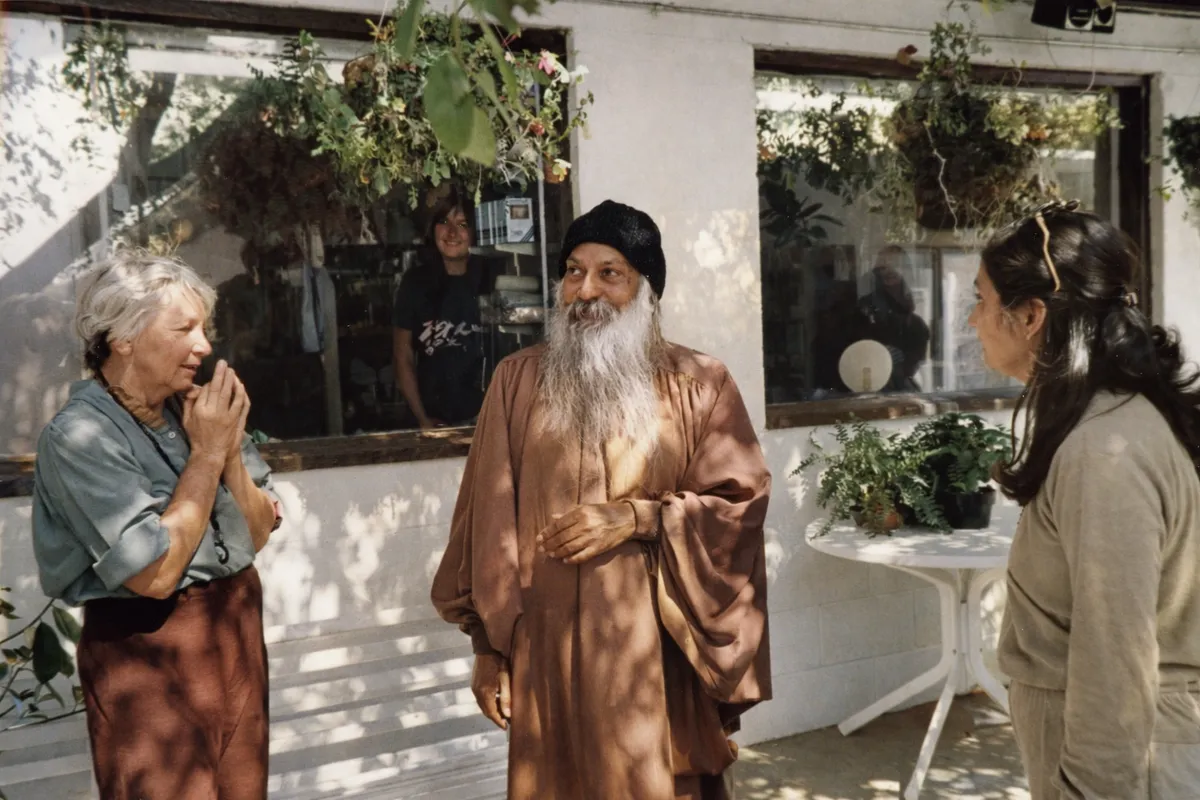
According to Osho, to encourage meditation you must first help people recognize their hidden frustration and meaninglessness—stop the anesthesia of distractions—so the need becomes urgent. Then offer the simplest doorway: witnessing. Teach them to observe every act, thought, and feeling without identification, all day long, discovering the silent watcher beyond subject and object; meditation then happens naturally.
First show them they’re secretly unhappy, then teach them to just watch everything—like clouds in the sky—without saying “this is me.”
From the Discourses
Passages where Osho speaks to this question — each links to the complete discourse.
Question: BELOVED OSHO, WHAT IS THE BEST WAY TO ENCOURAGE PEOPLE IN MEDITATION? The first thing: for a patient to go to the doctor, you must make him realize that he is sick; otherwise there is no need to go to the doctor. So the people you want to encourage into meditation: first you have to make them aware that they are frustrated, perhaps for so long that they have forgotten that they are sad. They cannot remember when they laughed from their very hearts. They have become robots -- they do things because they have to be done but there is no joy in doing them. They are living an accidental life. Their birth is accidental, their marriage is accidental, their children are accidental, their job is accidental. Their life has no sense of intrinsic growth and direction. That's why they cannot feel like rejoicing.
Osho, what is the first experience of samadhi like?
You will know only when it happens. It cannot be said; at most a few hints can be given. It is as if, in the dark, a lamp is suddenly lit. Or as if a dying patient, right at the edge of death, suddenly finds a medicine that works; life’s wave, life’s thrill spreads again—so it is. As if a corpse becomes alive—such is the first experience of samadhi. It is the taste of nectar. The experience of the ultimate music. But it will be only when it happens; and only then will you understand. You will not understand by my saying it. It is as with love. How can anyone explain it? To someone who has never loved, never known love, no matter how many explanations you offer—he will hear it all and still ask, “I haven’t understood; please explain a little more.” It is like explaining light to…
How to introduce meditation to the daily life of so-called ordinary people?
The question is good because it says "so-called ordinary people." In fact, there are only so-called extraordinary people; ordinary people are just real people, not so-called. Extraordinary people are so-called; they are phony, unreal. There is no problem in introducing meditation into people's lives -- I will not call them ordinary because I don't see anybody who is extraordinary. The whole distinction is created by egoists. Everybody is a unique individual; either everybody is ordinary or everybody is extraordinary, but there is no distinction between the two. I will just use the word `people'. Gautam Buddha was just like you before he became enlightened. I was just like you before I entered into my innermost core. There is no speciality in it. Only one thing is missing: you have never endeavored, you have never tried -- you have been looking only outside. Your education teaches you to look outside, your…
In 1969 followers of the Maharishi Mahesh Yogi invited Osho to talk to them. This was the first occasion on which Osho addressed a western audience, and the first time he talked publicly at length in English. The discourse has been published in OTI January 1 & 16, 1991; and February 1, 1991. Osho: Really, there can be no method as far as meditation is concerned. Meditation is not a method. Through technique, through method, you cannot go beyond mind. When you leave all methods, all techniques, you transcend mind. So meditation itself is not a method. Truth cannot be achieved through method. Method is our own invention. We, who are ignorant, have achieved knowledge through methods constructed, created, projected, in our ignorance. Through method you can achieve a sort of self-hypnosis, a sort of auto-hypnosis. Any method, whatsoever it's name, can only give you an illusory kind of peace.
Osho, can the ultimate state not be attained through continuous witnessing and without meditation? And when only witnessing remains, how does one become free of that too?
Begin with action—and go to non-action. Begin with meditation—and go to samadhi. Start in shallow waters, then slowly go deeper… then into the bottomless depths. Do not hurry. Gently, step by step… But you seem to be in a hurry. The question is quite extraordinary: “Can the ultimate state be attained through continuous witnessing and without meditation?” And then: “And when only witnessing remains, how to be free of that too?” You are in a great rush! Witnessing has not happened yet. Meditation has not happened yet. Meditation hasn’t even begun; theoretically you have adopted the notion: it would be good if witnessing were accomplished—without meditation. If it had happened, you would not be asking. It has not happened. Yet you go further: “If witnessing is accomplished—without meditation—then how to be free of that?” Not such haste. If you leap like this, you will break your hands and feet. The…