
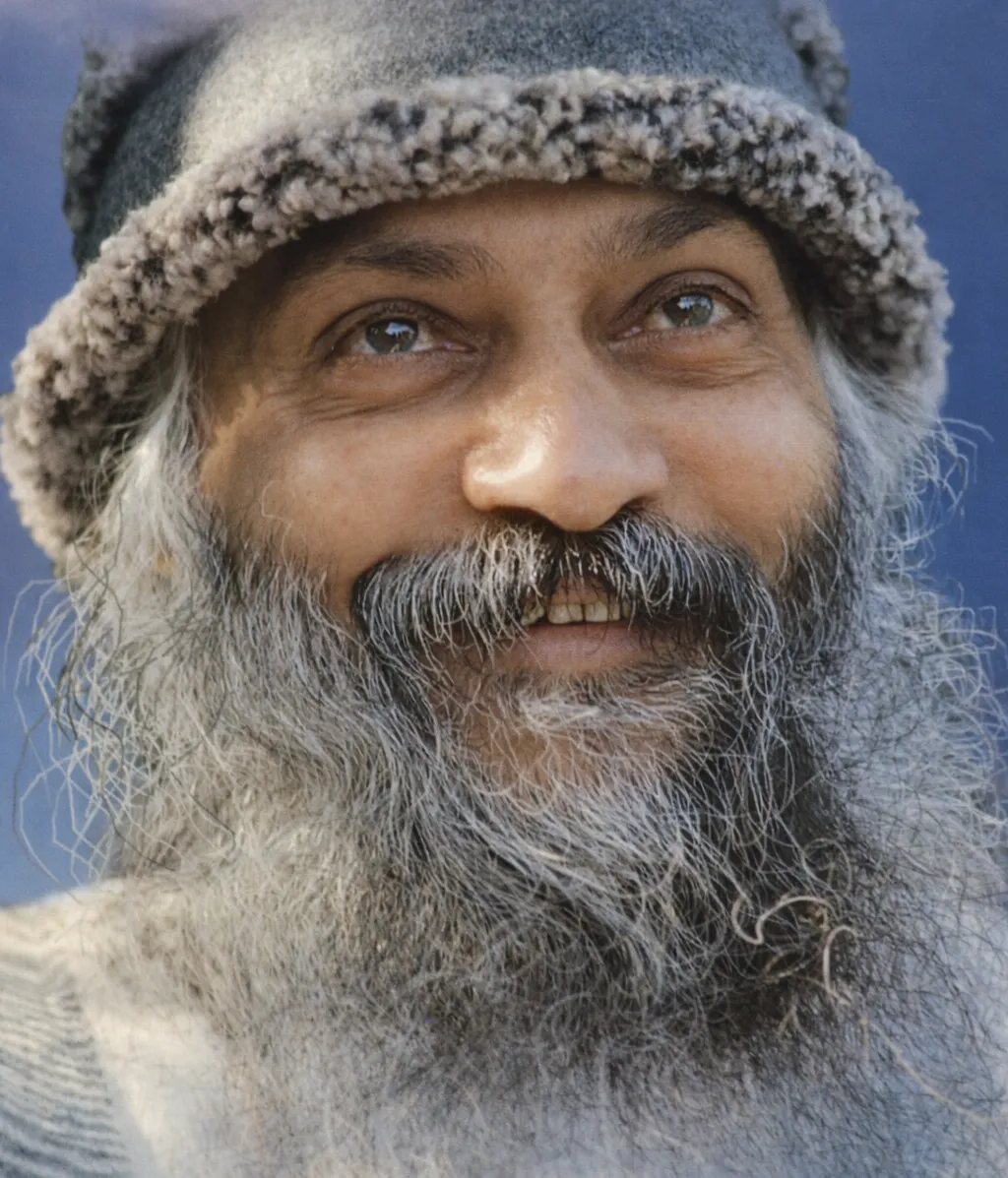
Breaking is easy but empty; making something beautiful is harder, and it grows you and makes you truly happy.
From the Discourses
Passages where Osho speaks to this question — each links to the complete discourse.
Osho, you said that creativity is of the divine nature and that destruction and annihilation are demonic. But in existence both processes go on together. And it isn’t only in war that destruction happens; so-called acts of God are no less destructive.
The divine quality is creative; this does not mean that the one who creates does not also efface. To make, one has to unmake. If you want to carve a statue, you have to cut away the stone. If you want a tree to be born, the seed has to disappear. If you want to find God, you have to let your self be erased. Creativity does not happen without some dissolving. Something goes so that something can come. Dissolution is the very experiment of becoming. Then what is the difference? Because the divine quality also erases, and the demonic quality also erases. What distinguishes them? The difference is in the goal. The divine quality always erases in order to create. The demonic quality erases in order to erase. Even when the demonic seems to build, it builds only to destroy. The difference is this: if the demonic quality appears…
तीसरा प्रश्न: ओशो, आपने कहा कि सृजनात्मकता दैवी स्वभाव है और विध्वंस व विनाश आसुरी हैं। लेकिन अस्तित्व में तो दोनों प्रक्रियाएं साथ-साथ चलती हैं। और सिर्फ युद्ध में ही विध्वंस होता हो, ऐसा नहीं है। दैवी विपदाएं कम विध्वंस नहीं करती हैं।
दैवी संपदा सृजनात्मक है, इसका यह अर्थ नहीं कि जो सृजन करता है वह मिटाता नहीं। बनाना हो, तो मिटाना पड़ता है। अगर मूर्ति बनानी हो, तो पत्थर को मिटाना पड़ता है। अगर वृक्ष निर्मित करना हो, तो बीज को मिटाना पड़ता है। अगर परमात्मा को खोजना हो, तो अपने को मिटाना पड़ता है। सृजनात्मकता भी बिना मिटाए तो नहीं होती। कुछ मिटता है, तो कुछ बनता है। मिटना बनने का ही प्रयोग है।
Another friend has asked; he has asked that... Osho, what difference do you see between socialism and communism?
I see the same difference as between the first stage of tuberculosis and the third—no other difference. Socialism is a somewhat pale, diluted communism; it is the first stage of the disease. And in the first stage the disease is not clearly visible, so it is easier to be taken in by it. That is why, all over the world, communism has started using the word “socialism.” The word “communism” has become notorious. And because of what communism has done to the world in the last fifty years, its respect has withered. In these fifty years, communism’s prestige has been dragged into the dust. So now communism has begun to use the word “socialism.” Now it talks of socialism and may even try to say it is different from communism. But there is no fundamental difference between socialism and communism—only a difference of words. Yet by changing the word we…
एक दूसरे मित्र ने पूछा है, उन्होंने पूछा है कि ओशो, आप समाजवाद और साम्यवाद--सोशलिज्म और कम्युनिज्म--में क्या फर्क करते हैं?
वही फर्क करता हूं मैं जो टी.बी. की पहली स्टेज में और तीसरी स्टेज में होता है, और कोई फर्क नहीं करता हूं। समाजवाद थोड़ा सा फीका साम्यवाद है, वह पहली स्टेज है बीमारी की। और पहली स्टेज पर बीमारी साफ दिखाई नहीं पड़ती इसलिए पकड़ने में आसानी होती है। इसलिए सारी दुनिया में कम्युनिज्म ने सोशलिज्म शब्द का उपयोग करना शुरू कर दिया है। कम्युनिज्म शब्द बदनाम हो गया है। और कम्युनिज्म ने पिछले पचास सालों में दुनिया में जो किया है, उसके कारण उसका आदर क्षीण हुआ है। पचास वर्षों में कम्युनिज्म की प्रतिष्ठा मिट्टी में मिल गई है। इसलिए अब कम्युनिज्म सोशलिज्म शब्द का उपयोग करना शुरू किया है। अब वह समाजवाद की बात करता है और यह भी कोशिश कर सकता है कि हम समाजवाद से भिन्न हैं। …
It is a strange phenomenon that the uncreative people are the people who are lacking in energy, the destructive people are the people who are lacking in energy. They are impotent people. Because they cannot create they start destroying. Destruction is easy -- anybody can do it. How much energy is needed to destroy a painting? A painter may have worked on it for months, but to destroy it... just a child can destroy it. How much energy is needed to destroy a flower? The gardener may have worked for years... Destruction needs no energy; hence my observation is that Adolf Hitler and Mussolini and Josef Stalin are not really powerful people, they are people who are lacking in energy, they are impotent people. Because they cannot create they have to destroy, that seems to be the only way to prove themselves.
A friend has asked: Why are you destructive, why are you a demolisher? Why aren’t you constructive?
Perhaps that friend does not even know that destruction and construction are not two different things; they are two sides of the same coin. We think in a language where building is one thing and demolition another, and we imagine that whoever destroys is the enemy of the builder. The truth is: no creation ever happens without destruction. Where there is destruction, there is creation. When something dies, something is born. When something is erased, something is made. And if you become afraid of erasing, afraid of letting things die, afraid of breaking, understand that your capacity to create has ended—you will never be able to create. Why do I talk about destruction? Because destruction comes first and creation after. Creation cannot come first. What is, has to be broken. Once it breaks, then I will speak of creation. If you become my companions in destruction and things are broken…
एक मित्र ने पूछा है कि आप डिस्ट्रक्टिव, आप विध्वंसक क्यों हैं? आप कंस्ट्रक्टिव क्यों नहीं हैं?
… कुछ मरता है तो कुछ जन्मता है। कुछ मिटता है तो कुछ बनता है। और अगर मिटाने से डर गए, मारने से डर गए, तोड़ने से डर गए, तो समझ लेना कि बनाने की क्षमता खत्म हो गई, अब बना कभी सकोगे नहीं। क्यों मैं विध्वंस की बात करता हूं? क्योंकि विध्वंस पहले है और सृजन पीछे है। सृजन पहले हो नहीं सकता। विध्वंस पहले होगा। जो है, उसे तोड़ना पड़ेगा। वह टूट जाए तो सृजन की बात करूं। आप मेरे विध्वंस में सहयोगी हों और जल्दी चीजें टूट जाएं, तो मैं सृजन की बात भी करूं। सृजन की बात मेरे खयाल में है। उसी को खयाल में रख कर विध्वंस की बात कर रहा हूं। …
Beloved Osho, how can I come out of self-destruction? Are all unenlightened people self-destructive?
Yes. Unfortunately, all unenlightened people are self-destructive. They are self-destructive because they don't know why they are here, where they are going, what the meaning and purpose of their life is. Without knowing anything about themselves, whatever they do is going to be harmful. It is going to be harmful to you, and through you, to others. You cannot do anything but harm because your eyes are closed, you don't have any inner sensitivity, you don't have any creative joy. And above all, for centuries you have worshipped self-destructive people. There was a man in Alexandria who remained seated on a thirty-foot-long pole. It was a pole from an old, ancient temple which was now in ruins but the pole had remained intact. This man, Peter of Alexandria, remained for twelve years sitting on the pole. That was his only contribution to the world, but he was recognized by the…