
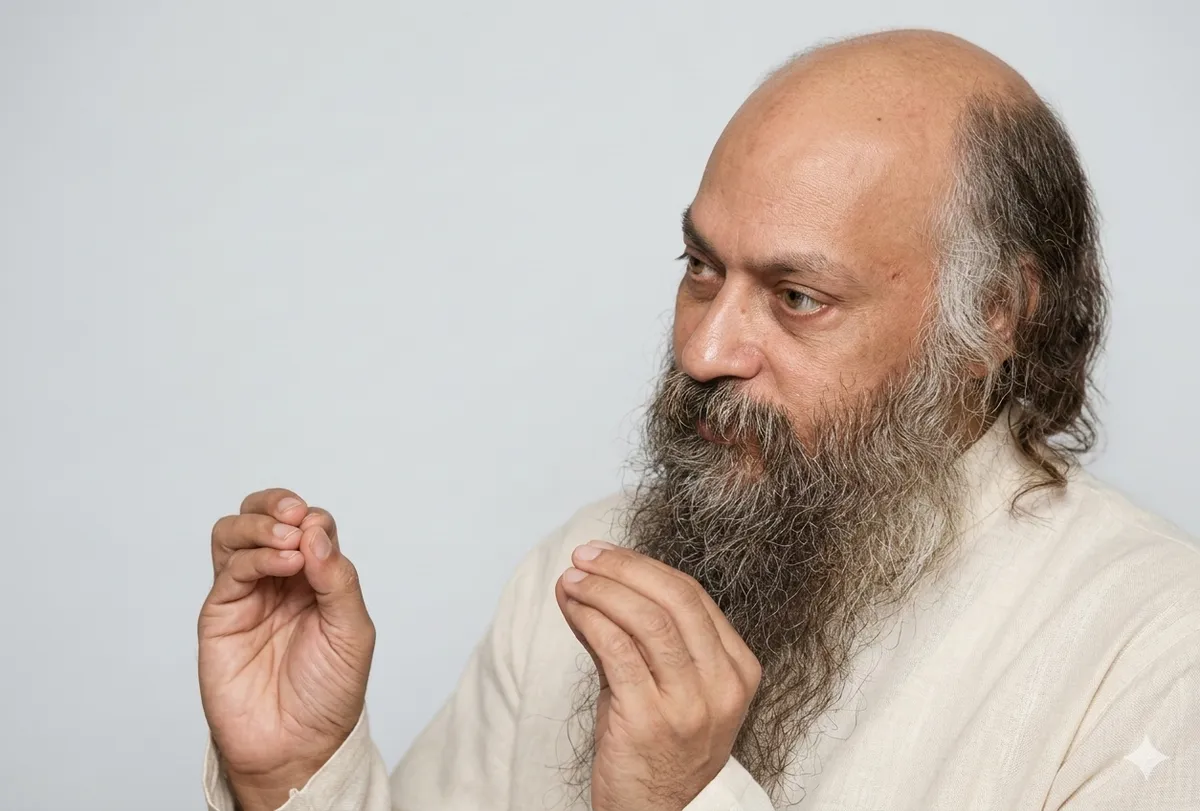
Nirvana is already who you are right now; you just need to wake up and notice it instead of searching outside.
From the Discourses
Passages where Osho speaks to this question — each links to the complete discourse.
What is nirvana?
This story is about NIRVANA... this ancient Buddhist story. An exceptionally beautiful young woman, Enyadatta, enjoyed nothing quite as much as gazing at herself in the mirror. She was a little crazy, as all human beings are. When she looked into her mirror one morning, the figure in the glass had no head. Enyadatta became hysterical and rushed around yelling 'My head is gone, where is my head? Who has my head? I shall die if I don't find it!' Even though everyone assured Enyadatta that her head was on her shoulders, she refused to believe them. Every time she looked in the mirror, her head wasn't there, so she continued her frenzied search, shouting and crying for help. Fearing for her sanity, Enyadatta's friends and relatives dragged her home and tied her to a pillar so she wouldn't hurt herself. Enyadatta's friends continued to reassure that her head was…
Osho, what is the status of death in nirvana?
Nirvana means, first, that one has come to know perfectly that death does not happen at all—one. Second, that what we call life yields nothing—this too has been known. Nirvana means the knowing of two truths: that what we call death is not death, and what we call life is not life. Are you following me? I have just told you one thing: whoever truly knows death will find that death is not death. But coupled with it is a second happening: whoever looks at life with total wakefulness will discover that what the world calls life is not life either. That too is a social delusion, just as death is a social delusion. Nirvana means these two insights are fully realized. If you know only this much—that death is not death—life will still continue. You have known only half. The longing will remain to live again, to grab another…
ओशो, निर्वाण में मृत्यु की क्या स्थिति होती है?
निर्वाण का मतलब ही यह है कि जिस व्यक्ति ने, मृत्यु होती ही नहीं, ऐसा परिपूर्ण रूप से जान लिया--एक। दूसरा, जिसे हम जीवन कहते हैं, उसमें कुछ मिलता ही नहीं, ऐसा भी जान लिया। निर्वाण का मतलब है दो सत्यों की जानकारी--कि जिसे हम मृत्यु कहते हैं, वह मृत्यु नहीं; और जिसे हम जीवन कहते हैं, वह जीवन नहीं। मेरी बात समझ रहे हो न तुम? यह तो मैंने अभी एक बात तुमसे कही कि मृत्यु को जो जानेगा, वह पाएगा कि मृत्यु मृत्यु नहीं है। लेकिन इससे ही संयुक्त दूसरी घटना भी है कि जो जीवन को पूरा जागकर देखेगा, वह पाएगा कि जिसको दुनिया जीवन कह रही है, वह जीवन भी नहीं है। वह भी एक सामाजिक भ्रांति है, जैसे मृत्यु एक सामाजिक भ्रांति है। निर्वाण का मतलब है, इन दोनों बातों का पूरी तरह अनुभव हो जाना। मृत्यु अगर मृत्यु नहीं है, इतना ही तुमने जाना, तो अभी और जीवन चलता रहेगा। अभी आधा ही जाना। अभी आकांक्षा रहेगी कि फिर जीएं, फिर शरीर पकड़ें, फिर जन्म लें। वह चलता रहेगा। …
The object can change, but just by changing the object the nature of the desire never changes. So one can want worldly power, somebody can want spiritual power, but both persons are worldly. One desires respectability, prestige; another desires moksha, nirvana, god -- but they are both the same. Their psychology is not different -- they desire. And desire means dreaming. Desire means motivation. Desire means you are not herenow -- and nirvana is always herenow. Desire means you are somewhere else -- and god is always herenow, so obviously you never meet: you remain in your desire and god remains just around you. He remains close-by, but you are never close to yourself -- you are projected into great desires. And nirvana is the greatest desire a man can have -- the last, the ultimate desire...
Osho, my family and acquaintances consider me dull-witted. Can I also attain nirvana? Today is the first time I have come into your presence.
Rabindranath thought beauty was simple. He was a poet; he had experienced beauty. But reading Croce got him entangled; he was tired and confused. He was reading by a small candle. He blew out the candle, closed the book, wiped the sweat from his brow. And the moment he opened his eyes after wiping the sweat, he was astonished—utterly astonished, speechless. Through every slit and chink of the barge, moonlight streamed in and began to dance. He opened the door; the moon was standing right there and entered within. He went out—an incomparable night! The whole sky was drenched in gentle moonlight. The entire river was a sheet of silver. Rabindranath’s eyes grew wet with tears of joy. He wrote in his diary, “How foolish I am—looking into a book to find what aesthetics is when beauty is spread all around me! And today I had a strange experience: my…
तीसरा प्रश्न: ओशो, मैं अपने परिवार और परिचितों द्वारा मूढ़मति समझा जाता हूं। क्या मैं भी निर्वाण पा सकता हूं? आज ही पहली बार आपके सान्निध्य में उपस्थित हुआ हूं।
रवींद्रनाथ सोचते थे, सौंदर्य सरल बात है। कवि थे, सौंदर्य का अनुभव किया था, मगर यह क्रोशे को पढ़ कर तो उनको और अड़चन हो गई, उलझ गए, थक गए। एक छोटी सी मोमबत्ती जला कर पढ़ रहे थे। मोमबत्ती फूंक कर बुझा दी, किताब बंद कर दी। सिर से पसीना पोंछ लिया। और जैसे ही पसीना पोंछ कर आंख खोलीं, चकित हो गए, एकदम चकित हो गए, अवाक हो गए। रंध्र-रंध्र से, बजरे के छिद्र-छिद्र से चांद की रोशनी भीतर आ गई। नाचने लगी रोशनी। द्वार खोला, चांद द्वार पर ही खड़ा था, भीतर आ गया। बाहर निकले, अपूर्व रात्रि थी! सारा आकाश स्निग्ध चांदनी से पटा पड़ा था। सारी नदी चांदी से पटी पड़ी थी। रवींद्रनाथ की आंखें आनंद के आंसुओं से गीली हो गईं। उन्होंने अपनी डायरी में लिखा कि मैं भी कैसा पागल हूं, सौंदर्यशास्त्र क्या है यह किताब में देख रहा था, जब कि सौंदर्य मेरे चारों तरफ बिखरा हुआ पड़ा था! और एक अदभुत अनुभव मुझे आज हुआ है कि मेरी पीली सी मोमबत्ती, टिमटिमाती सी रोशनी, धुआं देती रोशनी, उसकी वजह से चांद भीतर नहीं आ पा रहा था! …
Osho, Buddha has said that those steadfast ones who practice meditation continuously attain the unsurpassable ease and security called nirvana. Are there kinds of nirvana?
It is said of the Zen master Rinzai that he had eighteen hundred satori experiences before samadhi. Eighteen hundred is only symbolic; they could be eighteen thousand. However many glimpses there may be, a glimpse is only a message: “I am coming closer, closer”—but I have not yet arrived. The goal begins to be seen, and then it is lost again, because the moods of the mind keep changing. On some days meditation settles easily—the mind is buoyant, quiet, blissful. On other days it does not settle—there is a miss, and a great distance arises. So there is often a coming near and a moving far. But once the glimpses begin—once the taste comes—you cannot be led astray. One thing is now certain: what you are seeking is. It is not imagination. Whatever the births it may take, it is. Faith arises. And as soon as faith arises, satori slowly…
पांचवां प्रश्न: ओशो, बुद्ध ने कहा है, ध्यान का सतत अभ्यास करने वाले धीर पुरुष अनुत्तर योगक्षेम रूप निर्वाण को प्राप्त होते हैं। क्या निर्वाण के भी प्रकार हैं?
झेन फकीर रिंझाई के संबंध में कहा जाता है कि उसे अट्ठारह सौ सतोरी अनुभव हुईं समाधि के पहले। अट्ठारह सौ भी सिर्फ प्रतीक हैं, अट्ठारह हजार भी हो सकती हैं। तो कितनी ही बार झलक हो सकती है। लेकिन झलक सिर्फ खबर है इस बात की कि मैं करीब आ रहा हूं, करीब आ रहा हूं; लेकिन अभी आ नहीं गया हूं। मंजिल दिखायी पड़ने लगी है। फिर कई बार खो भी जाती है मंजिल, क्योंकि मन के भावावेग बदलते रहते हैं। कभी ध्यान सध जाता है किसी दिन, मन प्रफुल्ल होता है, शांत होता है, आनंदित होता है। सध जाता है किसी दिन। किसी दिन नहीं सधता, चूक जाता है, बड़ी दूरी हो जाती है। ऐसा कई बार पास आना और कई बार दूर होना हो जाता है। लेकिन, जिसको झलकें मिलने लगीं, जरा-जरा स्वाद आने लगा, वह अब भटक नहीं सकता। अब एक बात तो पक्की हो गयी कि जिसकी तलाश है, वह है; जिसको खोजते थे, वह कल्पना नहीं है; जिसकी तरफ चले थे, वह चाहे मिले न जन्मों-जन्मों तक भी अब, लेकिन है। श्रद्धा का आविर्भाव होता है। …