
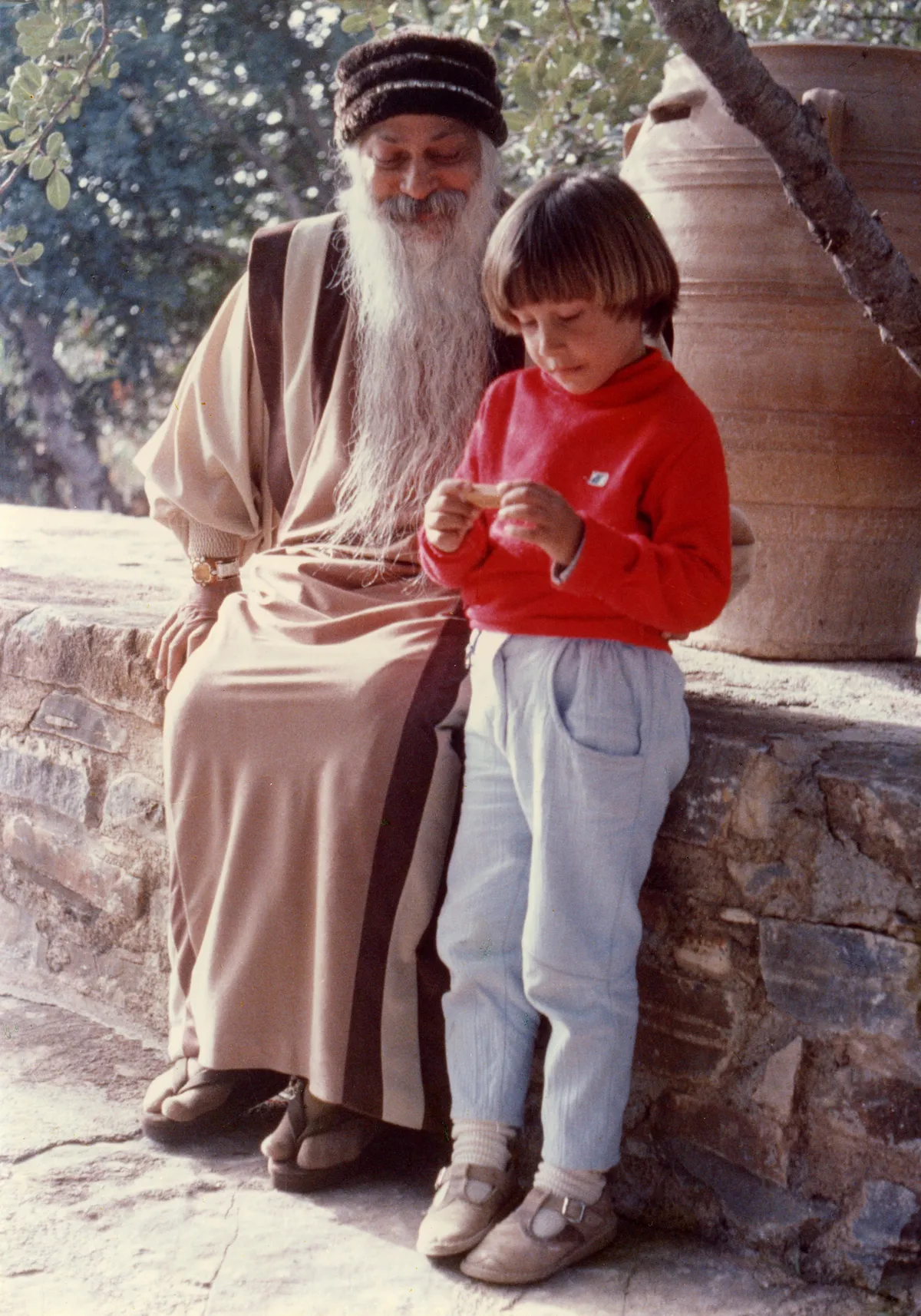
According to Osho, when your rebellious expression matures into gratitude and love, its meaning flips: it ceases to be a public protest against dead traditions and becomes a private, heartfelt yes. The outer struggle ends; the second phase begins—no longer my insistence but yours—an intimate indication to the master of trust and thankfulness for what is unfolding, rather than a statement to the world.
Your old ‘no’ to the world has ripened into a heartfelt ‘yes’—you now act from love and thankfulness, not from fighting.
From the Discourses
Passages where Osho speaks to this question — each links to the complete discourse.
Osho, sometimes a great revolt flares up in my mind against you, and here and there I even end up making little criticisms of you. It is said that one who maligns the guru finds no refuge anywhere. What should I do?
Good. Let it flare up. Only a dead disciple never rebels. Rebellion is energy; if you repress it, it becomes poison, if you watch it, it becomes fuel for awareness. Remember, your criticism cannot harm me; it can only cloud you. When you throw mud at the sky, the sky is not stained—only your hands are. Do not be frightened by old sayings. “Whoever maligns the guru finds no place” was invented by priests to protect their thrones. A living master does not need your fear; he invites your intelligence. If your trust cannot pass through the fire of doubt, it is not trust—it is decoration borrowed from others. I do not ask you to stop your rebellion; I ask you to bring it into the light. Two things to remember: - Do not gossip. Gossip is the coward’s rebellion. If something burns in you about me, bring it to…
My idea of love is not abstract, it is very pragmatic, realistic. I am not an idealist at all, I am very down-to-earth. Start loving people make it your foundation, and then slowly move towards higher realities. If you can love human beings, if you can love animals, if you can love trees and rocks, then only are you capable of loving god. And then your god will not be an abstraction, then your god will be simply the totality of existence. Then it will be the whole universe -- the stars and the moon and the sun. Then it will be simply the total of all. And that love needs only one thing: slowly slowly you have to die as an ego. And the more you die as an ego, the more you are born as a soul. This I call a rebellion.
[NOTE: This is an unedited tape transcript of an unpublished darshan diary, which has been copy-typed. It is for reference purposes only.] The goal of the meditator is to find out who he is. When one goes on enquiring "Who am I?" "Who am I?",slowly slowly, one comes to a point where action, thought, feeling -- all are negated, and there is nothing else left to negate any more. There is only pure consciousness. You cannot negate that. Who will negate it? You are a pure knower, a seer. To know this is the real beginning of life. The lotus symbolises the ultimate flowering of consciousness. Right now you are just like a bud, closed; hence your fragrance is not being released. Sannyas is a process of opening the petals of the lotus. Sannyas is like sunrise. Being with a master means entering into a sunlit world.
The master laughed. He said, "The difference is that before I used to get identified with my misery; now I remain aloof, just a witness. The misery comes and goes, clouds gather and disperse -- it has nothing to do with me. Before it used to affect me, now it does not affect me at all. I am just a mirror, I only reflect. If it is sunny I reflect it: if it is cloudy I reflect it." His answer is tremendously beautiful: "Before enlightenment I was miserable, and after enlightenment I am miserable." As far as the outer world is [illegible] Even being God ain't a bed of roses, remember. Thorns are always there, but your vision changes. You look in a different way, your attitude is different, your approach is different, because you are different.
Question: BELOVED MASTER, WHERE DO REBELLION AND SURRENDER MEET? Prem Rajo, rebellion and surrender meet in the idea of the ego. Drop the ego and simultaneously surrender happens, and rebellion too. I know what you mean by your question. You mean that rebellion and surrender seem to be polar opposites -- how can they meet? How can one be rebellious AND surrendered? That's your question. That's how mind thinks about rebellion and surrender; through the mind you cannot see them meeting anywhere. A man who is surrendered will look nonrebellious. A man who is rebellious will always be disobeying -- how can he surrender? He may die, but he will not surrender.