
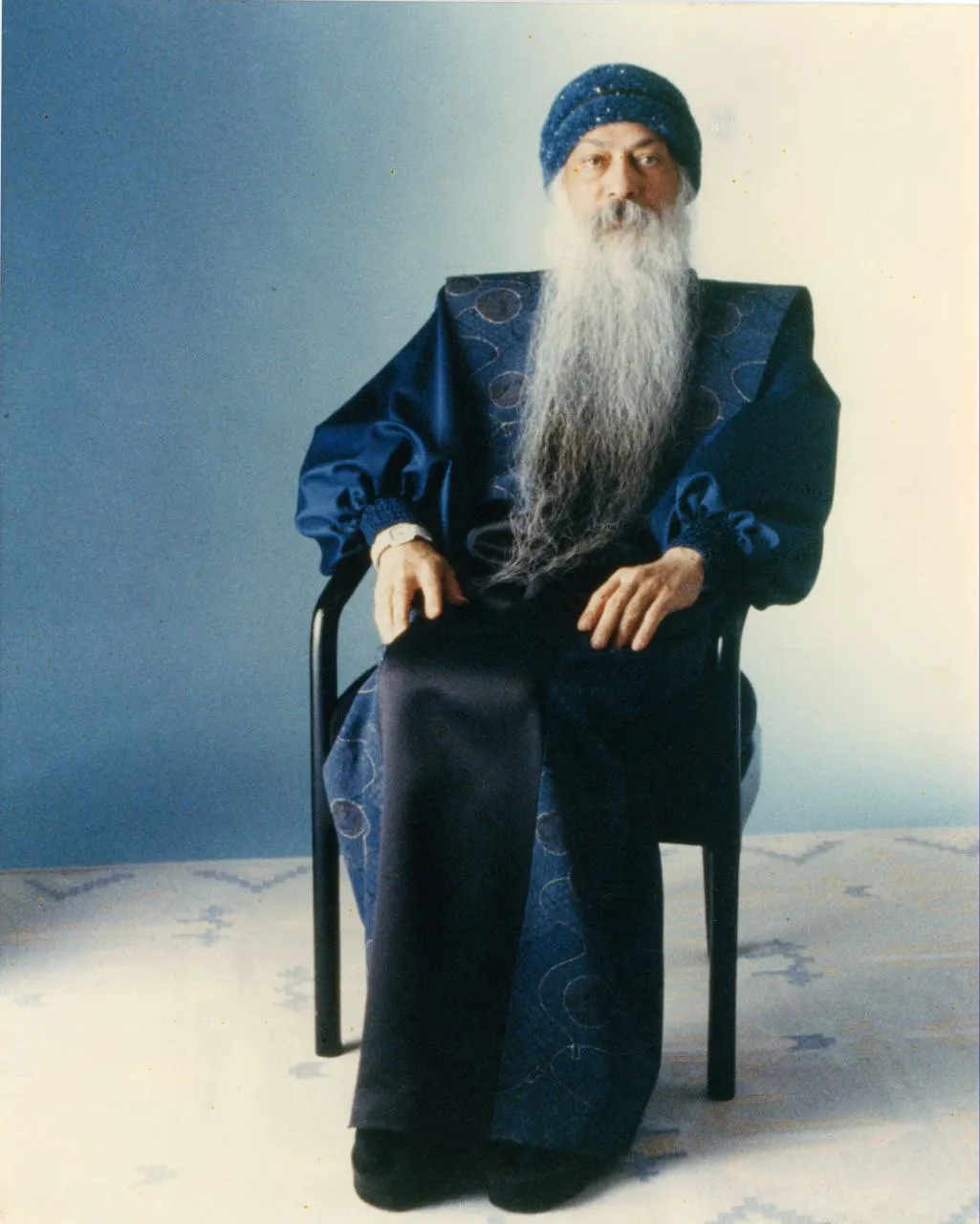
According to Osho, enlightenment gains nothing; it is the total loss of ego and craving, an emptiness that becomes the abode of the Whole. One simply recognizes what was always present—God/Reality—so certainty is not belief but awakening. The treasure was already yours; realization ends the chase, removes sorrow’s thorns, and reveals the ever-present Self while the imagined “me” disappears.
You don’t get something new; you wake up from a dream and see what was already here, full and complete.
From the Discourses
Passages where Osho speaks to this question — each links to the complete discourse.
Osho, what is the proof of God’s existence?
And you still ask for proof? There have been people who offered proofs, and all their proofs are futile. No proof works. All the proofs for God so far are not worth a penny. Someone says: everything that is made must have a maker; such a vast world—surely it must have a maker. But that proof commits suicide; the moment it meets an atheist, it goes lame. The atheist says: If every made thing must have a maker, if God is needed to make the world, then who made God? With that he tightens the noose around your neck. Who made God? You protest: No, no one made God. Then the atheist says: If God can be without being made, why can’t the world be without being made? The argument collapses; it falls flat. You say: just as the potter makes the pot, so that Great Potter made this world.…
Beloved Osho, what is enlightenment? Have the experience and the idea of enlightenment evolved with time?
So nirvana is just like darkness. The light is put off and your reality is all there, with all its beauty, benediction, blessing. But there is no word in English to translate nirvana. Jainas use the word moksha. Moksha means absolute freedom, ultimate freedom, freedom from all fetters. And the biggest fetter is the ego. Other fetters are just parts of the ego: greed, lust, ambition, anger. All that is thought to be sin in other religions, in Jainism is thought only to be a fetter. But the root, the main root of the whole tree of your slavery, is the ego. So cut the main root and all other roots will die of their own accord. Don't bother to cut small roots, branches, leaves, because they will come again. Cut the main root and the whole tree will die. And when all your fetters fall, what remains? The unfettered…
What is enlightenment?
Enlightenment is finding that there is nothing to find. Enlightenment is to come to know that there is nowhere to go. Enlightenment is the understanding that this is all, that this is perfect, that this is it. Enlightenment is not an achievement, it is an understanding that there is nothing to achieve, nowhere to go. You are already there -- you have never been away, you cannot be away from there. God has never been missed. Maybe you have forgotten, that's all. Maybe you have fallen asleep, that's all. Maybe you have got lost in many, many dreams, that's all -- but you are there. God is your very being. So the first thing is: don't think about enlightenment as a goal, it is not. It is not a goal, it is not something that you can desire. And if you desire it you will not get it. In desiring…
Beloved Osho, I am happy to be free from any god, and to be living more and more on my own authority. But now I cannot imagine what enlightenment is all about. Isn't it just another god?
It seems to be the same stupid man. How do you know that there is no God -- because I have said it? But when did I say it to you, "Believe in me"? You must be enjoying great egoism: "I am free of God." You are not free even of your ego, how can you be free of God? How do you manage to know that there is no God? One can know this only after enlightenment, because then the whole existence is crystal-clear, open; life is there, but there is no God anywhere. Because you started with a belief -- hearing me say again and again that there is no God -- you felt good, because if there is no God then you are free to do anything. When I am saying there is no God, I am not freeing you from responsibility. In fact, when there is…
Osho, for the attainment of the supreme state, how helpful are ochre robes, a mala, and the Guru? And after attaining the supreme state, what need remains for them?
So, in the final phase the complication is not that the disciple wants to leave and the Guru wants to hold. The final complication is this: the Guru says, “Leave now,” and the disciple will not. A disciple means one who has loved so totally—how will he leave! There is great pain. He is even ready to let liberation lie where it is; only let him lie at the Guru’s feet—that is enough. At the Guru’s feet he has found so much that the thought does not even arise that liberation could give more; and even if it could, no true disciple can be so ungrateful as to agree to leave in an instant. In the beginning, it was hard for the Guru to hold the disciple’s hand because the disciple kept pulling away. Now it is this same gentleman who is pulling away. I, too, would like to hold…