
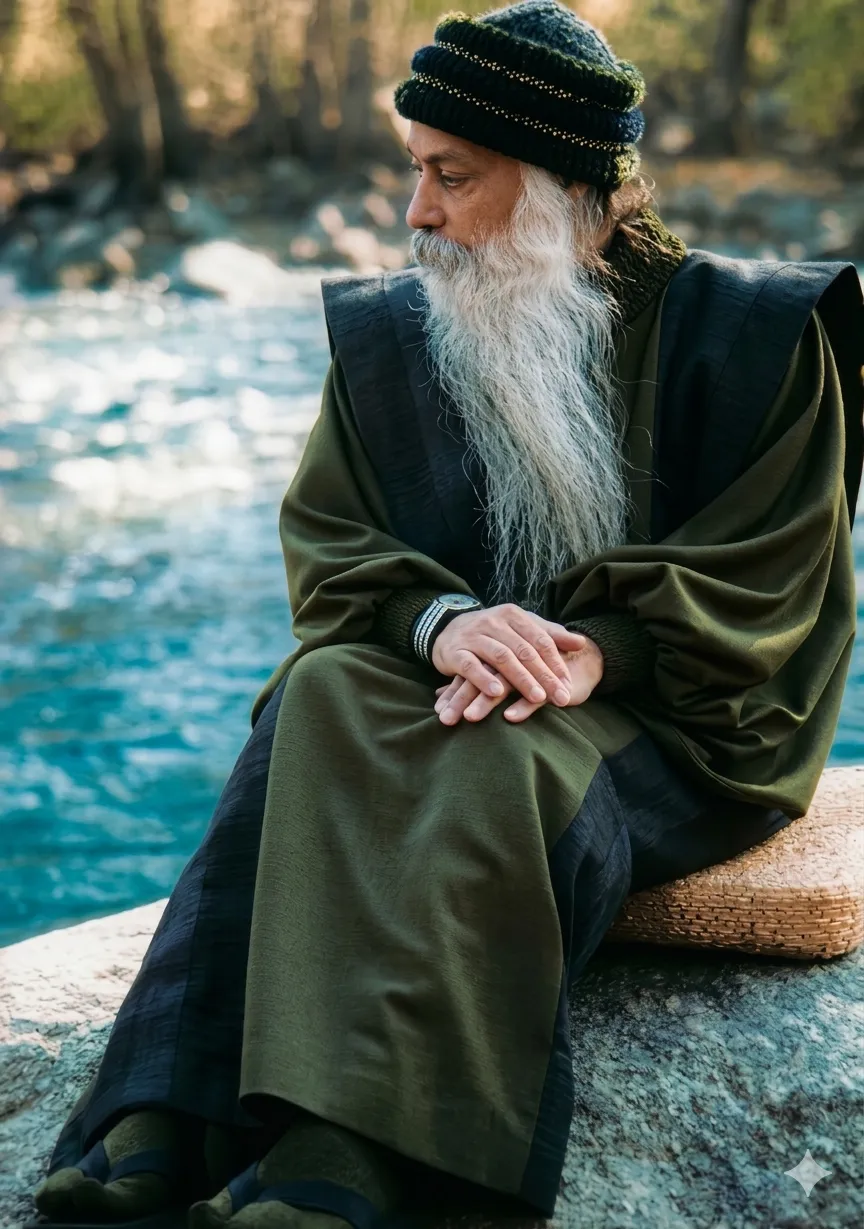
Swadharma is your own deepest truth and way; paradharma is copying someone else’s way.
From the Discourses
Passages where Osho speaks to this question — each links to the complete discourse.
Osho, what is a human being’s swadharma and what is paradharma?
Krishna uses two words. Both need to be understood correctly. One is swadharma, and one is svakarma. Swadharma means what you are in your ultimate innermostness—the fundamental tone of your nature. Where all thought has fallen away, all action has fallen away, and a deep emptiness remains—the intrinsic quality of that inner void is called swadharma. This means that swadharma is, in truth, the same. My swadharma and your swadharma cannot be different, because when I reach that station, I find the same emptiness that you find. But that is the ultimate event, the last happening. Krishna, Buddha, and Christ have all attained the same void, the same pure suchness. But there is no way to see that from the outside; it is an inner experience. There is no outer sign by which to recognize it. From the outside, what can be recognized is your svakarma. That is different for…
तीसरा प्रश्न: ओशो, मनुष्य का स्वधर्म क्या है और परधर्म क्या है?
स्वधर्म का तो अर्थ है, तुम अपनी आत्यंतिक निजता में जो हो; तुम्हारे स्वभाव का जो मौलिक स्वर है। जहां सब विचार खो गए, सब कर्म खो गए, गहन शून्य बचा; उस भीतर के शून्य का जो गुणधर्म है, उसका नाम स्वधर्म है। इसका तो यह अर्थ हुआ कि स्वधर्म वस्तुतः एक-सा ही होगा। मेरा स्वधर्म और तुम्हारा स्वधर्म अलग नहीं हो सकता। क्योंकि जब मैं पहुंचूंगा उस पड़ाव पर, तो वही शून्य मिलेगा, जो तुम्हें मिला है। लेकिन वह तो आत्यंतिक घटना है, आखिरी घटना है। कृष्ण, बुद्ध और क्राइस्ट एक ही शून्यता को उपलब्ध हो गए हैं; एक ही शुद्ध भाव को उपलब्ध हो गए हैं। लेकिन उसको तो बाहर से देखने का कोई उपाय नहीं है। वह तो भीतर की अनुभूति है। उसको तो पहचानने का कोई लक्षण भी नहीं है। बाहर से तो तुम जिसे पहचानोगे, वह है स्वकर्म। वह भिन्न-भिन्न है।
Osho, you say: Dharma is one, samadhi is one, the Divine is one, but swadharmas are many. How are these two reconciled? Please clarify.
These are the three elements to which India gave these names. The West calls them electron, proton, neutron—give any names; it makes no difference. What is established is that the ultimate analysis of life falls into three forces. Hence we gave them many names. Those who thought scientifically called them rajas, tamas, sattva. Those who thought metaphorically, poetically, said: Brahma, Vishnu, Mahesh. Their work is the same. Brahma is the creative force; Vishnu sustains; Shiva destroys. Without all three, nothing can be. Electron, neutron, proton do these three jobs as well. The electron is negative—like Shiva, it negates, breaks, destroys. The proton is positive—like Brahma, it builds. The neutron is neither negative nor positive; it sustains, stands between, balances. Krishna says: within man—whatever happens, inner or outer—is play of these three forces. According to them, all occurs. One is pushed, restrained, born, dies, laughs, weeps—these are the work of the…
प्रश्न: ओशो, आप कहते हैं, धर्म एक है, समाधि एक है, परमात्मा एक है, लेकिन स्वधर्म अनेक हैं। तो इन दोनों में कैसे तालमेल बैठे, इसे स्पष्ट करें।
ये तीन तत्व हैं, जिनको भारत ने ऐसे नाम दिए थे। पश्चिम जिनको इलेक्ट्रान, प्रोटान, न्यूट्रान कहे, कोई और नाम दे, इससे कोई अंतर नहीं पड़ता। एक बात बहुत अनिवार्य रूप से सिद्ध हो गई है कि जीवन का अंतिम विश्लेषण तीन शक्तियों पर टूटता है। इसलिए हमने इन तीन शक्तियों को ये कई तरह से नाम दिए थे। जो लोग वैज्ञानिक ढंग से सोचते थे, उन्होंने रजस, तमस, सत्व ऐसे नाम दिए। जो लोग मेटाफोरिकल, काव्यात्मक ढंग से सोचते थे, उन्होंने कहा, ब्रह्मा, विष्णु, महेश। उनका भी काम वही है। वे तीन नाम भी यही काम करते हैं। उसमें ब्रह्मा सर्जक शक्ति हैं, विष्णु सस्टेनिंग, संभालने वाले और शिव विनाश करने वाले। उन तीन के बिना भी नहीं हो सकता। ये जो इलेक्ट्रान, न्यूट्रान और प्रोटान हैं, ये भी ये तीन काम करते हैं। उसमें जो इलेक्ट्रान है, वह निगेटिव है। वह ठीक शिव जैसा है, निगेट करता है, तोड़ता है, नष्ट करता है। उसमें जो प्रोटान है, वह ब्रह्मा जैसा है, पाजिटिव है, इसलिए प्रोटान उसका नाम है। वह विधायक है, वह निर्माण करता है। …
Osho, please say something about the real nature of dharma.
Dharma means your intrinsic nature. Dharma means your spontaneity. As fragrance is to a rose, as heat is to fire, as coolness is to water, so you too have a nature of your own; living in tune with that nature is called dharma, living against it is called adharma. There will be slight differences in each person’s nature—there must be, because existence does not make carbon copies. Therefore each person’s dharma will also differ a little. What is medicine for one can be poison for another, and what is poison for one can be medicine for another. Hence each person has to search for his own nature in the depths of meditation. No one else can give you a clear, definitive statement about your nature. You yourself have to recognize, slowly, your naturalness in the depths of meditation, and then gather the courage to live according to it. Courage is…
तीसरा प्रश्न: ओशो, धर्म के वास्तविक स्वरूप के संबंध में कुछ कहें।
धर्म का अर्थ होता है स्वभाव। धर्म का अर्थ होता है तुम्हारी सहजता। जैसे गुलाब में गंध है और जैसे अग्नि उत्तप्त है और जैसे जल शीतल है, ऐसे ही तुम्हारा भी एक स्वभाव है; उस स्वभाव में जीने का नाम धर्म है, उस स्वभाव से विपरीत जीने का नाम अधर्म है। फिर प्रत्येक व्यक्ति के स्वभाव में थोड़ा सा भेद होगा--होना ही चाहिए क्योंकि परमात्मा एक जैसे लोग नहीं बनाता। इसलिए प्रत्येक व्यक्ति के धर्म में भी थोड़ा सा भेद होगा। जो एक के लिए दवा है, दूसरे के लिए जहर हो सकता है और जो एक के लिए जहर है, दूसरे के लिए दवा हो सकता है। इसलिए प्रत्येक व्यक्ति को ध्यान की गहराइयों में अपने स्वभाव की तलाश करनी होती है। कोई दूसरा तुम्हें तुम्हारे स्वभाव के संबंध में सुस्पष्ट निर्वचन नहीं दे सकता। तुम्हें ही ध्यान की गहराइयों में धीरे-धीरे अपनी स्वाभाविकता को पहचानना पड़ता है और फिर उसी स्वाभाविकता के अनुसार जीने की हिम्मत जुटानी पड़ती है। …
So Dharma is swabhava—in one sense. And Dharma is the method—the way to reach swabhava—in another sense. Dharma has two forms: its ultimate form is swabhava, one’s own nature. And toward this swabhava—because we have strayed from it, otherwise there would be no need to say anything—the other meaning of Dharma, for us, is experimental, procedural, instrumental. The first definition is of the goal; the second is of the means. Mahavira says: Which Dharma? ‘Ahimsa sañjamo tavo.’ Perhaps never has such a small formula been given in which the whole of Dharma is contained. Ahimsa, restraint, tapas—first let us understand their arrangement; then we can enter into each one. Ahimsa is the soul of Dharma—the center. Tapas is the circumference. And restraint is the bridge in-between which joins center and circumference. Understand it thus: Ahimsa is soul; tapas is body; and restraint is prana—the breath that connects the two.
तो धर्म स्वभाव है, एक अर्थ। धर्म विधि है, स्वभाव तक पहुंचने की, दूसरा अर्थ। तो धर्म के दो रूप हैं--धर्म का आत्यंतिक जो रूप है वह है स्वभाव, स्वधर्म। और धर्म तक, इस स्वभाव तक--क्योंकि हम इस स्वभाव से भटक गए हैं, अन्यथा कहने की कोई जरूरत न थी। स्वस्थ व्यक्ति तो नहीं पूछता चिकित्सक को कि मैं स्वस्थ हूं या नहीं। अगर स्वस्थ व्यक्ति भी पूछता है कि मैं स्वस्थ हूं या नहीं, तो वह बीमार हो चुका है। असल में, बीमारी न आ जाए तो स्वास्थ्य का खयाल ही नहीं आता। लाओत्सु के पास कनफ्यूशियस गया था और उसने कहा था कि धर्म को लाने का कोई उपाय करें। तो कनफ्यूशियस से लाओत्सु ने कहा: धर्म को लाने का उपाय तभी करना होता है जब अधर्म आ चुका होता है। तुम कृपा करके अधर्म को छोड़ने का उपाय करो, धर्म आ जाएगा। तुम धर्म को लाने का उपाय मत करो। इसलिए स्वास्थ्य को लाने का कोई उपाय नहीं किया जा सकता है, सिर्फ केवल बीमारियों को छोड़ने का उपाय किया जा सकता है--जब बीमारियां छूट जाती हैं तो जो शेष रह जाता है--दि रिमेनिंग...। …