
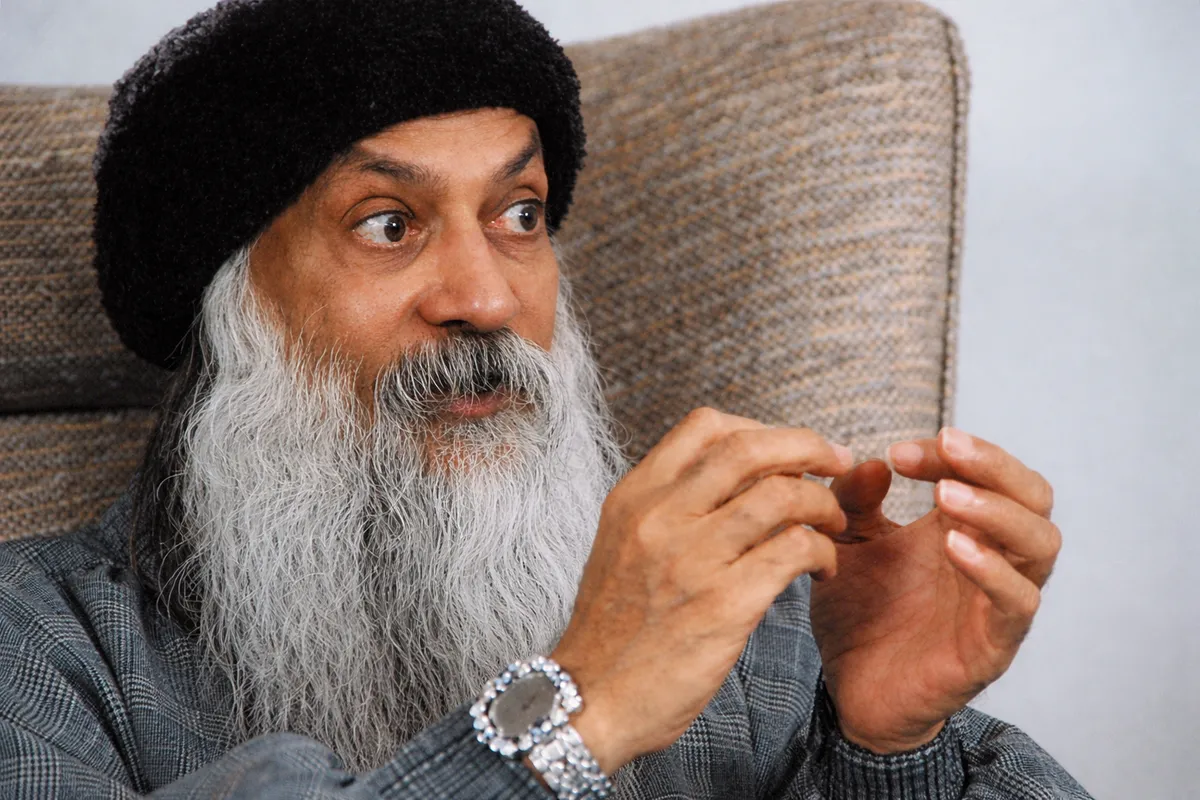
Your deepest self is like a blank seed; when it sprouts, it becomes your own way of living and doing - follow that, not others' rules.
From the Discourses
Passages where Osho speaks to this question — each links to the complete discourse.
Osho, please say something about the real nature of dharma.
Dharma means your intrinsic nature. Dharma means your spontaneity. As fragrance is to a rose, as heat is to fire, as coolness is to water, so you too have a nature of your own; living in tune with that nature is called dharma, living against it is called adharma. There will be slight differences in each person’s nature—there must be, because existence does not make carbon copies. Therefore each person’s dharma will also differ a little. What is medicine for one can be poison for another, and what is poison for one can be medicine for another. Hence each person has to search for his own nature in the depths of meditation. No one else can give you a clear, definitive statement about your nature. You yourself have to recognize, slowly, your naturalness in the depths of meditation, and then gather the courage to live according to it. Courage is…
तीसरा प्रश्न: ओशो, धर्म के वास्तविक स्वरूप के संबंध में कुछ कहें।
धर्म का अर्थ होता है स्वभाव। धर्म का अर्थ होता है तुम्हारी सहजता। जैसे गुलाब में गंध है और जैसे अग्नि उत्तप्त है और जैसे जल शीतल है, ऐसे ही तुम्हारा भी एक स्वभाव है; उस स्वभाव में जीने का नाम धर्म है, उस स्वभाव से विपरीत जीने का नाम अधर्म है। फिर प्रत्येक व्यक्ति के स्वभाव में थोड़ा सा भेद होगा--होना ही चाहिए क्योंकि परमात्मा एक जैसे लोग नहीं बनाता। इसलिए प्रत्येक व्यक्ति के धर्म में भी थोड़ा सा भेद होगा। जो एक के लिए दवा है, दूसरे के लिए जहर हो सकता है और जो एक के लिए जहर है, दूसरे के लिए दवा हो सकता है। इसलिए प्रत्येक व्यक्ति को ध्यान की गहराइयों में अपने स्वभाव की तलाश करनी होती है। कोई दूसरा तुम्हें तुम्हारे स्वभाव के संबंध में सुस्पष्ट निर्वचन नहीं दे सकता। तुम्हें ही ध्यान की गहराइयों में धीरे-धीरे अपनी स्वाभाविकता को पहचानना पड़ता है और फिर उसी स्वाभाविकता के अनुसार जीने की हिम्मत जुटानी पड़ती है। …
Osho, you explained that one has to rise from tamas to rajas, and then from rajas to sattva. It is also said that living in one’s swadharma is the goal of dharma. So if someone’s swadharma is rajasic, must he abandon his swadharma and rise to sattva?
No guna is swadharma. The gunas are outer coverings. Swadharma means going into one’s own nature. That is beyond the gunas. Rajas, tamas, or sattva are not swadharma; they are superimpositions upon dharma. If someone has an iron covering, that is tamas. If someone has a silver covering, that is rajas. If someone has a golden covering, that is sattva. But all three are coverings. Inside, what is hidden is beyond the gunas; swadharma is there. So do not interpret swadharma in terms of qualities. Swadharma is like the sky. You will recognize it only by entering it; it has no quality. Swadharma has no quality; its very being is the state beyond qualities. Therefore everyone has to rise from tamas, from rajas, and even from sattva. And ultimately, one has to attain swadharma. Now this swadharma—neither has it anything to do with Hinduism, nor with Islam, nor with Jainism—swadharma…
चौथा प्रश्न: ओशो, आपने समझाया कि तमस से रजस में, फिर रजस से सत्व में उठना है। फिर कहा गया है कि स्वधर्म में जीना ही धर्म का लक्ष्य है। तो यदि किसी व्यक्ति का स्वधर्म राजसिक होना हो, तो क्या उसे भी अपना स्वधर्म छोड़कर सत्व में उठना जरूरी है?
कोई गुण स्वधर्म नहीं है। गुण तो बाहर के आवरण हैं। स्वधर्म का अर्थ तो स्वभाव में जाना है। वह तो गुणातीत है। रजस, तमस या सत्व स्वधर्म नहीं हैं, धर्म पर आरोपण हैं। किसी के ऊपर लोहे का आवरण है, वह तमस। किसी के ऊपर चांदी का आवरण है, वह रजस। किसी के ऊपर सोने का आवरण है, वह सत्व। बाकी तीनों आवरण हैं। भीतर जो छिपा है, गुणातीत, स्वधर्म तो वहां है। तो स्वधर्म का अर्थ तुम गुणों से मत करना। स्वधर्म तो आकाश की भांति है। उसमें तो तुम जाओगे, तो ही पहचान पाओगे; उसका कोई गुण नहीं है। स्वधर्म का कोई गुण नहीं है; गुणातीत अवस्था ही उसका होना है। इसलिए सभी को तमस से उठना है, रजस से उठना है, सत्व से भी उठना है। और अंततः स्वधर्म को पाना है।
Osho, in your discussion of swadharma and nij-dharma, the first part of the verse says that swadharma, even when vigun, is still superior. If swadharma means one’s ownness, how can it be vigun—without qualities? Can any ownness be without qualities?
Stronger, stronger—let the whole valley resound. Dance, shout—strongly. A few seconds remain—give your total energy, give your total energy. Dance, laugh, shout—give your total energy… Very good, very good—just a few seconds more—give your all… Now enter the third stage. Keep dancing; within, ask: Who am I? Keep dancing; within, ask: Who am I? Who am I? Who am I? In ten minutes, tire out the mind. Ask: Who am I? Who am I? Who am I?… Who am I? Who am I? Who am I? Raise a storm—raise a storm within. Dance and ask within: Who am I? Who am I? Who am I? Let there be only one question within. Dance and ask: Who am I? Who am I? Who am I? Who am I? Who am I? Ask, ask—within, deeper and deeper and deeper: Who am I? Who am I? Who am I?… Who am I? Who…
ओशो, यह जो आपने स्वधर्म और निजधर्म की चर्चा की, उसमें जो श्लोक का पहला भाग है वह यह कहता है कि स्वधर्म विगुण भी श्रेष्ठ है। स्वधर्म अगर निजता है, तो वह विगुण कैसे हो सकता है? गुणरहित कैसे हो सकता है? क्या कोई निजता गुणरहित भी होती है?
जोर से, जोर से, पूरी घाटी गूंज जाए। नाचें, चिल्लाएं, जोर से। कुछ सेकेंड बचे हैं, पूरी ताकत लगाएं, पूरी ताकत लगा दें। नाचें, हंसें, चिल्लाएं, पूरी ताकत लगा दें।...बहुत ठीक, बहुत ठीक, कुछ सेकेंड और हैं, पूरी ताकत लगाएं।... अब तीसरे चरण में प्रवेश करें, नाचना जारी रखें, भीतर पूछें, मैं कौन हूं? नाचना जारी रखें, भीतर पूछें, मैं कौन हूं? मैं कौन हूं? मैं कौन हूं? दस मिनट में मन को थका डालना है। पूछें, मैं कौन हूं? मैं कौन हूं? मैं कौन हूं?... मैं कौन हूं? मैं कौन हूं? मैं कौन हूं? तूफान उठा दें। भीतर बिलकुल तूफान उठा दें। नाचें, पूछें, मैं कौन हूं? मैं कौन हूं? मैं कौन हूं? एक ही सवाल भीतर, नाचें, और पूछें, मैं कौन हूं? मैं कौन हूं? मैं कौन हूं? मैं कौन हूं? मैं कौन हूं? पूछें, पूछें, भीतर और गहरे और गहरे और गहरे, मैं कौन हूं? मैं कौन हूं? मैं कौन हूं?...
Questioner: you talked about swadharma, self-nature, the innate individuality of man. The geeta says that one's own nature, even if it be inferior in quality, is preferable to an alien nature of superior quality. Then the question is: how can self-nature, which is one's innate individuality, be inferior in quality?
And the Master rejects all nine pictures saying, "How can you have color and a cow in a painting that has to be without form and attributes?" The tenth disciple has just a blank sheet of paper in his hand, and the Master says, "Yes, this is it." The nine disciples who have attempted to paint feel disappointed and they protest, "Where is the cow?" The Master says, "The cow went home after grazing." "And where is the grass?" they protest further. The Master says, "The cow ate it up. So things have gone back to their original places. Things have returned to their unmanifest state. This is really painting without form and attributes. It shows a cow who is finished grazing and a plot of grass the cow has eaten up. Empty space, just space is there." At its deepest level self nature is without any form, without any…
Osho, what is a human being’s swadharma and what is paradharma?
Krishna uses two words. Both need to be understood correctly. One is swadharma, and one is svakarma. Swadharma means what you are in your ultimate innermostness—the fundamental tone of your nature. Where all thought has fallen away, all action has fallen away, and a deep emptiness remains—the intrinsic quality of that inner void is called swadharma. This means that swadharma is, in truth, the same. My swadharma and your swadharma cannot be different, because when I reach that station, I find the same emptiness that you find. But that is the ultimate event, the last happening. Krishna, Buddha, and Christ have all attained the same void, the same pure suchness. But there is no way to see that from the outside; it is an inner experience. There is no outer sign by which to recognize it. From the outside, what can be recognized is your svakarma. That is different for…
तीसरा प्रश्न: ओशो, मनुष्य का स्वधर्म क्या है और परधर्म क्या है?
स्वधर्म का तो अर्थ है, तुम अपनी आत्यंतिक निजता में जो हो; तुम्हारे स्वभाव का जो मौलिक स्वर है। जहां सब विचार खो गए, सब कर्म खो गए, गहन शून्य बचा; उस भीतर के शून्य का जो गुणधर्म है, उसका नाम स्वधर्म है। इसका तो यह अर्थ हुआ कि स्वधर्म वस्तुतः एक-सा ही होगा। मेरा स्वधर्म और तुम्हारा स्वधर्म अलग नहीं हो सकता। क्योंकि जब मैं पहुंचूंगा उस पड़ाव पर, तो वही शून्य मिलेगा, जो तुम्हें मिला है। लेकिन वह तो आत्यंतिक घटना है, आखिरी घटना है। कृष्ण, बुद्ध और क्राइस्ट एक ही शून्यता को उपलब्ध हो गए हैं; एक ही शुद्ध भाव को उपलब्ध हो गए हैं। लेकिन उसको तो बाहर से देखने का कोई उपाय नहीं है। वह तो भीतर की अनुभूति है। उसको तो पहचानने का कोई लक्षण भी नहीं है। बाहर से तो तुम जिसे पहचानोगे, वह है स्वकर्म। वह भिन्न-भिन्न है।