
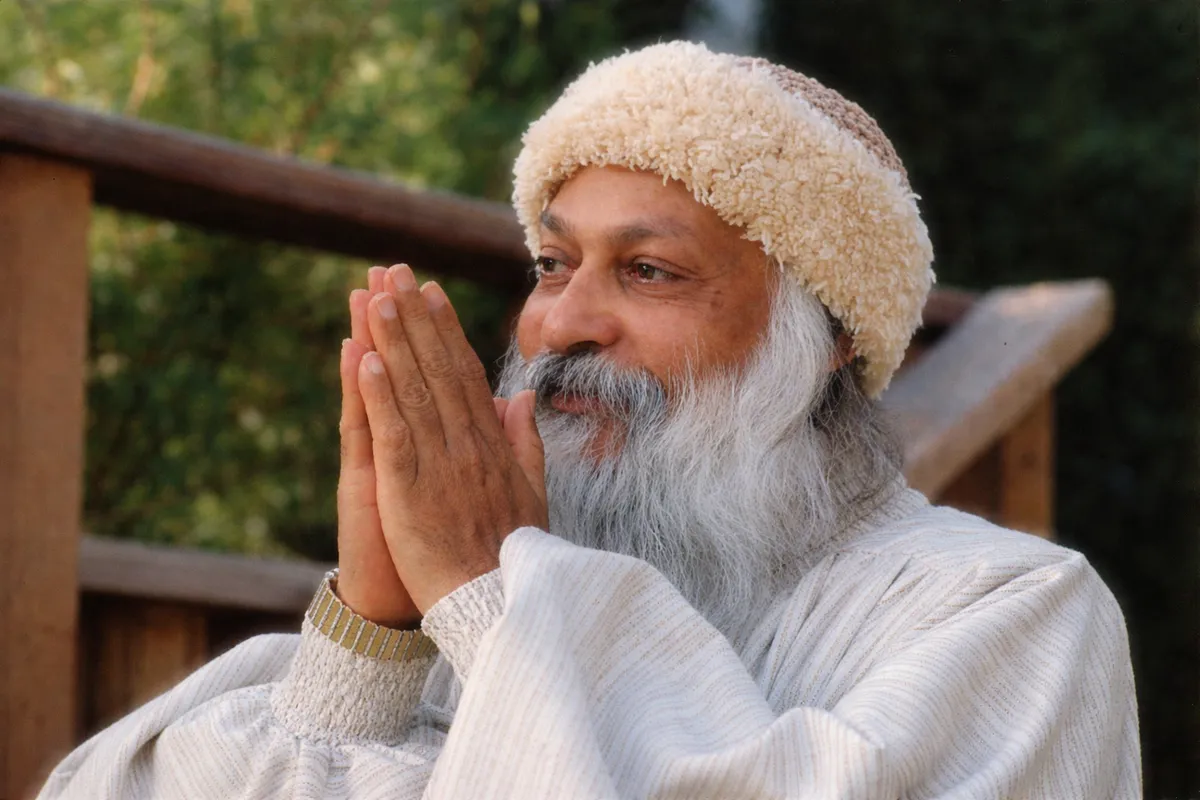
Saying the plain truth can hurt at first, but like strong medicine it makes us healthier and happier inside.
From the Discourses
Passages where Osho speaks to this question — each links to the complete discourse.
Osho! You state the truth as it is—straight and blunt. That’s why enemies arise. Like what you said yesterday about Dayanand. The point is true, but it stings. Wouldn’t it be better to remain silent in such matters?
When in the Chikmagalur election Indira won, and the news reached him that Indira had won, he clapped and laughed. The newspapers reported that he was pleased, delighted with her victory. Then he must have thought it over: a costly bargain. Morarji was in power then; to be happy at Indira’s victory was a slip. Soon a statement came that his clapping and laughing had nothing to do with Indira’s victory; he sometimes claps and sometimes laughs just out of playful mood. He changed the story. Just four or six days ago, before these election results, he told a certain minister that Indira’s Congress would win in only nine states. The minister issued a statement; it was printed. Two days later he must have felt that if victory did not occur in all those states, my word would be proved false; and as soon as it was seen that in…
Beloved Osho, I was blind. You gave me light for which I am extremely grateful. Until now, I did not ask a single question, but now I cannot hold back. Osho, it seems that some men of truth, after contemplating the consequences of telling the truth, came to observe, "say the truth, but say the pleasant truth. Don't say the truth that is unpleasant." Osho, please say something about it.
And in the evening a third man came. He was neither a theist nor an atheist; he was just an innocent seeker. He said to Buddha, "I don't know whether God exists or not. But there is a great urge in me to seek the truth. Can you be of any help?" Rather than answering him, Buddha closed his eyes. There was utter silence... and Ananda was surprised. Seeing Buddha closing his eyes and sitting in silence, that man also closed his eyes and sat in silence. Almost an hour must have passed. Then the man opened his eyes, touched Gautam Buddha's feet and said, "Your answer is so precious that I will keep it in my heart forever." Now it was too much, and as the man left, Ananda was furious. He said to Gautam Buddha, "What is going on? In one day you have contradicted yourself again and…
Verse (Sanskrit): यह भी मैं मानता हूं कि सत्य बोलने से बड़ा धक्का दूसरा नहीं हो सकता। समाज इतना झूठ बोलता रहा, इतना झूठ पर जी रहा है कि आप बड़े से बड़ा छाप जो पहुंचा सकते हैं वह यह कि चीज जैसी है वैसी सच-सच बोल दें। प्रश्न: ओशो, इसलिए कभी-कभी ऐसा भी हो जाता है कि लोग मानते हैं कि जो कोई धक्का दे सकता है वे सत्यवती हैं। Transliteration: yaha bhī maiṃ mānatā hūṃ ki satya bolane se bar̤ā dhakkā dūsarā nahīṃ ho sakatā| samāja itanā jhūṭha bolatā rahā, itanā jhūṭha para jī rahā hai ki āpa bar̤e se bar̤ā chāpa jo pahuṃcā sakate haiṃ vaha yaha ki cīja jaisī hai vaisī saca-saca bola deṃ| praśna: ośo, isalie kabhī-kabhī aisā bhī ho jātā hai ki loga mānate haiṃ ki jo koī dhakkā de sakatā hai ve satyavatī haiṃ| Translation: This too I hold: there is no shock…
Question: BELOVED OSHO, WHY, WHEN TRUTH AND LIES MEET, DOES TROUBLE ARISE? Waduda, man almost lives in lies, because they are comfortable, convenient. You don't have to make much effort to find a lie. The whole of society is ready to give you all kinds of lies -- but truth is an individual search. Lies are a social invention. So whenever truth is discovered, there is trouble. You have lived all your life in lies -- beautiful lies -- and suddenly you find your whole life collapsing. To choose truth, first you have to make an immense effort to find it. Second, when you find it, you suddenly also find that the whole of society is against you -- the whole world is against you.
Question: BELOVED OSHO, AN OLD TIBETAN IS QUOTED AS SAYING: "LIKE A LION, I HAVE NO FEAR. LIKE AN ELEPHANT, I HAVE NO ANXIETY. LIKE A MADMAN, I HAVE NO HOPE. I TELL YOU THE HONEST TRUTH." OSHO, WHAT IS SO WONDROUS AND PRECIOUS ABOUT THE HONEST TRUTH? In fact, to use these two words together shows a deep misunderstanding. "Honest truth" implies that there can be dishonest truth. Truth is enough. Honesty is a very ordinary quality that comes as a shadow of truth, with many other qualities. There is something immensely important about truth. But remember, never use the words honest truth. That means you have a suspicion: deep down you yourself are not convinced of the truthfulness of truth. To substitute, to compensate, you add honesty to it. Nothing can be added to truth. Truth is always pure, nude, alone.