
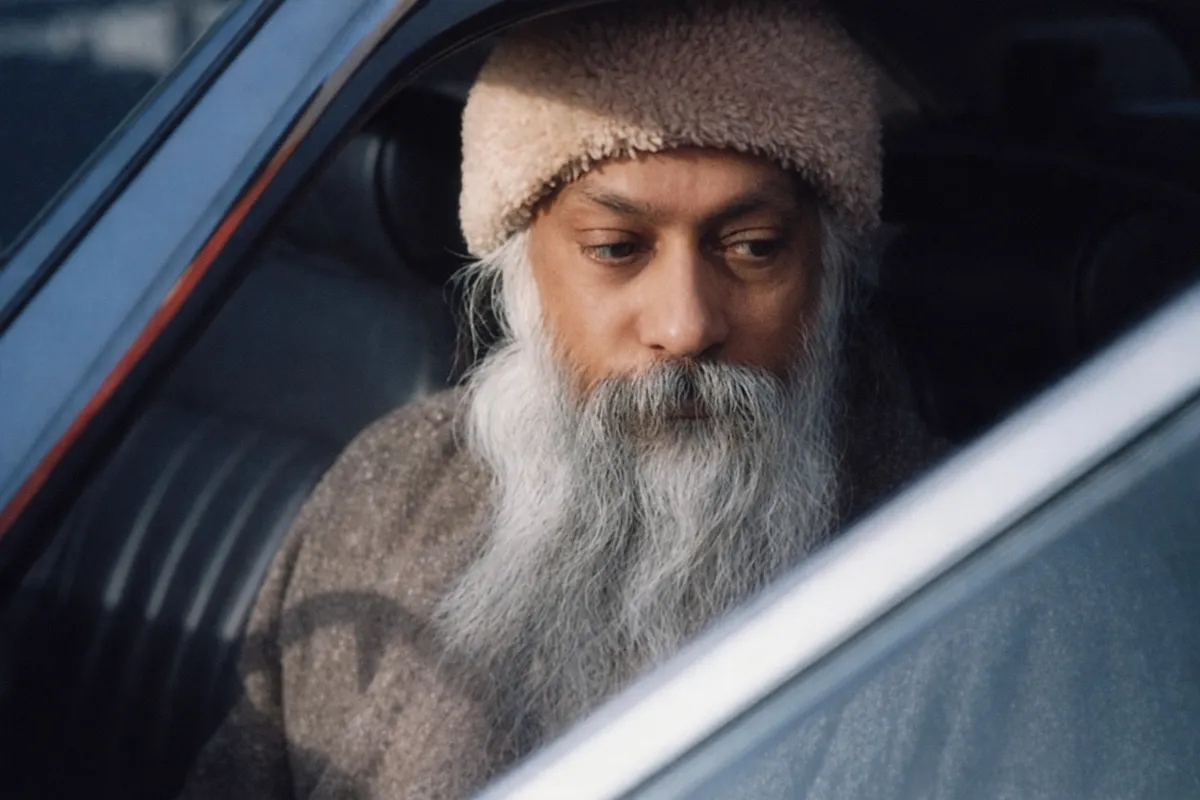
When you wake up inside while doing things, you stop running like a machine and move more gently, making even small acts feel alive and beautiful.
From the Discourses
Passages where Osho speaks to this question — each links to the complete discourse.
I am not saying to do anything. Meditation is not a doing at all, it is pure awareness. But a miracle happens, the greatest miracle in life. If you go on watching, tremendous and incredible things start happening. Your body becomes graceful, your body is no more restless, tense; your body starts becoming light, unburdened; you can see great weights, mountainous weights, falling from your body. Your body starts becoming pure of all kinds of toxins and poisons. You will see your mind is no more as active as before; its activity starts becoming less and less and gaps arise, gaps in which there are no thoughts. Those gaps are the most beautiful experiences because through those gaps you start seeing things as they are without any interference of the mind. Slowly slowly your moods start disappearing. You are no more very joyous and no more very sad.
Osho, you say that if there is awareness, then how are the two to be brought into harmony?
That is precisely the practice of active meditation: awareness. Awareness is the very means of going into emptiness in relation to all actions, to the movements of the mind as well. For example, if you lie there for half an hour—what will you do? In that half hour, whatever thoughts are moving in your mind, you are to be simply aware of them. Simply a witness—what else will you do? Just become a witness. Keep silently watching; let them move. But obstacles arise in our seeing. We become absorbed. We fail to remain a witness. We don’t even notice when we have become one with those very thoughts. That sense of awareness fades; a kind of stupor, a moorchha, comes in. A thought comes, a memory arises, and we stop being the watcher. We become part of that thought and of its flow. That is moorchha. And the opposite is…
प्रश्न: ओशो, आप जो बोलते हो कि जागरूकपना अगर है तो उन दोनों का समन्वय कैसे स्थित करेंगे?
वह सक्रिय ध्यान का ही प्रयोग है जागरूकता। समस्त क्रियाओं के प्रति, चित्त की क्रियाओं के प्रति शून्य में जाने का भी माध्यम जागरूकता ही है। जैसे आधा घंटा आप पड़े रहेंगे तो क्या करेंगे? उस आधे घंटे में आपके चित्त में जो भी विचार चल रहे हैं, उनके प्रति केवल जागरूक होना है। केवल साक्षी होना है, और क्या करिएगा? साक्षी भर हो जाना है। देखते रहना है चुपचाप, वे चलें। लेकिन हमारे देखने में बाधा आती है। हम तल्लीन हो जाते हैं। साक्षी नहीं रह पाते। हम कब उन्हीं विचारों में एक हो गए इसका पता नहीं रहता। यह बोध मिट जाता है, मूर्च्छा आ जाती है।
Mahavira has called apramad—vigilance, awareness, continuous wakefulness—the basis of practice. A friend asks: how can we bring this awareness into our conduct while doing our tasks—in the office, in the shop, while working? If attention remains on awareness, how will the work get done? While engaged in work, what is the place of awareness, and can this itself be a sadhana?
Take attention also as delight. Do not make it a restlessness. Let it not become a burden on your head that “I must work attentively.” Do not load it with strain and effort; let it grow lightly, support it. Whenever the remembrance arises, do it consciously. If you forget, do not worry. When remembrance returns, begin again to do it consciously. If you decide, “Now I will do my work consciously,” you will not be able to do it today itself; it may take years. To keep awareness even for a moment is difficult. You will decide to walk consciously; you will not be able to take even two steps before awareness has gone elsewhere and the feet have started walking elsewhere. Do not be anxious about that; do not repent. Heedlessness is the habit of countless lives; there is no reason to be distressed. We ourselves have cultivated unawareness—whom…
महावीर ने अप्रमाद को साधना का आधार कहा है, होश को, सतत जागृति को। एक मित्र ने पूछा है कि जो होश के बारे में कहा गया है वह हम अपने काम-काज में, ऑफिस में, दुकान में कार्य करते समय कैसे आचरण में लाएं? होश में रहने पर ध्यान जाए तो काम कैसे हो? काम में होते हुए होश का क्या स्थान है और क्या यह साधना हो सकती है?
ध्यान को भी आनंद समझें। इसको भी बेचैनी मत बनाएं। यह आपके सिर पर एक बोझ न हो जाए कि मुझे ध्यानपूर्वक ही काम करना है। इसको चेष्टा और प्रयत्न का बोझ न दें, हलके-हलके इसे विकसित होने दें, इसको सहारा दें। जब भी खयाल आ जाए, तो होशपूर्वक करें। भूल जाए, तो चिंता न लें। जब खयाल आ जाए, फिर होशपूर्वक करने लगें। अगर आपने तय किया है कि अब मैं काम अपना होशपूर्वक करूंगा, तो आप कर पाएंगे आज ही, ऐसा नहीं है; वर्षों लग जाएंगे। क्षण भर भी होश रखना मुश्किल है। तय करेंगे कि होशपूर्वक चलूंगा, दो कदम नहीं उठा पाएंगे और होश कहीं और चला जाएगा, कदम कहीं और चलने लगेंगे। …
Repression has become an automatic reaction in our bodies and minds which we do not even recognize or want to change any more. How can we learn to tell between a false image and a real one in ourselves?
So do not be for and do not be against. Allow the thoughts to move, let them go wherever they are going, be in a deep let-go, and simply witness. Whatsoever is passing, witness. Do not judge; do not say, "This is good, this is bad." If the thought of a divine being comes, do not say, "Beautiful!" The moment you say this you are identified with it, and you are cooperating with the thought process. You are helping it, you are giving energy to it, you are feeding it. And if you are feeding it, it can never drop. Or if there is a thought, a sexual thought, do not say, "This is bad; this is sin." Because when you say, "This is sin," you have created another series of thoughts. Sex is a thought, sin is a thought, God is a thought. Be neither for nor against. Simply…
Question: BELOVED OSHO, IN JAPAN THERE IS AN ANCIENT FORM OF THEATER, WHICH I STUDIED FOR A SHORT TIME, CALLED NOH. IN IT, THE ACTOR MOVES SLOWLY FORWARDS, ONE STEP AT A TIME; SIMULTANEOUSLY HE FOCUSES INSIDE, AND WITH HIS ENERGY CREATES A PATH BEHIND HIM. IF THE AUDIENCE IS REALLY IN TUNE WITH HIM, THEY CAN ALSO SEE BOTH HIS PHYSICAL MOVEMENT FORWARD AND THE PATH HE IS CREATING BEHIND HIM. OSHO, YOU ALWAYS SAY THAT YOU DON'T KNOW WHERE YOU WILL BE IN THE NEXT MOMENT, YOU DON'T CARE WHERE YOUR FEET WILL BE NEXT. MY CONCERN IS THAT I BE ABLE TO SEE CLEARLY, EVERY MOMENT, THE PATH THAT YOU ARE CREATING BEHIND YOU. WHAT A WONDERFUL JOURNEY TO BE WITH YOU, OSHO! WE GO WHEREVER EXISTENCE LEADS US. ... For two weeks he tried, and he found that it is the most difficult thing in the world.