
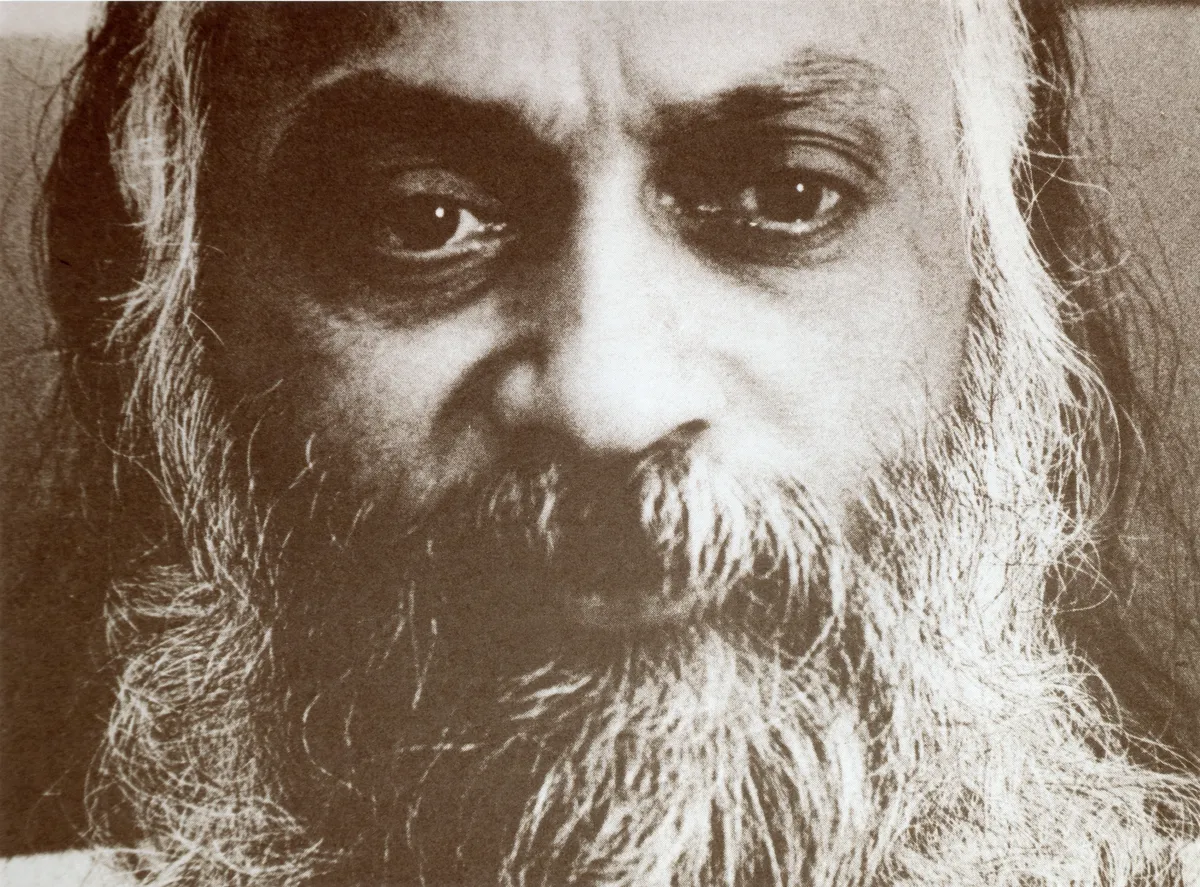
Waking up doesn’t make everyone the same; it makes you fully yourself, shining the same truth in your own style.
From the Discourses
Passages where Osho speaks to this question — each links to the complete discourse.
Beloved Osho, I heard you saying that enlightenment is the transcendence of mind -- conscious, unconscious, sub-conscious -- and that one dissolves into the ocean of life, into the universe, into nothingness. I also hear you talking about the individuality of human beings. How can the individuality of an enlightened person manifest itself if he is dissolved in the whole?
The ordinary, unconscious human being has no individuality; he has only a personality. Personality is that which is given by others to you -- by the parents, by the teachers, by the priest, by the society -- whatever they have said about you. And you have been desiring to be respectable, to be respected, so you have been doing things which are appreciated, and the society goes on rewarding you, respecting you more and more. This is their method of creating a personality. But personality is very thin, skin-deep. It is not your nature. The child is born without a personality, but he is born with a potential individuality. The potential individuality simply means his uniqueness from anybody else -- he is different. So first, remember that individuality is not personality. When you drop personality, you discover your individuality -- and only the individual can become enlightened. The false cannot…
Question: BELOVED OSHO, HOW DO YOU EXPERIENCE YOUR ENLIGHTENMENT? But in this whole changing, riverlike being... who are you? Only the stupid will speak out; the wise will remain silent. One who knows not will say, "I am this; I am a man, I am a woman, I am young, I am Hindu, I am a Christian..." Only the stupid will speak out. The wise will become absolutely silent. He is also answering -- his silence is the answer. Buddha calls this silence "right remembrance"... sammasati. You are saying, "I go on remembering all kinds of things you have said, and my own insights..." Agyeya, I had no idea that you also have insights! But... okay. Remembering all kinds of things that I have said, and what you have imagined as your intuitions... just try to find a single intuition that is yours, and you will be surprised.
And then he renounced the world. Rather than becoming a wrestler, he became a meditator. And when he became enlightened, he dropped the cloths. He had only one cloth that he used to cover his body. And after his enlightenment, as he was coming down the hill, a beggar asked him something, because it is too cold and he has nothing. And Mahavira looked at himself, he has only one shawl, so he made two pieces out of one shawl and gave half to the beggar, and half he kept himself. It was not enough to cover the body now. And as he was just descending from the hill into the valley, a rose bush caught hold in its thorns, the one piece of the shawl. He looked back and he laughed, and he said, "This is too much.
If krishnamurti is enlightened he must see what you are saying himself, right? So why doesn't he just come here and find himself a chair and a case of cold sodas and lean back and forget all that?
Two hipsters were visiting a small Alaska town when they heard some rumbling in the distance. 'Hey, cat,' one hipster said to a native. 'What's that crazy noise?' 'That noise means an avalanche is starting,' said one of the locals. 'In the past we've had to leave here for safety's sake.' 'Man,' said the second hipster, 'I don't dig this. Let's beat it.' 'You can go if you want to,' screamed hipster number one, 'but I'm staying. I've got a feeling this town is really going to move tonight!' If you look into people you will find that in situations absolutely alike -- or even in one situation -- they react differently, they respond differently. So what to say about enlightened persons? They are like peaks, peaks of the Himalayas, absolutely alone, unique. Never compare two enlightened persons. If you understand well, never compare any two persons -- but at…
Beloved Osho, it is said that shankara was a hindu vedantin, and you have said that shankara is a hidden buddhist. Please clarify this.
Two thousand five hundred years before Buddha, when the Upanishads were born, their grandeur was unique. Each and every word contained in them was luminous, every line was full of the divine! But that grandeur was lost by the time of Buddha -- the mirror was there but lots of dust had gathered on it. Now the mirror had become blind and nothing could be reflected in it. A big belief system had stood near the mirror. Even if Buddha tried to clean the mirror that creed would not let him do so, because what is called dust by Buddha is said to be religion by the masses. The communal mind does not know the mirror, it only knows the dust gathered on it and it thinks that this dust is the decoration, is the jewel. The communal mind cannot agree to the dust being wiped away; it thinks that…