
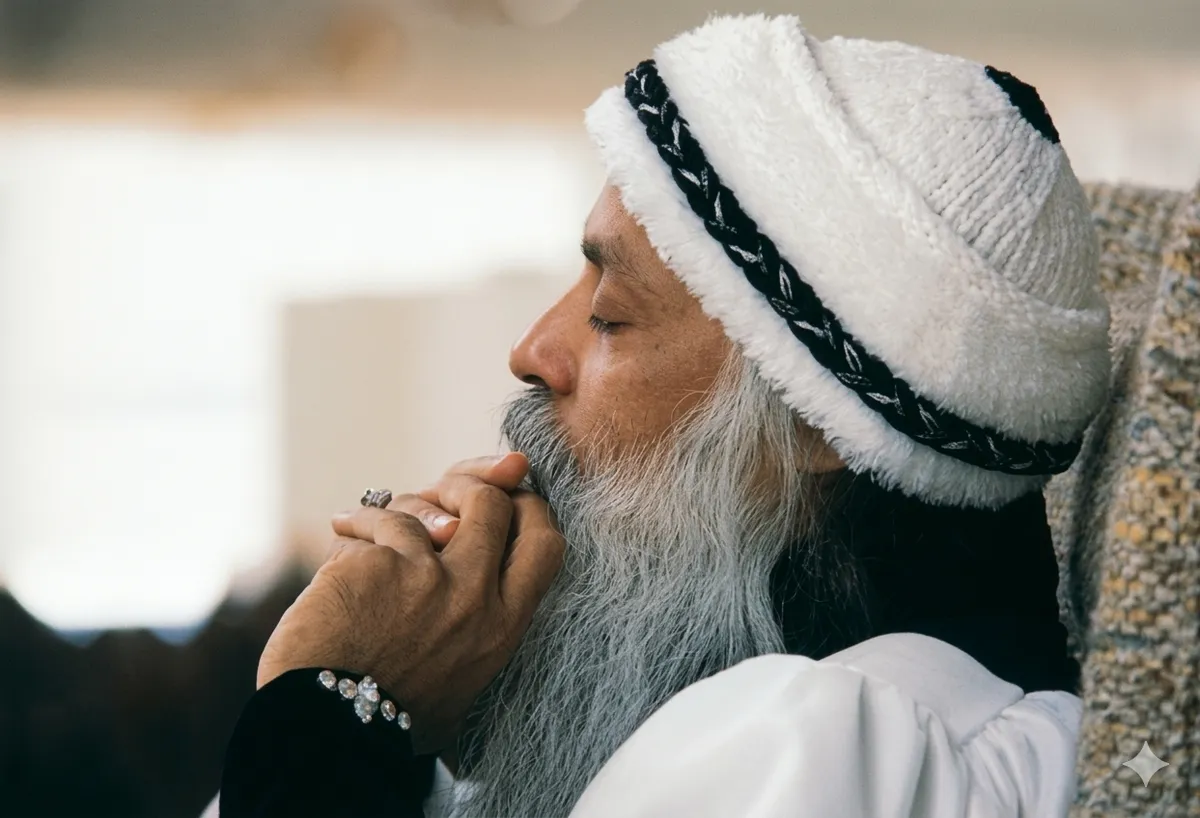
It means your body slept but a tiny light of awareness stayed on inside—so you feel awake, yet you’re rested, which is a good sign.
From the Discourses
Passages where Osho speaks to this question — each links to the complete discourse.
Osho, I don’t see dreams in sleep, yet it feels as if I haven’t slept for many days. At the slightest disturbance the body wakes up, as if I had been awake all along. But I don’t feel tired, and the hours of sleep seem to slip away. Please tell me what this state is?
Good, auspicious; do not be afraid. Dreams will slowly disappear. When the witness is awake, dreams cannot be. If there is dreaming, there cannot be witnessing. Good. The dream has fallen away; a sense of wakefulness remains through the night. Gradually it will deepen and grow denser; swiftness and intensity will come. The witness becomes keen—like the edge of a sword. But in the beginning there will be difficulty. We believe that eight hours of sleep are necessary—this is a notion—and then what is this that is happening? The whole night seems to pass as if awake. And if you remain “as if awake” for eight hours, the night feels very long, as if it will never end. If you sleep, you forget; you do not know when the night began or ended. You sleep and it is morning. But now it feels as if all night it remained morning;…
दूसरा प्रश्न: ओशो, नींद में सपने नहीं आते, पर लगता है कि कई दिनों से नहीं सोई हूं। जरा सी बाधा पर भी शरीर जाग पड़ता है, जैसे कि जागी ही होऊं। लेकिन थकान का अनुभव नहीं होता और नींद का समय सरकता मालूम होता है। कृपया बताएं कि यह कैसी स्थिति है?
शुभ है, मंगलदायी है; घबड़ाना मत। सपने धीरे-धीरे खो ही जाएंगे। क्योंकि जब साक्षी जागा रहेगा तो सपने नहीं हो सकते। सपना हो तो साक्षी नहीं हो सकता। ठीक है। सपना तो खो गया है, रात भर जागरण जैसा भी बना रहता है। धीरे-धीरे और प्रगाढ़ होगा; और सघन होगा; और त्वरा और तीव्रता आएगी। तलवार की धार की तरह साक्षीभाव बन जाता है--प्रखर। लेकिन शुरू में तो अड़चन होगी। क्योंकि हम सोचते हैं कि आठ घंटे की नींद जरूरी है--धारणा है; और यह क्या हो रहा है? रात भर जागे-जागे से रहे। और आठ घंटे जागे-जागे से बने रहो तो रात बड़ी लंबी मालूम पड़ती है। अंत ही होता नहीं आता मालूम पड़ता। …
When Turiya becomes easy in the day, then you can use it even in dreams. At night as you fall asleep, carry only one remembrance: I am the watcher, I am the seer. As sleep approaches, let a single tone resound within: I am the witness, I am the witness, I am the witness. Repeating this feeling-stream, fall asleep. You will not even notice when sleep came and when this stream broke. If you keep guarding this stream, sleep will come — the stream will continue. For the stream is flowing within you; sleep comes to the body. If the inner stream continues, one day suddenly even in a dream you will experience: I am the watcher. And the moment you experience this, something unique will happen — the dream will break instantly. As soon as within the dream you remember, “I am the watcher,” the dream stops.
जब दिन में तुरीय सरल हो जाएगा, तब तुम सपने में भी उसका उपयोग कर सकोगे। तब रात सोते वक्त एक ही खयाल रख कर सोना कि मैं देखने वाला हूं, मैं द्रष्टा हूं। नींद आने लगे, आने लगे, तुम्हारे भीतर एक ही स्वर गूंजता रहे कि मैं साक्षी हूं, मैं साक्षी हूं, मैं साक्षी हूं। इस भाव को पुनरुक्त करते हुए तुम सो जाना। तुम्हें पता भी न चले कि कब नींद लग गई और कब यह भाव-धारा टूटी। अगर तुम इस भाव-धारा को सम्हालते चले गए, सम्हालते चले गए, नींद आ जाएगी, भाव-धारा जारी रहेगी। क्योंकि भाव-धारा तुम्हारे भीतर चल रही है, नींद तो शरीर को आती है। अगर भाव-धारा भीतर जारी रही तो एक दिन तुम अचानक स्वप्न में भी अनुभव करोगे कि मैं देखने वाला हूं। और जैसे ही तुम अनुभव करोगे, अनूठी प्रतीति होगी: स्वप्न तत्क्षण टूट जाएगा। जैसे ही तुम्हें यह खयाल आएगा स्वप्न में कि मैं देखने वाला हूं, वैसे ही स्वप्न बंद हो जाएगा। स्वप्न चलता ही तुम्हारी बेहोशी से है। …
Question: BELOVED OSHO, BEFORE SEEKING YOU'VE INDICATED YOU WANT ME TO INSTRUCT YOU BY LETTER IN THE DIRECT ESSENTIALS. THIS VERY THOUGHT OF SEEKING INSTRUCTION IN THE DIRECT ESSENTIALS HAS ALREADY STUCK YOUR HEAD INTO A BOWL OF GLUE. THOUGH I SHOULDN'T ADD ANOTHER LAYER OF FROST TO THE SNOW, NEVERTHELESS WHERE THERE'S A QUESTION IT SHOULDN'T GO UNANSWERED. I ASK YOU TO ABANDON AT ONCE ALL THE JOY YOU'VE EVER FELT IN READING THE WORDS OF THE SCRIPTURES YOURSELF OR WHEN BEING AROUSED AND INSTRUCTED BY OTHERS. BE TOTALLY WITHOUT KNOWLEDGE AND UNDERSTANDING, AS BEFORE, LIKE A THREE-YEAR-OLD CHILD. THOUGH THE INNATE CONSCIOUSNESS IS THERE, IT DOESN'T OPERATE. THEN CONTEMPLATE WHAT'S THERE BEFORE THE THOUGHT OF SEEKING THE DIRECT ESSENTIALS ARISES: OBSERVE AND OBSERVE.
"does an enlightened person ever dream? Can you tell us something about the quality and nature of an enlightened person's sleep?"
No, an enlightened person cannot dream. And if you like dreams very much, never become enlightened. Beware! Dreaming is part of sleep. The first thing is that for dreaming to happen you have to move into sleep. For ordinary dreams you have to move into sleep. In sleep you become unconscious. When you are unconscious, dreams can happen. They happen only in your unconsciousness. An enlightened person is conscious even while asleep. He cannot become unconscious. Even if you give him an anaesthetic -- chloroform or something like that -- only his periphery goes to sleep. He remains conscious; his consciousness cannot be disturbed. Krishna says in the Gita that while everyone is asleep the yogi is awake. It is not that yogis are not going to sleep in the night; they also sleep, but their sleep has a different quality. Only their bodies sleep, and then their sleep is…
Sometimes at your lectures I can't keep my eyes open or concentrate, and keep falling somewhere and coming back with a jerk. There is no memory of where I have been. Am I going deep, or just falling asleep?
That's how in the morning you remember that in the night there were so many dreams, or on some day you say, "I slept very deeply; there were no dreams." These are both memories -- one positive, one negative. If dream happens there will be a positive memory -- something was happening, certain activity going on. If there is no dream you will have just a peaceful remembrance of nothing, that nothing happened. But this you will remember: that nothing happened and no dream crossed my mind and sleep was really deep, very deep, not a single ripple. But you will remember and you will say, "I was very blissful." But if you fall not asleep but into the meditative state -- they are similar, almost similar -- than you will not be able to remember anything. Because when you fall into a meditative state, theta, or sometimes you can…