
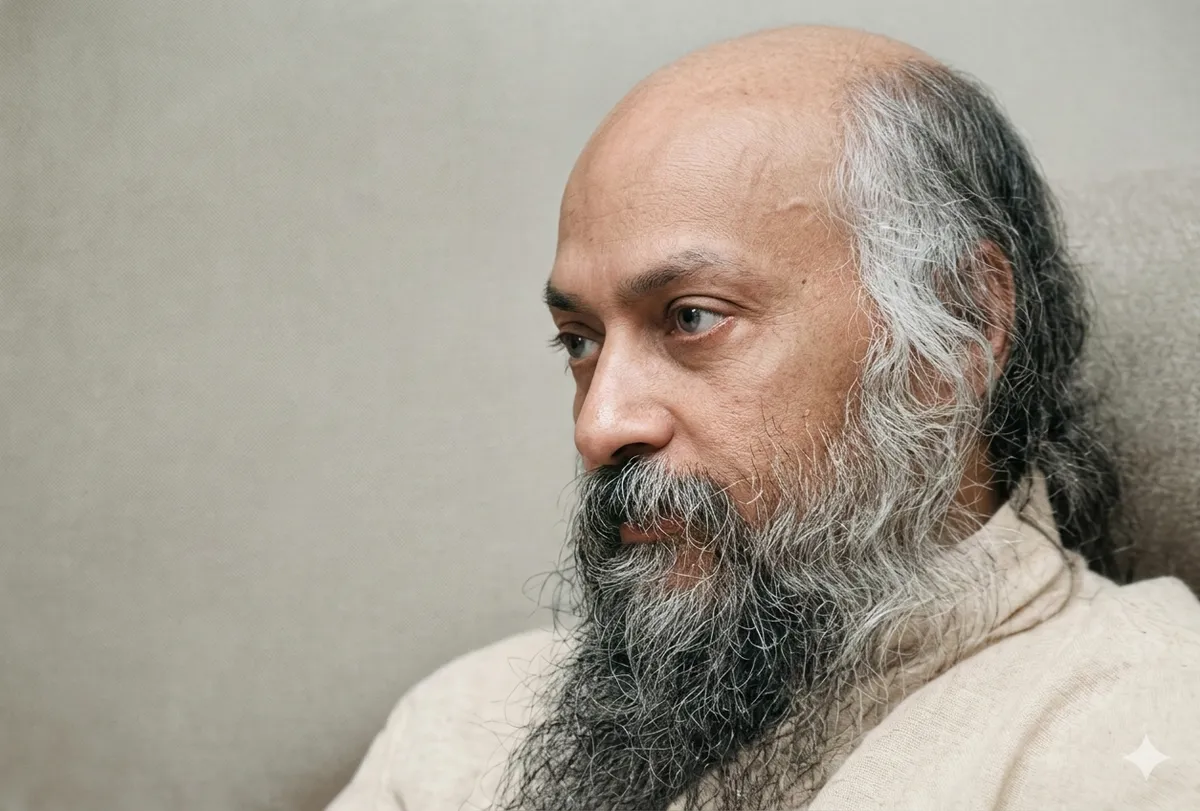
Sleep rests your body while, deep inside, a calm inner light can stay quietly awake.
From the Discourses
Passages where Osho speaks to this question — each links to the complete discourse.
Osho, I don’t see dreams in sleep, yet it feels as if I haven’t slept for many days. At the slightest disturbance the body wakes up, as if I had been awake all along. But I don’t feel tired, and the hours of sleep seem to slip away. Please tell me what this state is?
Good, auspicious; do not be afraid. Dreams will slowly disappear. When the witness is awake, dreams cannot be. If there is dreaming, there cannot be witnessing. Good. The dream has fallen away; a sense of wakefulness remains through the night. Gradually it will deepen and grow denser; swiftness and intensity will come. The witness becomes keen—like the edge of a sword. But in the beginning there will be difficulty. We believe that eight hours of sleep are necessary—this is a notion—and then what is this that is happening? The whole night seems to pass as if awake. And if you remain “as if awake” for eight hours, the night feels very long, as if it will never end. If you sleep, you forget; you do not know when the night began or ended. You sleep and it is morning. But now it feels as if all night it remained morning;…
दूसरा प्रश्न: ओशो, नींद में सपने नहीं आते, पर लगता है कि कई दिनों से नहीं सोई हूं। जरा सी बाधा पर भी शरीर जाग पड़ता है, जैसे कि जागी ही होऊं। लेकिन थकान का अनुभव नहीं होता और नींद का समय सरकता मालूम होता है। कृपया बताएं कि यह कैसी स्थिति है?
शुभ है, मंगलदायी है; घबड़ाना मत। सपने धीरे-धीरे खो ही जाएंगे। क्योंकि जब साक्षी जागा रहेगा तो सपने नहीं हो सकते। सपना हो तो साक्षी नहीं हो सकता। ठीक है। सपना तो खो गया है, रात भर जागरण जैसा भी बना रहता है। धीरे-धीरे और प्रगाढ़ होगा; और सघन होगा; और त्वरा और तीव्रता आएगी। तलवार की धार की तरह साक्षीभाव बन जाता है--प्रखर। लेकिन शुरू में तो अड़चन होगी। क्योंकि हम सोचते हैं कि आठ घंटे की नींद जरूरी है--धारणा है; और यह क्या हो रहा है? रात भर जागे-जागे से रहे। और आठ घंटे जागे-जागे से बने रहो तो रात बड़ी लंबी मालूम पड़ती है। अंत ही होता नहीं आता मालूम पड़ता। …
A friend has asked: Osho, if through meditation or spiritual practice one can conquer death, does not the same state occur in sleep? And if it does, why can’t death be conquered through sleep?
But meditation and hypnosis are not the same. Understand me carefully. I said: up to this point it is hypnosis, mesmerism—so long as we are manufacturing suggestions. When the manufacturing of suggestions stops and you awaken—where awareness begins—there meditation begins. Where witnessing begins, meditation begins. And the reason for this hypnosis is that you have fallen into a reverse hypnosis. In scientific language, this is not hypnosis but de-hypnosis. Not mesmerism, but the breaking of mesmerism. We are the ones mesmerized—but we don’t know it. In life we have become hypnotized, and we have no idea how many kinds of hypnotic trances we have taken on, by how many devices we have produced them. A large part of our life is hypnosis. And when we want to be hypnotized, we don’t notice what we are doing. For example… we live like this all our lives. If we became aware of…
Beloved Osho, what is sleep for you? Do you leave your body while it is resting or does sleep help you to stay in your body?
Prem Shunyo, asleep or awake, my consciousness is in the same state. To me, sleep is samadhi. That's how Patanjali explains samadhi: a sleep without dreams; a sleep which is not unconscious, which is not like a coma, but simply a light rest for the body. But deep inside, the inner being is fully alert ... just like a candle burning all night in a dark room, where no wind comes in. It remains unwavering but goes on radiating light. I don't feel any difference in my sleep or in my awakening. The same light and the same blissfulness and the same silence continues day in, day out. My sleep is not much of a sleep, just a thin layer of rest for the body. Inside I am all awake. You are asking, "Do you leave your body while it is resting or does sleep help you to stay in…
Is sleep a state of aloneness?
No. Sleep as it exists is not aloneness. It is not oneness, it is not twoness, it is just unconsciousness. You are unconscious of that which is. In ordinary wakefulness you are conscious of the two. In ordinary sleep you are not conscious of oneness nor are you conscious of twoness. But in real wakefulness -- in meditation, in samadhi -- you are conscious of aloneness. There is a similarity and there is a difference also. In sleep, you are unaware of the two but not aware of the one; in samadhi, in meditation, you are aware of it. If you can become totally aware and there is no twoness -- as in sleep there is not -- then oneness happens. In sleep the mind goes to sleep. In samadhi the mind dies. So sleep and samadhi appear to be similar but they are not, because after samadhi there is…
If you all sleep here tonight—so long as you are awake, there may be some differences; once asleep, all difference disappears. One and the same sleep descends upon all. If someone were to inspect each face—he would find only one taste: of sleep. However he investigates—women will be sleeping, men sleeping; children sleeping, old people sleeping; the healthy sleeping, the ill sleeping; the ugly and the beautiful sleeping; the poor and the rich sleeping; the worldly and the sannyasin sleeping—but the sleep is alike. The taste of sleep is one: unconsciousness. So too happens in the supreme awakening. Whoever awakens—their taste is one. Certainly their words differ—Krishna spoke in Sanskrit, the Buddha in Pali, Mahavira in Prakrit, Jesus in Aramaic, Mohammed in Arabic; languages differ, cups of different colors and shapes from different lands and times—but the taste is one. And the one who recognizes this taste—he alone is religious.
तुम सब यहां सो जाओ आज रात, तो जब तक जागे हो तब तक थोड़ा-बहुत शायद भेद भी हो, सोते ही तो सब भेद मिट जाएंगे। एक सी निद्रा सब पर छा जाएगी। फिर कोई आकर अलग-अलग चेहरों का निरीक्षण करने लगे, तो एक ही तो स्वाद पाएगा, निद्रा का। कितना ही खोजबीन करे--स्त्रियां सोयी होंगी, पुरुष सोए होंगे; बच्चे सोए होंगे, बूढ़े सोए होंगे; स्वस्थ सोया होगा, अस्वस्थ सोया होगा; कुरूप और सुंदर सोए होंगे, गरीब और धनी सोए होंगे, संसारी और संन्यासी सोए होंगे--लेकिन नींद एक सी होगी। नींद का स्वाद एक सा है। बेहोशी नींद का स्वाद है। ऐसी ही घटना परम जागरण में भी घटती है। जो भी जागे, उनका स्वाद एक है। निश्चित ही उनके शब्द अलग हैं--कृष्ण संस्कृत में बोले, बुद्ध पाली में बोले, महावीर प्राकृत में बोले, जीसस अरेमैक में बोले, मोहम्मद अरबी में बोले, भाषाओं के भेद हैं; अलग-अलग घाट, अलग-अलग रंग-ढंग की प्यालियां, अलग-अलग देश, अलग-अलग काल में बने हुए पात्र हैं, लेकिन स्वाद एक है। और जो इस स्वाद को पहचान लेता है, वही धार्मिक है। …