
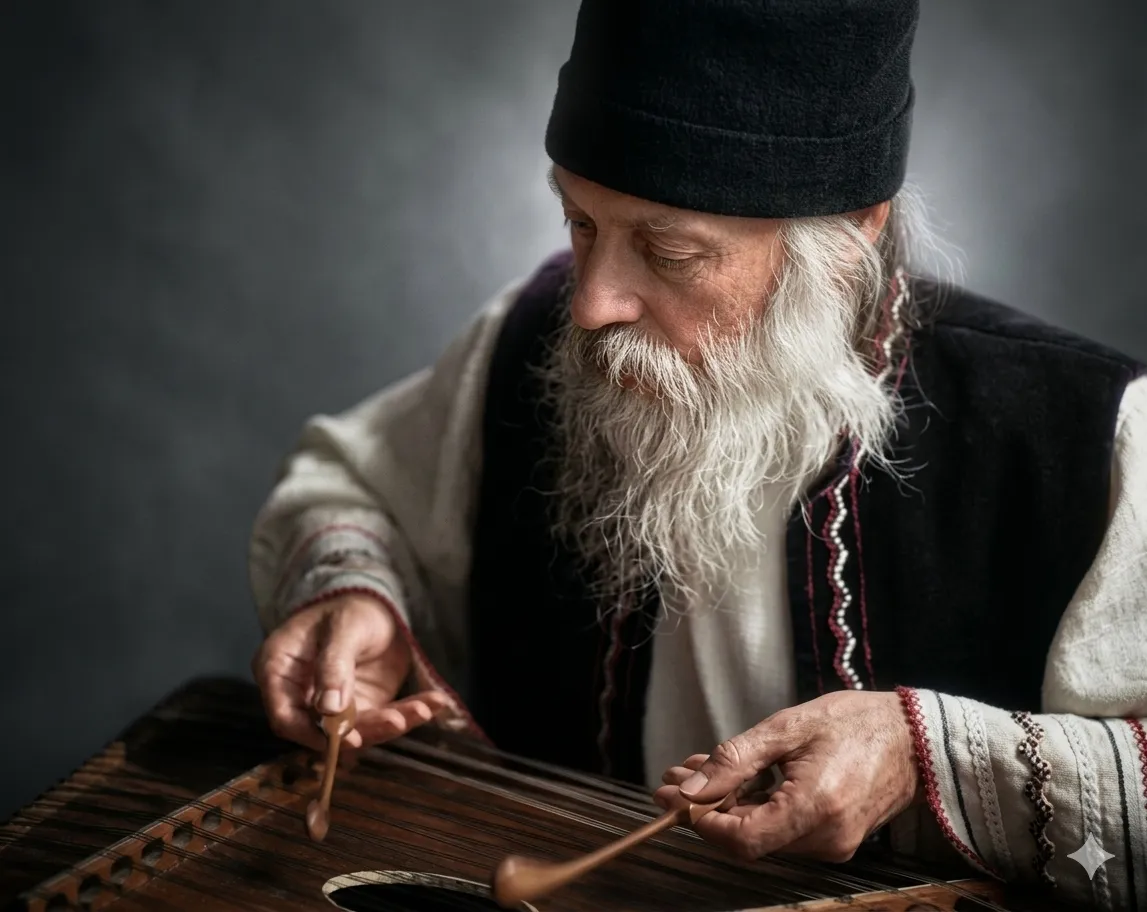
After listening, the words fade but the feeling stays, making you calmer inside and you naturally do and say wiser things without trying to remember.
From the Discourses
Passages where Osho speaks to this question — each links to the complete discourse.
Beloved Osho, when I listen to your discourses, you take me on an indescribable journey. If afterwards someone asks me about what you have said, I hardly remember. But when people ask me personal questions, answers are coming out of my mouth which astonish me the most. Osho, am I becoming a parrot of your words?
Listening to me is less like listening and more like drinking. Although it is a verbal communication, that is only the superficial part of it. Hidden beneath it is the real communion where meanings are absorbed and words are forgotten. You cannot become my parrot -- at least while I am alive. It is impossible to become my parrot. You will go crazy! My words are so full of contradictions that the poor parrot will be crushed under those contradictions. And it is a sure signal that you are not becoming a parrot because you don't remember my words. The parrot only remembers words, but whatever is being communicated to you is absorbed. It has to become part of your blood, your bones, your marrow -- not part of your memory. Unless it becomes your blood, your bones and your marrow, it cannot transform you. And the transformation is happening.…
Why, when I try to listen to your lectures with total attention, can I afterwards not remember what you have said?
There is no need. If you have listened to me with total attention there is no need to remember what I have said. It becomes part of you. You eat something do you remember what you have eaten? What is the use? It becomes part of you -- it becomes your blood; it becomes your bones. It becomes you. Once you eat something, you forget about it. You digest it, not that you remember it. If you listen totally, I am converting into your blood, I am converting into your bones, I am converting into your being. You are digesting me. There is no need. Whenever there will be a situation, you will respond; and in that response all that you have heard and listened to in totality will be there -- but not as remembered... but as lived. And this difference has to be remembered. Whatsoever I am trying…
Osho, you say the same thing in countless ways. But when I listen to you, it feels as if I am hearing it for the first time. And I feel so much joy that I don’t feel like going back home. What should I do—what can I do—so that I can just keep listening to you!
You will feel as if you have been made to rise out of season, before time—as if you were not yet to go and yet had to go. And if you go in that way, your home will become even more desolate than before. I do not want to make your home desolate; I want to make your home a temple. I want that when you go home, your home’s new form is revealed. I do not want to tear you away from home, from the world, from family life. That is the newness of my sannyas: I do not want to sever you from the world; I want to join you to the world in such a way that your connection with the world becomes a connection with the Divine. Let the world no longer be a barrier between you and the Divine; let it become a means. If…
Osho, the other day while listening to your discourse, a strange kind of vibration arose in the heart and along the auditory nerves; since then even ordinary sounds set off odd ripples and waves of bliss. Please tell me: is there something in the voice of enlightened ones that produces a special effect? Also, in your presence there is a particular, delightful fragrance; at times it is felt in the ashram and sometimes during meditation as well. In this regard, please say whether certain moments in time have their own special fragrance too.
I speak with the same purpose with which a musician plays the vina. He does not play to explain anything. Remember me as a vina player. My speaking is my vina. What I am saying to you—less am I speaking, more am I singing. If you understand its purpose, that is enough: listening to this instrument—as one sometimes, listening to a vina, falls into a trance—one begins to sway; something within begins to vibrate; something like a stone inside begins to melt and flow. For a moment a window, an opening, is there—sky is glimpsed. Like a flash of lightning—the darkness is gone—even if only for a moment; but then you know that light is, and you also know there is a path. It was revealed for a moment in the lightning’s flare, but revealed it was. Now no one can tell you there is no path; no one can…
Osho, after listening to the discourse on “Nahin Ram Bin Thav,” we were reminded of your proclamation voiced at the Anandshila camp: “I have not come to teach but to awaken. Surrender, and I will transform you—this is my promise.” Please explain this supreme assurance to us in detail. Also tell us: what is the difference between learning and awakening? And what is the relationship between surrender and transformation?
Through the boy, Rasputin had the royal family in his grip. If he left town for a day, they were in trouble. He also declared, “The day I die, within a short time the Tsar’s power will end.” He said it to ensure protection—and the Tsar protected him as best he could. Within a year and a half of Rasputin’s murder, the three‑hundred‑year‑old empire collapsed. In the outer history of the 1917 revolution, Lenin is central; in the inner, psychological history, Rasputin is key. Because of him, a revolution could happen—though such inner causes don’t show on the surface. If you cultivate concentration under a tree, power will arise. All forms of power feed the ego. Therefore concentrated renunciates are almost always very egoistic—their gait, their posture, their speech—all bear the shadow of ego. And for the ego‑filled, what relation can there be with the Divine? Impossible. Meditation is the…