
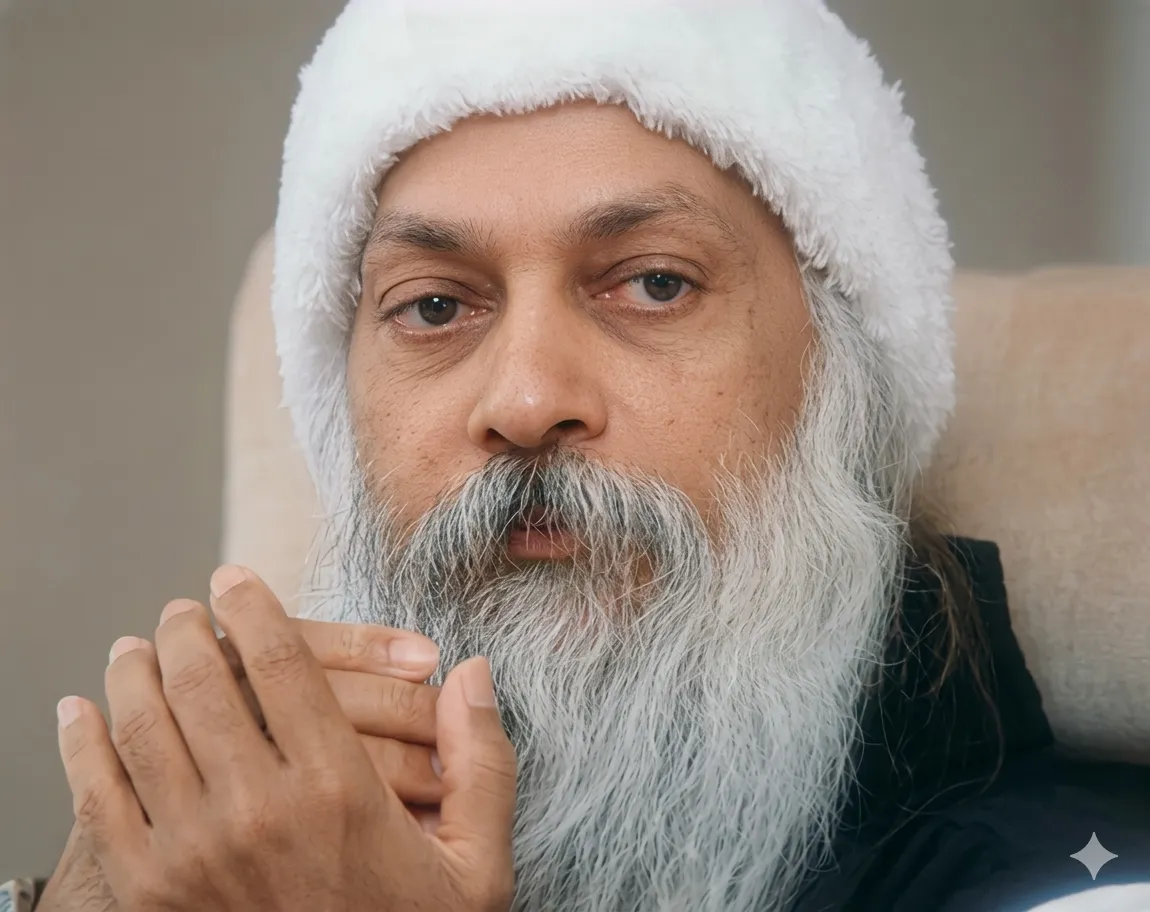
Stop trying so hard; float with life like riding a gentle river, and you’ll feel peaceful and happy.
From the Discourses
Passages where Osho speaks to this question — each links to the complete discourse.
It is not a difficult process because the process of looking is the same, just the object changes: you start turning your consciousness upon yourself. You may have seen many pictures of snakes swallowing their own tails. Those pictures are very ancient symbols of mystery schools; they represent this inner transformation. When your consciousness starts turning upon itself you become a circle, and the moment you are a circle you are no more the same old person. Your life starts having a new grace, a new beauty, a new beatitude. You become golden, you become precious. For the first time you have a contact with god, and that contact is a magical transformation. It is sheer magic and a miracle. Enjoy the trip, don't be too fixated on the target, Osho said in conclusion. Bliss is not a pond, it is a river. It is not static.
Osho, I have not had any experience of the supreme life and supreme bliss you speak of again and again, but even walking on this path brings joy. So can there be joy in the journey even before reaching the destination?
Even if the destination were to be given to you, first, you would not recognize it. Your eyes are very small and the destination very vast; your eyes would not be able to see it. Even if it were right in front of you—as it is—you would not recognize it, because to recognize it the eyes require training. And if, unfortunately, you did get it and recognized it, it would not prove a blessing but a curse, because you would not be able to contain so much bliss; that bliss would be devastating. So sadhana is the name of many preparations. We have to reach the destination. To be able to see it, the eyes must be trained. To be able to experience it, each wave of joy has to be slowly assimilated. To be able to contain it—so that when that great bliss descends you do not go mad,…
पहला प्रश्न: ओशो, परम जीवन और परम आनंद की बात जो आप बार-बार करते हैं, उसका तो कोई अनुभव मुझे हुआ नहीं है, लेकिन इस मार्ग पर चलने में भी आनंद आता है। तो क्या मंजिल तक पहुंचने के पहले यात्रा में भी आनंद हो सकता है?
… और दुर्भाग्य से अगर मंजिल आपको मिल भी जाए, आप पहचान भी लें, तो वह वरदान सिद्ध नहीं होगी, अभिशाप सिद्ध होगी। क्योंकि उतना आनंद आप झेल न पाएंगे। वह आनंद महाघातक होगा। तो साधना बहुत-सी तैयारियों का नाम है। मंजिल तक पहुंचना है। मंजिल को देख सकें, इसके लिए आंखों को प्रशिक्षित करना है। मंजिल को अनुभव कर सकें, इसलिए आनंद की एक-एक लहर को धीरे-धीरे आत्मसात करना है। …
Question: BELOVED OSHO, WHAT DOES IT MEAN TO BE A SPIRITUAL SEEKER? ... This happens: you are not really frustrated with life, but have become greedy for religious promises. You have not known that life is divine, but you have become enchanted with religious heavens. Then everything will be difficult, because you have not gone through the first part. The second part will be very difficult. So go through the first part and the second is very easy. The second is only difficult when the first has not been traveled completely. Then you ask, "How to meditate? Then you say, "The mind goes on working. Then you say, "The thought process is continuing. It cannot be stopped. How can it be stopped? Desire is there, so desire will go on creating thoughts. The first part has not been fulfilled.
Osho, is there no end to this journey?
There is neither a beginning to this journey nor an end. We are parts of the infinite, fragments of the eternal. We have always been, and we will always be. It is only that the waves seem to change, but the ocean remains the same. Forms change. It appears as though one journey is completed and another begins. But in truth, whatever is, is the eternal. No beginning, no end. And what greater joy could there be than this—that you are the infinite, you are the deathless? The seers of the Upanishads were absorbed in a single quest: How to move from darkness to light? From untruth to truth? And from death to immortality? If you live in darkness you will live in untruth; live in untruth and you will live in death. The three belong to one chain, one logic. Recognize the light within, and you will recognize truth—simultaneously,…
प्रश्न: ओशो, क्या इस यात्रा का कोई अंत नहीं है?
न तो कोई प्रारंभ है इस यात्रा का, न कोई अंत है। हम अनंत के हिस्से हैं, हम शाश्वत के अंश हैं। हम सदा से हैं, और सदा रहेंगे। यह बात और है कि लहरें बदलती हुई दिखाई पड़ती हैं, मगर समुंदर वही है। रूप बदल जाते हैं। लगता है ऐसे कि एक यात्रा पूरी हुई, दूसरी यात्रा शुरू हुई। लेकिन वस्तुतः जो भी है, शाश्वत है। न कोई प्रारंभ है, न कोई अंत है। और इससे बड़ी आनंद की और क्या बात होगी कि तुम अनंत हो, तुम अमृत हो?
Osho, the journey so far has been hard, but with your hint and support I have passed through it. I feel blessed to have received what I had never even imagined! Whatever I experienced, I kept explaining to others as well. But the journey ahead seems not only difficult, it feels absolutely impossible. You say, “You are at the destination; drop the very idea of journey.” It seems somewhat understandable, yet the resolution doesn’t stay. Osho, why does this complaint arise? Am I expecting the impossible before its time? Is waiting an even harder practice than practice itself? Osho, what is this r
You get a glimpse that the teaching is right; but the ancient mind won’t let the glimpse stay. It protests, “How can this be right? What will happen to me? Where will I go? If you are already God, then what is the point of religion? What meaning has practice? If you are God, then who is saint and who sinner? Who is Ravana and who Rama?” The mind creates a thousand disturbances. “Then what difference between a drunkard and a devotee—if all are God?” It becomes hard to answer such questions. And the truth is: between saint and sinner there is no difference—only on the surface, in the mind; within, the same One resides. Between Rama and Ravana there is no difference. Have you ever gone behind the stage of a Ramlila? There the reality is revealed. The curtain lifts: Rama and Ravana stand with bows and arrows aimed,…
पहला प्रश्न: ओशो, अब तक की यात्रा कठिन रही, लेकिन आपके इशारे से और सहारे से उससे गुजर चुका। जो कभी सोचा भी न था, उसे पाकर धन्यभागी हूं! जो भी अनुभव में आया, उसे अब तक दूसरों को भी समझाता रहा। लेकिन आगे की यात्रा सिर्फ कठिन ही नहीं, बल्कि बिलकुल असंभव लगती है। आप तो कहते हैं, तुम मंजिल पर हो; यह यात्रा का खयाल ही छोड़ दो। बात कुछ समझ में आती सी लगती है, फिर भी समाधान टिकता नहीं। ओशो, यह शिकायत क्यों उठती है? क्या मैं समय के पूर्व असंभव की अपेक्षा कर रहा हूं? क्या प्रतीक्षा साधना से भी कठिन साधना है? ओशो, यह कैसी बेचैनी है?
एक झलक मिलती है तुम्हें कि बात ठीक। लेकिन यह जो पुराना मन है, यह उस झलक को टिकने नहीं देता। यह कहता है, बात ठीक कैसे हो सकती है? मेरा क्या होगा? मैं कहां जाऊं? और यह बात ठीक नहीं हो सकती; क्योंकि अगर तुम परमात्मा ही हो तो फिर धर्म का कोई प्रयोजन नहीं; फिर साधना का कोई अर्थ नहीं। अगर तुम परमात्मा ही हो तो फिर कौन है संत और कौन असंत; कौन पापी, कौन पुण्यात्मा; फिर कौन रावण और कौन राम? फिर मन हजार उपद्रव खड़े करता है। फिर तुम शराबी में और सत्संगी में क्या फर्क करोगे? अगर सभी परमात्मा हैं! और मन के इन प्रश्नों के उत्तर देना मुश्किल होने लगेगा। और सच्चाई यही है कि संत में और असंत में कोई फर्क नहीं है। फर्क ऊपर-ऊपर है, फर्क मन का है, भीतर एक ही विराजमान है। राम और रावण में कोई फर्क नहीं है।