
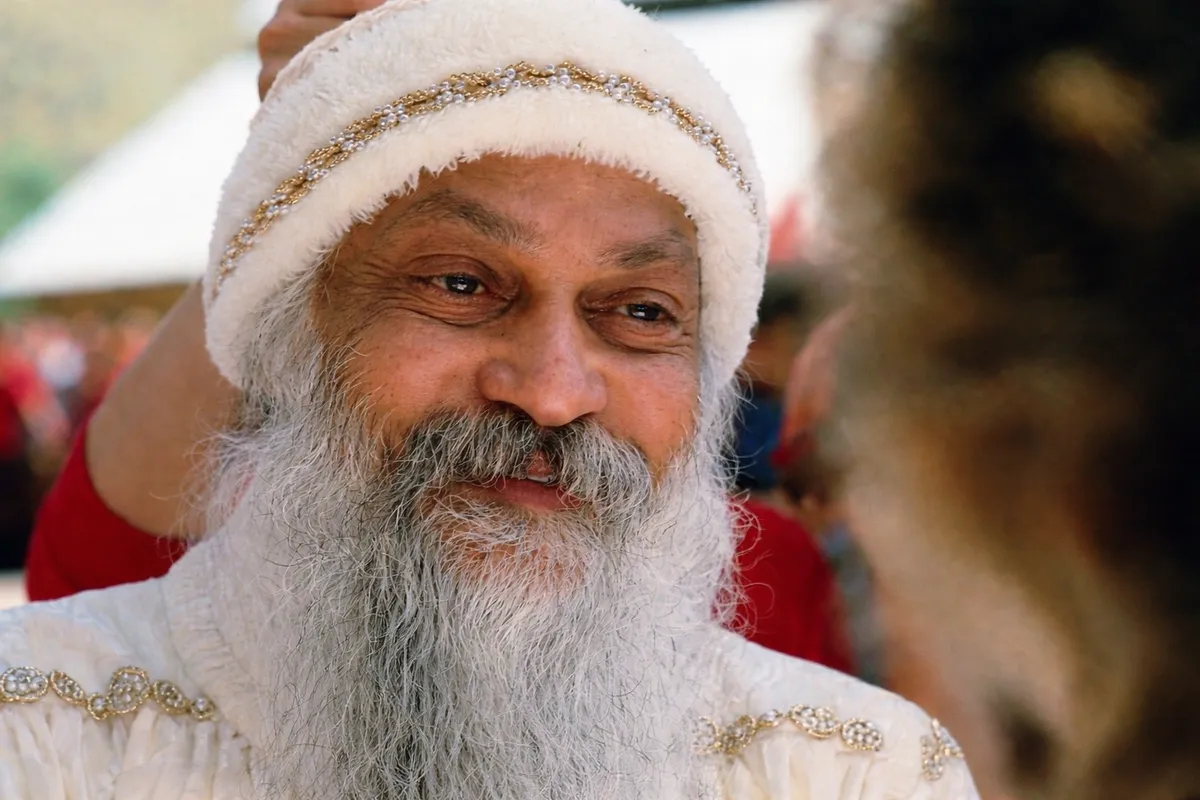
According to Osho, after enlightenment a vast, unbreakable silence descended—the mind stopped, speech ceased by itself, and only pure witnessing remained. For nearly two years there was immense inner rejoicing while outwardly people feared he’d gone mad. Misunderstood by family and pundits, he was affirmed by the beggar-sage Magga Baba, whose quiet recognition mirrored the truth: transformation is silent, self-arising, and needs no social approval.
After awakening, he fell into deep silence and joy, stopped talking naturally, was seen as crazy by many, and only a simple beggar-saint recognized he was truly okay.
From the Discourses
Passages where Osho speaks to this question — each links to the complete discourse.
Beloved Osho, what did you do in those years immediately after your enlightenment?
It is a difficult question. The first thing was that a great silence, almost unbreakable, followed the experience, as if the mind had stopped functioning. There was nothing to do about it -- except to watch. It was difficult for my family, my friends. Obviously, they thought I had gone mad. My family has always been worried about me, concerned that I'm not following the well-trodden path and I am moving into dangerous experiments; the danger of going mad was easily conceivable. And when I stopped speaking -- it would be better to say that the speaking stopped itself, I was not a partner to it -- people would ask questions and I would not even be able to give answers to simple things. For almost two years, inside it was a tremendous rejoicing. Outside, it became a trouble. The people who thought they were trying to help me were…
Osho, what was the first thing that you did after you became enlightened?
For two years I had lived with that family, and they had known that I would get up at three o'clock in the morning, then I would go for a long four- or five-mile walk or run, and then I would take a bath in the river. Everything was absolutely routine. Even if I had a fever or I was ill, there was no difference: I would simply go on the same way. They had known me to sit in meditation for hours. Up to that day I had not eaten many things. I would not drink tea, coffee, I had a strict discipline about what to eat, what not to eat. And exactly at nine o'clock I would go to bed. Even if somebody was sitting there, I would simply say "Goodbye" and I would go to my bed. The family with whom I used to live, they would…
Question: BELOVED OSHO, HOW DO YOU EXPERIENCE YOUR ENLIGHTENMENT? But in this whole changing, riverlike being... who are you? Only the stupid will speak out; the wise will remain silent. One who knows not will say, "I am this; I am a man, I am a woman, I am young, I am Hindu, I am a Christian..." Only the stupid will speak out. The wise will become absolutely silent. He is also answering -- his silence is the answer. Buddha calls this silence "right remembrance"... sammasati. You are saying, "I go on remembering all kinds of things you have said, and my own insights..." Agyeya, I had no idea that you also have insights! But... okay. Remembering all kinds of things that I have said, and what you have imagined as your intuitions... just try to find a single intuition that is yours, and you will be surprised.
Beloved Osho, I have heard you say that gautam buddha's work came to an end when he became enlightened, and you started your work after your enlightenment. Could you say something about this?
This was the day of his enlightenment. Buddhist scholars for twenty-five centuries have thought that he achieved this state because of those six years of arduous effort. I differ from them absolutely. And they have not been able to prove to me... and they think that I am crazy because they think that if it were true, then in twenty-five centuries people would have seen it. But I say that he attained enlightenment because he dropped the desire to attain it. Pankaja, I said Gautam Buddha's work came to an end when he became enlightened. He worked too hard. I have never worked for enlightenment; I have never followed any discipline, any scripture, any religion, any ascetic path. Where Buddha reached after six years of arduous effort, I found myself there from the very beginning -- sitting under a tree, relaxed. People used to think -- my teachers, my friends…
Beloved Osho, what is enlightenment? Have the experience and the idea of enlightenment evolved with time?
So nirvana is just like darkness. The light is put off and your reality is all there, with all its beauty, benediction, blessing. But there is no word in English to translate nirvana. Jainas use the word moksha. Moksha means absolute freedom, ultimate freedom, freedom from all fetters. And the biggest fetter is the ego. Other fetters are just parts of the ego: greed, lust, ambition, anger. All that is thought to be sin in other religions, in Jainism is thought only to be a fetter. But the root, the main root of the whole tree of your slavery, is the ego. So cut the main root and all other roots will die of their own accord. Don't bother to cut small roots, branches, leaves, because they will come again. Cut the main root and the whole tree will die. And when all your fetters fall, what remains? The unfettered…