
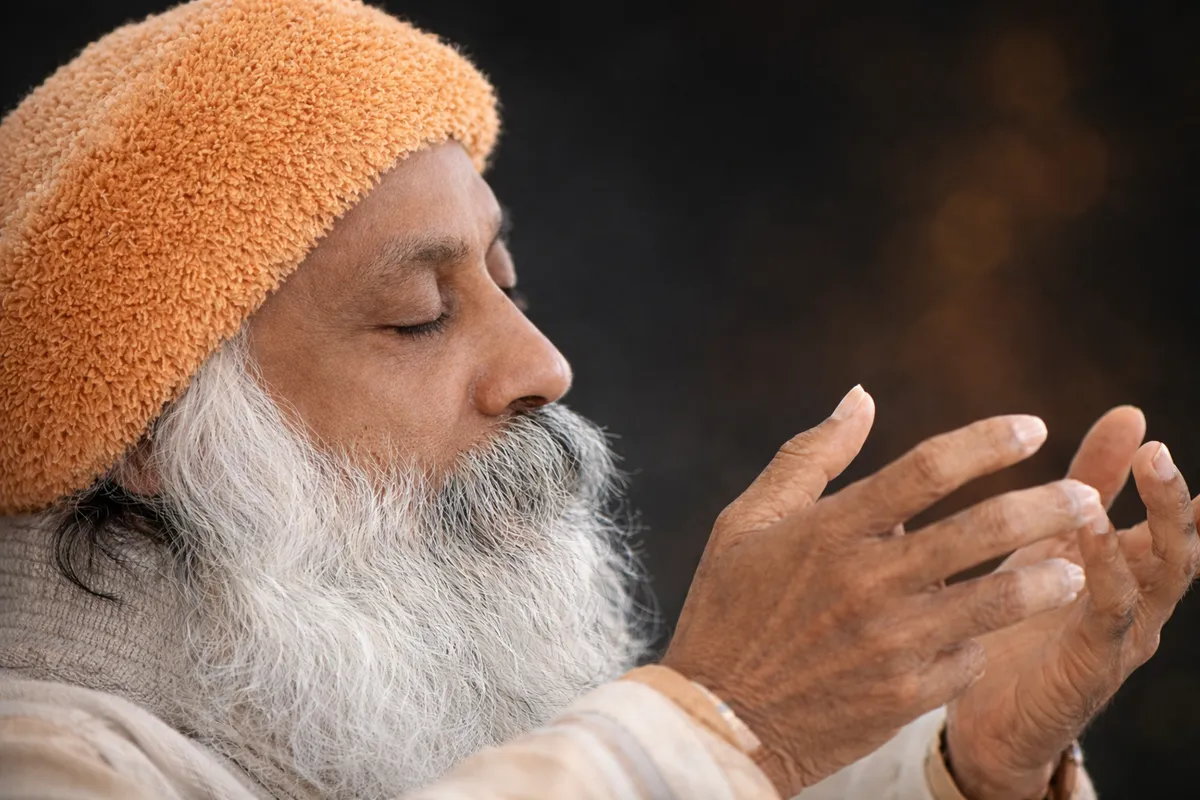
When a big feeling comes, especially a good one, let it out gently instead of pushing it down so you feel clearer and calmer.
From the Discourses
Passages where Osho speaks to this question — each links to the complete discourse.
Krishnapriya has asked, "So in such a situation, what guidance would you give?"
I am always on the side of the predominant feeling. Whatever strong feeling arises, do not suppress it. And when such an auspicious feeling is arising, then certainly do not suppress it. Let it be expressed. This will increase your purity, enhance your clarity, and the likelihood of its recurring will lessen.
पूछा है कृष्णप्रिया ने, ‘तो ऐसे में आप क्या मार्गदर्शन देंगे?’
मैं तो हमेशा ही प्रबल भाव के पक्ष में हूं। जो प्रबल भाव उठे, उसे दबाना मत। और जब ऐसा शुभ भाव उठ रहा हो, तब तो दबाना ही मत। तब तो उसे प्रकट करना। इससे तुम्हारी शुद्धता बढ़ेगी, स्वच्छता बढ़ेगी और दुबारा होने की संभावना कम हो जाएगी।
A second friend has asked: Osho, in the practice of awakening, of awareness, fear arises, and there is a constant worry that the routine of life may fall into disorder. It also seems that when anger, sex, etc., arise, if one acts on them, they are finished in five to seven minutes—one feels free of them. If you don’t act, their after-echo, their waves, keep resounding within for days. Then it feels as if it would have been better to have done it and been done with it. So what should one do? Is such awakening not repression?
Two things. First, if through “awakening” your anger—which would otherwise be over in five minutes—goes on for two days, understand it is not awakening; it is repression. Repression makes things spread. It creates even more disturbance than indulgence. If sexual desire arises and is over in a moment, but with your so-called awakening it drags on for days, grows dense, and becomes a burden on the mind, know that it is not awakening, it is repression. Many of us don’t rightly understand the difference between awakening and repression. Understand it. Repression means: what has arisen inside, you press it down inside; you don’t allow it to come out. Indulgence means: you let it out on someone. Get the difference clear. Repression means: you force it down upon yourself; indulgence means: you unload it onto the other. Awakening is a third thing—letting it out into the void: neither pressing it down…
एक दूसरे मित्र ने पूछा है: ओशो, जागृति की, होश की साधना में भय का जन्म हो जाता है, और हर समय डर लगता रहता है कि जीवन-चर्या अस्त-व्यस्त न हो जाए। फिर ऐसा भी लगता है कि क्रोध, काम आदि उठते हैं, तो कर लेने से पांच-सात मिनट में निपट जाते हैं। उनसे मुक्ति हो जाती मालूम पड़ती है। न करो तो दिनों तक उनकी प्रतिध्वनि, उनकी तरंगें भीतर गूंजती रहती हैं। और तब ऐसा लगता है कि इससे तो कर ही लिया होता तो निपट गए होते। तो क्या करें? ऐसी जागृति दमन नहीं है?
दो बातें हैं, एक तो, अगर, जागृति से क्रोध--जो पांच मिनट में निपट जाता है, दो दिन चल जाता है, तो समझना कि वह जागृति नहीं है, दमन ही है। क्योंकि दमन से ही चीजें फैल जाती हैं। भोग से भी ज्यादा उपद्रव खड़ा हो जाता है। अगर कामवासना उठती है और क्षण भर में निपट जाती है। और जागृति से दिनों सरकती है और सघन होने लगती है और मन पर बोझ बन जाती है, तो समझना कि जागृति नहीं है, दमन ही है।
Osho, you have earlier said, “Live moment to moment, live in the present.” Now you are saying, “Return to the past.” What should we do?
So it is with the mind—there are ruts. The past means endless grooves. However much you understand, your intellect agrees, you make decisions, you resolve—at the moment of resolve you feel something is going to change. But not even an hour passes before your decision breaks. Then only self-condemnation is produced, nothing else. Your saints, your fakirs, your priests and pundits—most of the time they only succeed in producing self-condemnation in you, nothing else. Their words are logically correct. You cannot even say they are wrong; you have to admit they are right. In that admission you take a decision. But against what are you deciding? Inside are grooves carved since who knows when, deep tracks. Walking in them has become a habit. It is easy to walk in them. They will pull you again and again. The meaning of returning into the past is: these grooves must be erased.…
दूसरा प्रश्न: ओशो, आपने पहले कहा है, क्षण-क्षण जीयो, वर्तमान में जीओ। अब आप कह रहे हैं, अतीत में लौटो। हम क्या करें?
ठीक मन पर लीकें हैं। अतीत का अर्थ है, अनंत लीकें। तो आप कितनी ही बातें समझ लेते हैं; बुद्धि सहमत हो जाती है; निर्णय ले लेते हैं; संकल्प कर लेते हैं। और जब संकल्प करते हैं, तब सोचते हैं कि कुछ होने-जाने वाला है। घड़ी भी नहीं बीत पाती कि जो आपने निर्णय लिया था, वह टूट जाता है। और तब सिर्फ आत्मग्लानि पैदा होती है, और कुछ भी नहीं। आपके संत, आपके फकीर, आपके पंडित-पुरोहित, आप में सिर्फ आत्मग्लानि पैदा करवा पाते हैं और कुछ भी नहीं। क्योंकि उनकी बातें तो तर्कयुक्त हैं। आप भी कह नहीं सकते कि वे गलत कह रहे हैं। स्वीकार करना पड़ता है कि ठीक कह रहे हैं। उस स्वीकृति में आप निर्णय लेते हैं। लेकिन निर्णय किसके खिलाफ ले रहे हैं! न मालूम कितनी लंबी लकीरें भीतर हैं, गहरे खांचे हैं। उनमें चलने की आदत हो गई है। उनमें चलना सुगम है। …
Osho, everything goes well, and then in a weak moment my entire past engulfs me like a storm and seems to say, I will not let you go. All the nerves in my head tighten. In discourse I find a solution, but then, upon returning to the world, the same forces try to assert themselves again. Pratibha has asked.
It is natural. Here you are in a wave; you flow with my tide. When you go back into the world, you become alone again. You do not yet have the art to take me with you there as well. I am ready; in time, that too will happen. Here you are in an atmosphere. This is a world of its own for these ochre-clad sannyasins. It has its own rhythm, its own breeze. In this breeze you effortlessly rise into the high sky. Left alone, you do not yet trust your own wings. Along with me you take a far flight; but when left to yourself you become frightened, full of doubt. Trust does not arise in you; self-confidence does not lift enough for you to live at such a height. When you return to the world, there is a crowd and all kinds of people. The air there…
चौथा प्रश्न: ओशो, सब-कुछ ठीक चलता रहता है, फिर किसी कमजोर क्षण में मेरा सारा अतीत एक तूफान-समान घेर लेता है और कहता मालूम होता है, जाने नहीं दूंगा। सिर की सारी नसें खिंचाव में आ जाती हैं। प्रवचन में समाधान हो जाता है पर फिर संसार में जाकर वही शक्तियां प्रबल होना चाहती हैं। पूछा है प्रतिभा ने।
ऐसा स्वाभाविक है। यहां तुम एक तरंग में होते हो। मेरी लहर के साथ बहते हो। संसार में जाते हो, फिर तुम अकेले हो जाते हो। अभी तुम्हें वह कला नहीं आई है कि तुम मुझे अपने साथ वहां भी ले जा सको। मैं तो तैयार हूं। आते-आते वह भी आ जाएगी। यहां तो तुम एक वातावरण में होते हो। यह गैरिक संन्यासियों का अपना एक जगत है। इसकी अपनी एक धुन है, अपनी एक हवा है। इस हवा में तुम सहज ही ऊंचे आकाश में उठ जाते हो। अकेले रह जाओगे, अपने ही पंखों पर तुम्हें अभी भरोसा नहीं है। मेरे साथ-साथ तुम दूर की उड़ान ले लेते हो। लेकिन अपने पर ही छोड़े जाओ तो तुम भयभीत हो जाते हो, शंकालु हो जाते हो। तुम्हें भरोसा नहीं आता। आत्म-विश्वास नहीं उठता कि मैं इतनी ऊंची उड़ान पर जी सकूं। संसार में लौटते हो, वहां भीड़ है और तरह के लोगों की। वहां और तरह की हवा है। उस हवा में तुम फिर खिंच जाते हो नीचे की तरफ। तो प्रतिभा का प्रश्न महत्वपूर्ण है, सभी के लिए काम का है। ‘सब-कुछ ठीक चलता रहता है, फिर किसी कमजोर क्षण में.।’ वे कमजोर क्षण आते रहेंगे। …
To be spontaneous means not to act out of the past, because out of the past is all cunningness, cleverness, calculation, arithmetic. When you act in the moment and it has no reference to your past, the action has a beauty, a purity -- the same as a small child's act. Whether he laughs or cries or goes into a tantrum or becomes angry, all his acts have purity -- it is uncalculated. His anger is hot and not cold. The calculated anger is cold. His anger is natural, a responsiveness. He has not brooded over it, he has not planned it. He is just in the hands of nature -- hence the beauty. He is surrendered to his nature; he is not trying to control his life.