
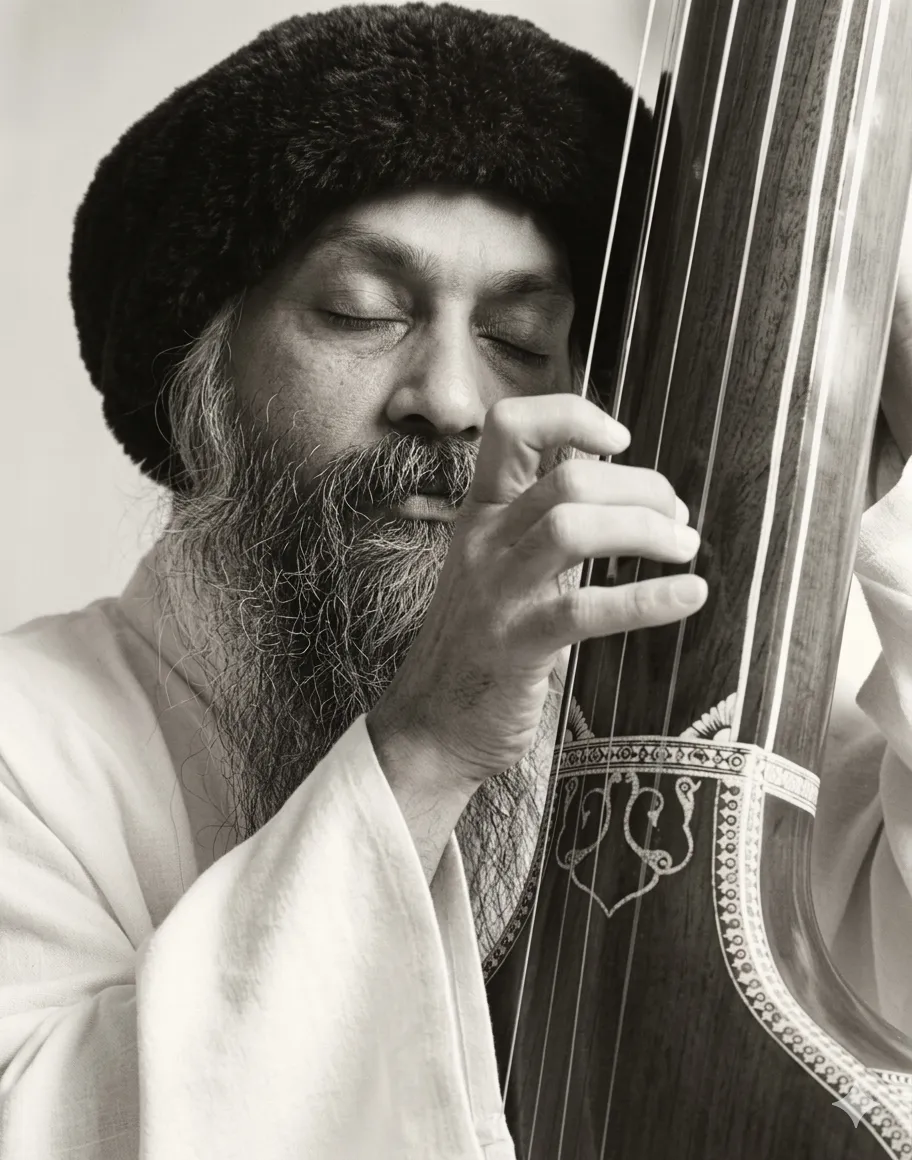
Sit quietly with an open heart, like waiting for sleep, and let the divine come to you instead of trying to grab it.
From the Discourses
Passages where Osho speaks to this question — each links to the complete discourse.
The second question is also related to this. 'Guna' has asked: Osho, I have been with you for a long time, and I am very ignorant and unintelligent—you know this well. Many of the things you say go over my head. The pain of separation from the Divine that you speak of—I have never felt it. I know nothing of thirst for God. Then why am I here, and what am I doing with all this meditation and practice?
‘Guna’s’ difficulty is exactly what I have just been talking about. She was born in a Jain household; therefore the word “God” does not carry meaning; even the word “thirst” carries no meaning. In the language of a Jain home there is no place for God or for prayer. The conditionings are Jain; the life-breath is not. On the surface the entire current—intellectually—is Jain; but within, the life-breath is that of a deeply emotional woman. She could have been dyed in Krishna’s color. With Krishna there could have been dance. With Mahavira, dance does not sit well; if you dance with Mahavira, it feels like a disturbance. There is no place for dance there—no place for song or instruments. That is the difficulty. So when I say “thirst for God,” a Jain can listen, but nothing moves within. All his layers of conditioning say, “What God? What thirst?” Because he…
दूसरा प्रश्न भी इससे संबंधित है। ‘गुणा’ ने पूछा है: ओशो, बहुत समय से मैं आपके पास हूं और मैं बहुत अज्ञानी और निर्बुद्धि हूं, यह आप भलीभांति जानते हैं। आपकी कही अनेक बातें मेरे सिर पर से गुजर जाती हैं। आप परमात्मा से बिछुड़न की जिस पीड़ा की बात करते हैं, वह पीड़ा मुझे कभी हुई नहीं। परमात्मा की प्यास का मुझे कुछ पता नहीं। फिर मैं क्यों यहां हूं और यह ध्यान-साधना वगैरह क्या कर रही हूं?
‘गुणा’ की भी तकलीफ वही है जो मैंने अभी तुमसे कही। वह जैन घर में पैदा हुई है; इसलिए परमात्मा शब्द सार्थक नहीं है; प्यास शब्द भी सार्थक नहीं है। जैन घर की भाषा में परमात्मा और प्रार्थना के लिए कोई स्थान नहीं है। संस्कार जैन के हैं, प्राण जैन के नहीं हैं। ऊपर से सारी धारा बौद्धिकता से तो जैन की है, और भीतर के प्राण तो एक अत्यंत भावुक स्त्री के हैं। कृष्ण से रंग बैठ सकता था। कृष्ण के साथ नाच हो सकता था। महावीर के साथ नाच बैठता नहीं। नाचो तो उपद्रव मालूम होगा महावीर के साथ। वहां नाच की कोई संगति नहीं है। वहां गीत, वाद्य की कोई संगति नहीं है। यही कठिनाई है।
Upasana means: to sit near to That. And the more duality there is, the more distance there will be from the seat; the less true worship there will be. The more non-separation there is, the nearer we shall be able to sit to That. Upavas has the same meaning; Upasana has the same meaning. Upavas means: to remain near to That. It does not mean starving oneself. So how are we to come near to That? And if in that nearness even a little distance remains, distance remains. We can be near to That only by becoming That. However great the nearness, it is still distance. Nearness too is only another name for distance—less distance, more distance. Truly near we can be only when we become That.
उपासना का मतलब होता है: उसके पास बैठना। और जितना द्वैत होगा, उतनी आसन से दूरी रहेगी। उतनी उपासना कम होगी। जितना अभेद होगा, उतने ही उसके निकट हम बैठ पाएंगे। उपवास का भी वही अर्थ होता है, उपासना का भी वही अर्थ होता है। उपवास का मतलब होता है: उसके निकट रहना। उसका मतलब भी भूखे मरना नहीं होता है। तो उसके निकट हम कैसे पहुंच जाएं? और अगर उसकी निकटता में थोड़ी भी दूरी रही, तो दूरी रही। तो उसके निकट तो हम वही होकर ही हो सकते हैं। कितनी भी निकटता रही, तो भी दूरी रही। निकटता भी दूरी का ही नाम है--कम दूरी का नाम, ज्यादा दूरी का नाम। …
Whatever happens—first Ram, then the other. Your whole life will change. If someone abuses, and first Ram’s remembrance arises, then answering abuse with abuse will become difficult—how? Ram has come in between; now abuse becomes impossible. Even death comes—first remembrance of Ram; then even in death the sting is gone. Whatever happens—Ram stands first. This is what I call upasana. Twenty-four hours—rising, sitting, sleeping—the felt presence of Ram, of the Divine, of Paramatma. Slowly this becomes dense—so dense that everything else melts and flows away; only this density remains. Gradually all else is veiled—only the presence of God all around remains. Then when you walk, God walks with you. You arise—God arises with you. You move—God moves with you. You sleep—in him you sleep. You wake—in him you wake. Then all around—only he. In every breath—only he. In the heartbeat—only he. This is upasana. And there is nothing to ask.
जो भी हो, पहले राम, फिर दूसरी बात। सारी जिंदगी बदल जाएगी। अगर किसी ने गाली दी, और पहले राम का स्मरण आया, तो फिर गाली का उत्तर गाली से देना मुश्किल हो जाएगा। कैसे? राम बीच में आ गया, अब गाली देना असंभव हो जाएगी। मौत भी आ जाए, पहले राम का स्मरण आए। फिर मौत में भी दंश न रह जाएगा। कुछ भी हो, राम पहले खड़ा हो जाए। इसको ही मैं उपासना कह रहा हूं। चौबीस घंटे--उठते, बैठते, सोते--राम का, प्रभु का, परमात्मा की उपस्थिति का अनुभव होता रहे। धीरे-धीरे यह सघन हो जाता है। यह इतना सघन हो जाता है कि सब चीजें पिघलकर बह जाती हैं, यही सघनता रह जाती है। धीरे-धीरे सब चीजें ओझल हो जाती हैं, परमात्मा की चारों तरफ उपस्थिति हो जाती है। फिर आप चलते हैं, तो परमात्मा आपके साथ चलता है। आप उठते हैं, तो परमात्मा आपके साथ उठता है। आप हिलते हैं, तो परमात्मा आपके साथ हिलता है। आप सोते हैं, तो उसमें सोते हैं। आप जागते हैं, तो उसमें जागते हैं। फिर चारों तरफ वही है। श्वास-श्वास में वही है। हृदय की धड़कन में वही है।
What are Krishna’s upasana and sadhana?
No matter how lofty his words, the sadhaka will think in terms of benefit. His moksha is his happiness. His liberation is his liberation. Therefore, it is not surprising if in a very deep sense the sadhaka is selfish; he will never be able to rise above self-interest. The upasaka rises above self-interest; therefore the upasaka speaks of parmarth—he speaks of the supreme meaning, where the self is lost. What will be the meaning of this upasana, and what will be its movement and journey? It will be difficult to understand. That is why I say in advance: drop the word sadhana completely; it has no place. Then we can move to understand upasana. As I said, upasana means to come near, to be nearer. So what is the distance? One distance we can see is physical space. You sit there; I am here; there is a gap between us.…
दूसरा सवाल पूछा है, कृष्ण की उपासना, साधना क्या है?
साधक कितनी ही ऊंची बात बोले, फायदे की बात में ही सोचेगा। उसका मोक्ष भी उसका ही सुख है। उसकी मुक्ति भी उसकी ही मुक्ति है। इसलिए साधक बहुत गहरे अर्थों में स्वार्थी हो तो आश्र्चर्य नहीं। स्व अर्थ से वह ऊपर कभी उठ भी नहीं पाएगा। उपासक स्व अर्थ के ऊपर उठेगा, इसलिए उपासक परमार्थ की बात बोलेगा। वह परम अर्थ की बात बोलेगा, जहां स्व खो जाता है। इस उपासना का क्या अर्थ होगा, और यह उपासना की क्या गति होगी और क्या यात्रा होगी? बड़ी कठिन होगी समझनी यह बात। इसलिए पहले ही आपको कह देता हूं कि साधना शब्द को बिलकुल ही हटा दें, उसकी जगह ही नहीं है, फिर हम उपासना को समझने चलें। जैसा मैंने कहा, उपासना का अर्थ है, निकट आना, टु बी नियरर। तो दूरी क्या है? डिस्टेंस क्या है? एक तो दूरी है जो हमें दिखाई पड़ती है, फिजिकल स्पेस है। आप वहां बैठे हैं, मैं यहां हूं, हम दोनों के बीच एक फासला है, एक डिस्टेंस है। मैं आपके पास आ जाऊं, आप मेरे पास आ जाएं, भौतिक दूरी समाप्त हो जाएगी। …
Questioner: we have had the rare opportunity of listening to you speak on krishna's multi-splendored life -- his raas, his flute, his radha and his unique weapon, the sudarshan. We would like to hear from you today something about his philosophy, the spiritual discipline and the way of worship that he taught to dispel the delusion of a single person, arjuna. Here you have before you so many of us who are all deluded and confused. Happily for us you are the most competent authority to remove our delusion.
ANOTHER QUESTIONER: IN THE COURSE OF THE PAST FIVE DAYS YOU HAVE PRESENTED KRISHNA, WHO IS KNOWN AS A BUTTER-THIEF AND PERFORMER OF RAAS, AS A PERFECT EMBODIMENT OF THE FULLNESS OF LIFE AND OF YOGA. IF WE UNDERSTAND YOU RIGHTLY WE CAN SAY THAT KRISHNA'S RAAS IS THE TRUE PORTRAYAL OF EXISTENCE AND HIS GEETA THE QUINTESSENCE OF LIFE ITSELF. YOU HAVE SAID THAT THE GEETA, AND NOT THE RAAS, IS A TESTIMONY TO KRISHNA. YOU HAVE ALSO SAID THAT MAHAVIRA AND BUDDHA WERE INCOMPLETE BECAUSE THEY WERE ONE-DIMENSIONAL. AND ELSEWHERE YOU HAVE SAID ABOUT MAHAVIRA THAT HE HAD TRANSCENDED EVEN THE SIXTH AND SEVENTH BODIES AND ATTAINED TO THE FULLNESS OF YOGA. IN THIS CONTEXT, WE SHOULD LIKE TO KNOW WHETHER IT WAS THE GEETA OR FRIVOLITIES LIKE THE RAAS THAT MADE KRISHNA A COMPLETE INCARNATION. WE WOULD ALSO LIKE TO KNOW IF, LIKE MAHAVIRA, ALL OTHER JAINA…