
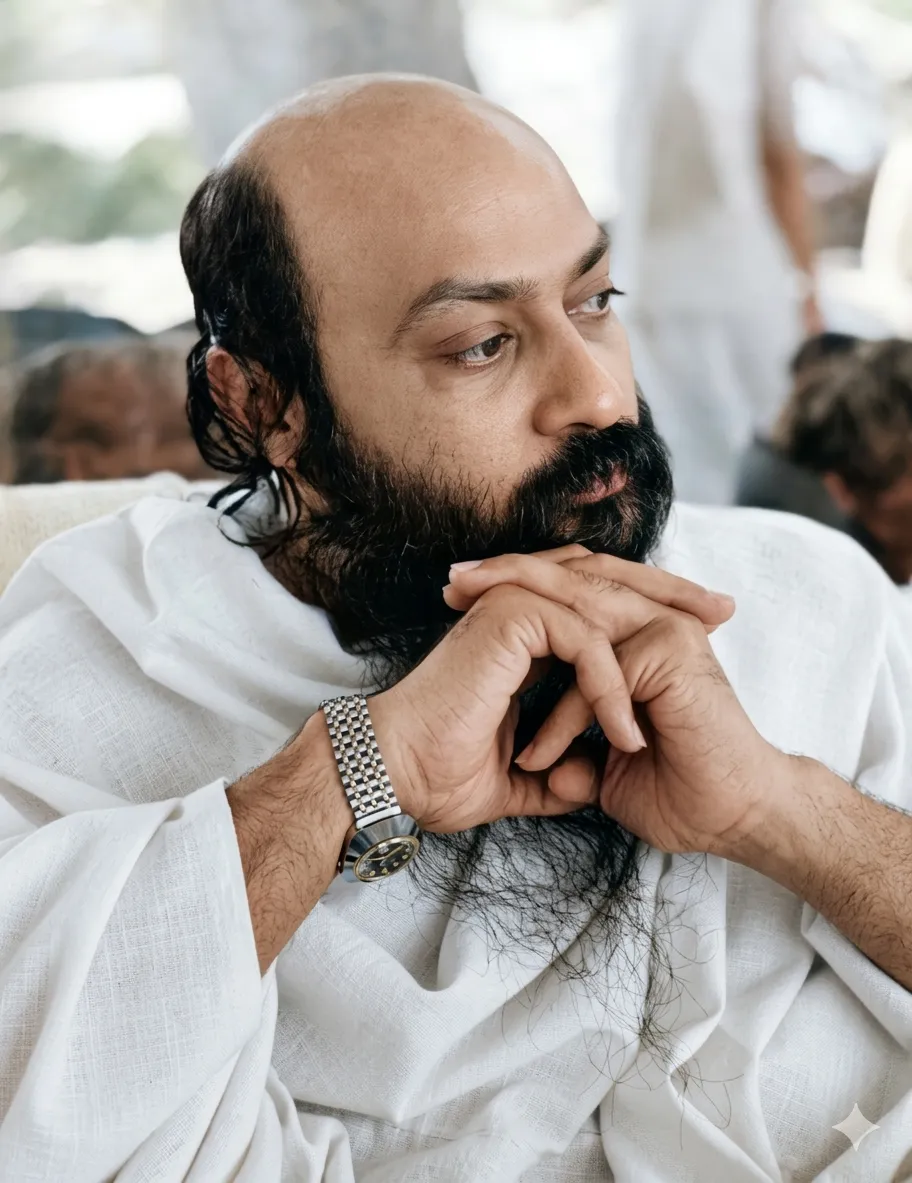
According to Osho, 'Nirbal ke bal Ram' means true strength dawns only when you drop the ego's claim to power and recognize your inherent human weakness. Weakness isn’t wretchedness; it simply means you are not the source of strength. In that humility, the divine power (Ram) acts through you. Accepting this universal law becomes a transformative sutra, turning defeat-driven pride or self-pity into surrender, clarity, and grace.
It means when you stop pretending to be strong and admit you're small, a bigger loving strength (Ram) helps you.
From the Discourses
Passages where Osho speaks to this question — each links to the complete discourse.
Osho, it is said: “Nirbal ke bal Ram” — the strength of the weak is Ram. Is this true?
So what does it mean when we say, “Nirbal ke bal Ram”? Not what you imagine. You think you will go to the temple and say, “O God, I am very weak, now give me strength — run my business well, make my shop prosper, increase my prestige in the market. All right, I admit I am weak; now show your miracles.” That is not the meaning. People have foolishly taken it so: that if we cry and weep, plead, “We are fallen, you are the purifier of the fallen; we are nothing, you are everything; we are the dust of your feet, you are the king; now save us” — then He will come running. These are childish expectations. It means you have co-opted Him into your service. Clever! Your flattery worked. Your prayers are flatteries. That is why prayer is called stuti — praise, eulogy. Your prayers are…
Eknath ran after him; the youth too ran behind—this is too much! Such a saintly person—what need to cause such a fuss over a dog taking a piece of bread? Eknath ran for two miles; the youth ran, exhausted. He said, I must see what this man does—will he beat the dog, or what? The suspicion had already arisen—this man is dangerous; perhaps mad. But when Eknath finally caught up, he said to the dog, see, I’ve told you a thousand times, O Ram—do not take the bread before we dip it in ghee! When we ourselves do not eat without ghee, how will we let you? The same Ram within me, the same Ram within you. Holding the dog by the ear he brought the bread back, dipped it in ghee, put it in its mouth and said, remember from tomorrow!
Osho, yesterday you said to sit steadfastly at the gate of life like Nachiketa. Nachiketa sat at the gate of death, but in what way are you asking us to sit steadfastly at the gate of life?
So there are three important happenings: birth, death, and love. Birth is not in your hands—you are already born. Nothing can be done by going back. Love is in your hands—something can be done. But perhaps culture, civilization, society will not allow you to love, will create hindrances and obstacles. Society, civilization, culture trust marriage, not love—there are reasons. Marriage appears more secure, convenient. Love is dangerous. Love is like casting off in a stormy sea in a small boat; like journeying on untrodden forest paths. Marriage is walking on a royal road—a cemented highway, millions walking alongside, no fear anywhere. Police on both sides, the magistrate along, everything organized. If a problem arises there is the court. Love is trouble; marriage is convenience. For the sake of convenience people have bought plastic flowers. To avoid inconvenience they have avoided real flowers. Therefore, as to birth—you can do nothing now;…
Ab kar chhati ka hano, gaye so baji hari. You have forgotten Ram—then you beat your chest: life has no meaning, what shall we do? You do not water the tree—and you complain the flowers do not come! Friedrich Nietzsche proclaimed in the West: “God is dead.” And then he went mad. For then the question arises—what meaning remains? Why live? First the ego declared God not there—then the calamity. Without God, meaning is lost. Without God, the context is gone in which meaning can arise. What are we without God? Mere accidents. Dolls of dust—today here, tomorrow gone. If there is God, there is the eternal; there is immortality; after the body we live—new wings, new dimensions. God means no end—ananta. Only in such a vast context can meaning be. Understand well: meaning arises only in a context greater than oneself.
The whole art of floating is simply this: become as a corpse in the river. Those who are skilled in floating can lie in the river without flailing arms or legs—like a corpse. The river holds them. They have left it to the river. Weakness means: What power is mine? Therefore, why trust myself? They let go. Thus Lao Tzu keeps drawing the essence from the little happenings of life. He did not learn from the Vedas or the Upanishads. He understood the scripture of life directly; he read life’s pages, life’s leaves. And the most essential formula he drew from them is this: in this world, if you try to be powerful you will be broken; if you learn the art of being powerless, you will be saved. Devotees sing: The strength of the weak is Ram. What occurs by nature they attribute to Ram.