
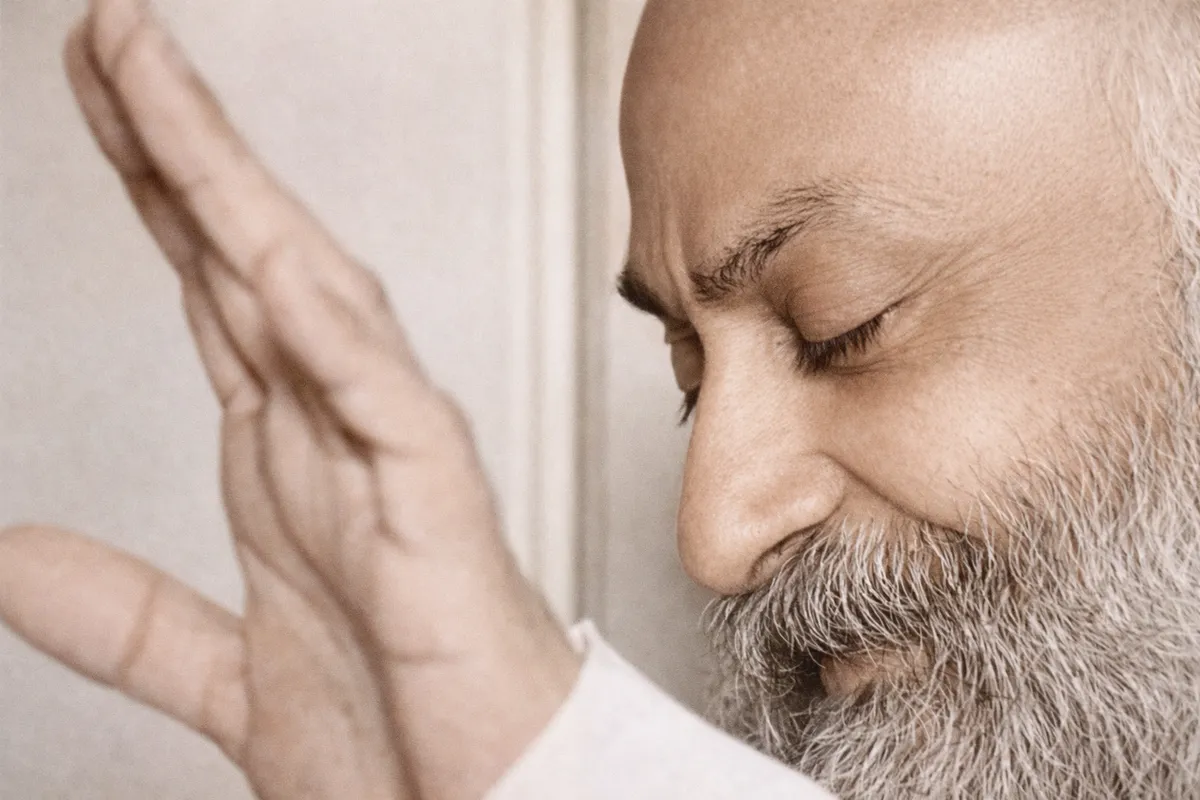
He says saints don’t teach you to be naturally yourself; they just say “no” to your real feelings and actions.
From the Discourses
Passages where Osho speaks to this question — each links to the complete discourse.
Osho, in human life crimes range from lies to rape and murder. Since ancient times sages and saints have inspired righteous action. In this context, please explain how today’s enlightened class should resolve the disorder-born problems of human life?
Now there are two kinds of people. One: those who harm others—you call them sinners, wrongdoers. Two: those who harm themselves for the good of others—you call them saints. There is not much difference between the two. One harms others; one harms himself—both harm. I call him a saint who harms no one—neither another, nor himself. Only when such a rare event happens does a ray of religion descend. This event does not happen to the crowd—it cannot. It is asked again: “In this context, please explain how today’s ‘enlightened’ class should solve the disorder-born problems of human life?” Whom do you call enlightened? Because you got a university degree? Because you managed to publish a few articles in two-bit newspapers? Whom do you call enlightened? Because you can spout a little nonsense in a logically dressed-up way? Whom do you call enlightened? “Enlightened” is a very big word. Do…
दूसरा प्रश्न: ओशो, मानव-जीवन में झूठ से लेकर बलात्कार और हत्या तक के अपराध फैले हैं। आदिकाल से संत महापुरुषों ने सदकर्म की प्रेरणा दी है। इस संदर्भ में कृपा कर समझायें कि आज का प्रबुद्ध वर्ग मानव-जीवन की विकार-जनित समस्याओं का समाधान कैसे करे?
अब ये दो तरह के लोग हैं। एक तो वे हैं, जो दूसरों की हानि करते हैं; इनको तुम कहते हो दुष्कर्मी, पापी। और एक वे हैं जो दूसरों के हित में अपनी हानि करते हैं; इनको तुम कहते हो साधु-संत। इन दोनों में बहुत फर्क नहीं है। एक दूसरे को हानि पहुंचाता है और एक खुद को हानि पहुंचाता है--मगर दोनों हानि पहुंचाते हैं। मैं उसे संत कहता हूं जो किसी को हानि नहीं पहुंचाता--न किसी और को, न अपने को। ऐसी अपूर्व घटना जब घटती है तो ही धर्म की किरण उतरी। भीड़ को यह घटना नहीं घटती--नहीं घट सकती है। फिर पूछा है: ‘इस संदर्भ में कृपा कर समझाएं कि आज का प्रबुद्ध वर्ग मानव-जीवन की विकार-जनित समस्याओं का समाधान कैसे करे?’ प्रबुद्ध किसको कहते हो? विश्वविद्यालय से डिग्री मिल गई, इसलिए? कि दो चार लेख दो-कौड़ी के अखबारों में लिख लिए, इसलिए? प्रबुद्ध किसको कहते हो? कि थोड़ी बकवास कर लेते हो तर्कयुक्त ढंग से, इसलिए? प्रबुद्ध किसको कहते हो?
Osho, just seeing sadhus and saints makes me bristle, even angry. I see nothing in them but hypocrisy. But with you—God knows what you’ve done—reverence wells up! What is the secret of your influence?
Buddha asked, “What are you doing?” They said, “This is not killing; not violence. The souls of these animals will go to heaven.” Buddha joked, “Then why not kill your parents? Send them to heaven. The door is open—why send animals? Send your parents, your wife, your children. Send everyone—and then go yourself! But don’t send these animals. They don’t want to go—they’re writhing, they want to run. They are pleading for mercy. They cannot speak—look into their eyes, they are beseeching. They are bleating: ‘Let us go.’ They don’t want heaven—and you are sending them. The yajman who is funding this sacrifice wants heaven—send him!” Clever folks have always been around. Tricks kept running; we kept bearing them. Sin and merit are difficult to determine. On one side are people along the Amazon who eat humans—and it is no sin to them. On the other side are the Quakers…
दूसरा प्रश्न: ओशो, साधु-संतों को देख कर ही मुझे चिढ़ होती है और क्रोध भी आता है। मैं तो उनमें सिवाय पाखंड के और कुछ भी नहीं देखता हूं। पर आपने न मालूम क्या कर दिया है कि श्रद्धा उमड़ती है! आपके प्रभाव का रहस्य क्या है?
तो बुद्ध ने कहा कि यह तुम क्या कर रहे हो? तो उन्होंने कहा कि यह कोई हत्या नहीं है, हिंसा नहीं है। ये जो पशु-पक्षी काटे जाएंगे, इन सबकी आत्माएं स्वर्ग चली जाएंगी। तो बुद्ध ने बड़ा मजाक किया है! और बुद्ध ने कहा: तो फिर अपने माता-पिता को क्यों नहीं काटते? स्वर्ग ही भेज दो। यह अवसर मिला, स्वर्ग भेजने का द्वार खुला और तुम इन पशु-पक्षियों को भेज रहे हो? माता-पिता को भेज दो! पत्नी-बच्चों को भेज दो! फिर सबको भेज कर खुद भी चले जाना! मगर इन पशु-पक्षियों को तो न भेजो। ये तो जाना भी नहीं चाहते। ये तो तड़प रहे हैं। ये तो भागना चाहते हैं। ये तो कहते हैं कि क्षमा करो! बोल नहीं सकते। जरा इनकी आंखें तो देखो, गिड़गिड़ा रही हैं। मिमिया रहे हैं; ये कह रहे हैं कि हमें जाने दो। ये तो स्वर्ग जाना नहीं चाहते, इनको तुम भेज रहे हो। और जो जाना चाहते हैं...। जिस यजमान ने यह करवाया है यज्ञ, वह स्वर्ग जाना चाहता है, उसी को भेज दो। खूब चालबाज लोग दुनिया में थे। चालबाजियां चलती रहीं। चालबाजियां हम सहते रहे। …
A friend has asked: Osho, why should we think about death at all? We have life—let us live it. Be in what is present. Why allow the thought of death to come in between?
Just as there can be fear of sleep. Sleep is, in a way, a daily death. The day is life; the night is death. It is a piecemeal death. Every day we die a little, we sink within; in the morning we return fresh again. Then after seventy or eighty years the whole body gets tired—work, work, work—the body wears out. Then full death takes hold; the entire body changes. But we are very afraid of that. It is a deep sleep. Yet we are very afraid of it. Have you noticed that the body changes every morning too? It changes a little, which is why you don’t notice. It does not change completely; there is a partial transformation. When you go to sleep in the evening, your body is in one condition; when you wake in the morning, your body is in another. By morning the body has become…
एक मित्र ने पूछा है कि ओशो, मृत्यु के संबंध में हम सोचें ही क्यों? जीवन मिला है, उसे जीएं। वर्तमान में जो है, उसमें रहें। मृत्यु के विचार को ही हम क्यों बीच में आने दें?
… दिन भर जीवन है, रात मृत्यु है। वह टुकड़े-टुकड़े की मृत्यु है। रोज थोड़ा-सा मरते हैं, भीतर डूबते हैं, सुबह फिर ताजे होकर वापस लौट आते हैं। फिर सत्तर और अस्सी साल में पूरा शरीर थक जाता है; श्रम, श्रम, श्रम, शरीर थक जाता है। फिर पूरी मृत्यु पकड़ लेती है, फिर यह शरीर पूरा बदल जाता है। लेकिन उससे हम बहुत डरे हुए हैं। वह गहरी निद्रा ही है। लेकिन उससे हम बहुत डरे हुए हैं। क्या आपने खयाल किया कि शरीर सुबह भी रोज बदल जाता है! थोड़ा बदलता है, इसलिए आपको खयाल में नहीं आता। पूरा नहीं बदलता; पार्शियल ट्रांसफार्मेशन होता है। जब आप सांझ को थके-मांदे सोते हैं तो शरीर और हालत में होता है, जब सुबह आप उठते हैं तो शरीर और हालत में होता है। सुबह शरीर ताजा हो गया होता है, नया हो गया होता है। फिर शक्ति आ गई होती है, फिर काम की दुनिया शुरू हो जाती है। …
You say that seeing a sadhu stirs compassion. Then is there no sadhu who truly seeks the Self? By putting all sadhus in the same line, are you not insulting saintliness?
It is not a question of insulting a sadhu. I am speaking about what is going on under the label “sadhu.” I speak of it precisely so that a genuine respect for real saintliness may arise in us, so that we learn to know and recognize it. To know and recognize it, other things are needed—not a change of clothes. What is needed is a revolution of the whole of life. A revolution of the whole of life—and a natural, unforced way of living. When someone becomes a sadhu, life becomes utterly simple. All the complexity of life dissolves. Gain and loss become zero for him. The ones you call sadhus think in the language of profit and loss twenty-four hours a day. Even if they have left home, it is with the idea that in exchange they will gain heaven or liberation. They are the same old shopkeepers. Their…
पूछा है कि ओशो, आप कहते हैं कि साधु को देखने से दया आती है। तो क्या कोई आत्मार्थी साधु नहीं है? सब साधु को एक ही लाइन में रखने से क्या साधुत्व का आप अपमान नहीं करते हैं?
… और इसीलिए उसके लिए कह रहा हूं कि ताकि वास्तविक साधुता के प्रति हमारे मन में एक सम्मान पैदा हो, हम उसे पहचानना और जानना सीख सकें। उसे जानने और पहचानने के लिए कुछ और बातेें जरूरी हैं, कपड़े का परिवर्तन नहीं। तो सारे जीवन की क्रांति जरूरी है। सारे जीवन की क्रांति। और जीवन की सहजचर्या जरूरी है। जब कोई साधु हो जाता है तो जीवन अत्यंत सहज हो जाता है। उसके जीवन की सारी जटिलता विलीन हो जाती है। उसके जीवन में लाभ-हानि शून्य हो जाते हैं। इनको आप साधु कह रहे हैं, ये चौबीस घंटे लाभ-हानि की भाषा में सोच रहे हैं। इन्होंने अगर घर भी छोड़ा है तो इस खयाल में कि इसके बदले में स्वर्ग मिलेगा या मोक्ष मिलेगा। ये पुराने दुकानदार ही हैं। इनके सोचने के ढंग वही प्रॉफिट के हैं। …
Is it not harmful to an individual and also to society to live without the barriers of norms? If so, then why do you preach that your sannyasins should live as they like? Mind always goes the wrong way if not restricted.
And who is going to restrict the mind? The mind of the society? Who is going to restrict the mind? The mind of the dead people, the dead moralists, the dead priests? Who is going to restrict the mind? You? Who are you except the mind? The first thing to be understood: up to now humanity has lived under a curse, and the curse is that we have never been allowed to trust our nature. We have always been told, "Trust your nature and you will go wrong." Mistrust, restrict, control. Don't go according to your feel. We have been told that human nature is somehow basically evil. This is stupid, this is foolish and poisonous. Human nature is not evil. Human nature is divine. And if the evil has arisen, it has arisen because of restrictions. Now let me explain it to you. You never see animals going to…