
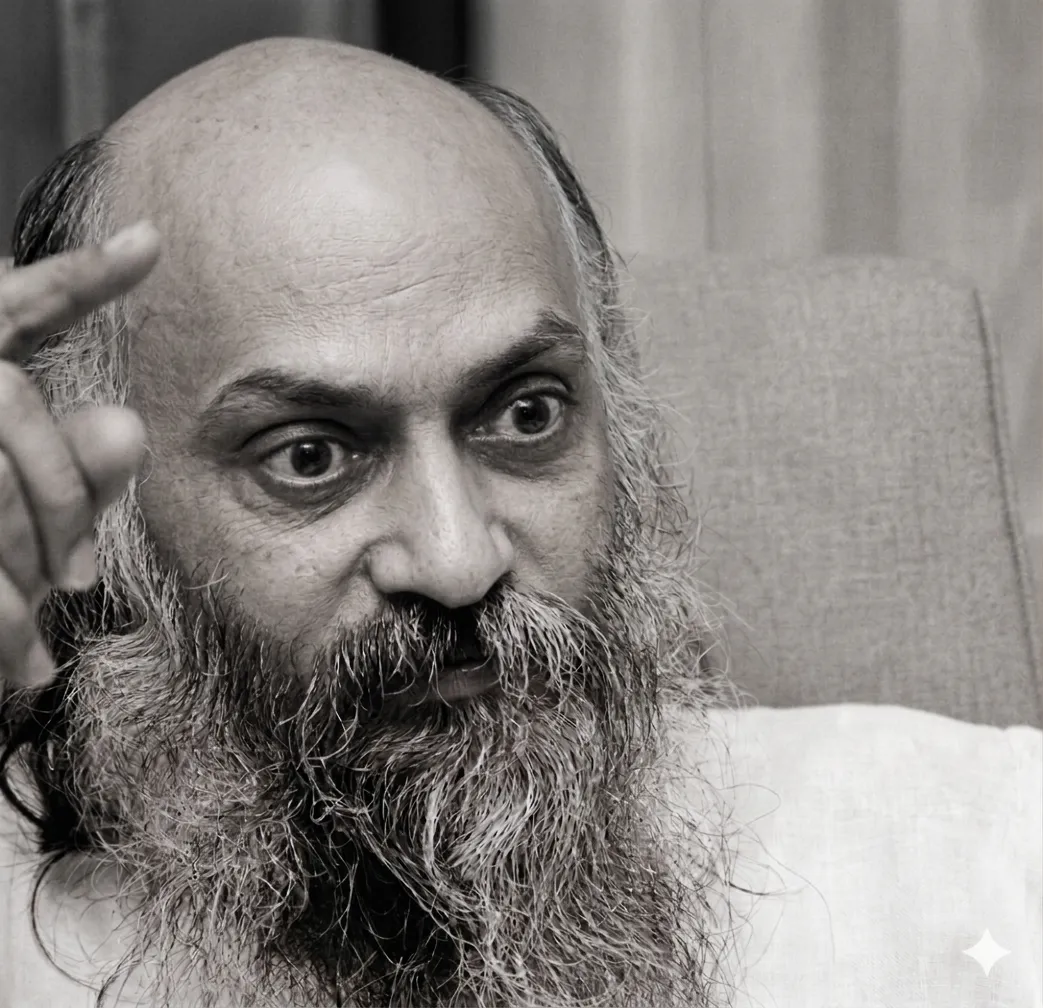
There’s no clash—like a finger pointing at the moon, don’t grab the finger; use your quiet inner sense to notice what’s everywhere but not visible to your eyes or ears.
From the Discourses
Passages where Osho speaks to this question — each links to the complete discourse.
Osho, you said that if one speaks of the body you will say it is mortal; and if one speaks of the soul you will say, you were never born. Then when Buddha says, “It was just a bubble that disappeared; I never was—so where would I go?” then who is the conscious one? And what is the unborn?
That is why I said: speaking of the body, I speak thus. By body I mean what is visible as name-and-form. By soul I mean that which will be even when name-and-form fall, that which was even when name-and-form were not. By soul I mean the ocean; by body I mean the wave. Both must be understood together. If confusion arises between the two, all the difficulties of the world come up. Within us is that which can never die. Hence, deep down we always feel: “I will never die.” We may see millions die, yet the feeling does not arise within that “I will die.” No echo of that truth is born deep inside. People may die before our eyes and yet some vigilant sense within keeps saying, “I cannot die.” Somewhere deep, the statement “I will not die” seems self-evident. Granted, external facts deny it, and events insist,…
ओशो, आपने कहा कि यदि शरीर की बात करोगे तो मैं कहूंगा, मरणधर्मा है; और आत्मा की बात करोगे तो मैं कहूंगा, तुम कभी जन्मे ही नहीं हो। फिर जब बुद्ध कहते हैं कि ‘बस एक बबूला था, जो मिट गया है; मैं था ही नहीं तो जाऊंगा कहां?’ तो फिर चिन्मय कौन? और अजन्मा क्या?
इसलिए मैंने कहा कि शरीर को देख कर कहें। शरीर से मेरा मतलब है, नाम-रूप से निर्मित जो दिखाई पड़ रहा है। और आत्मा से मेरा मतलब है, नाम-रूप के गिर जाने पर भी जो होगा, नाम-रूप नहीं थे तब भी था। आत्मा से मेरा मतलब है सागर और शरीर से मेरा मतलब है लहर। और ये दोनों ही बातें एक साथ समझनी जरूरी हैं। नहीं तो इन दोनों के बीच अगर भ्रम पैदा हो तो जगत की सारी कठिनाइयां खड़ी होती हैं। भीतर हमारे तो वह है जो कभी मर नहीं सकता। इसलिए गहरे में हमें सदा ही ऐसा लगता है, मैं कभी न मरूंगा। लाखों लोगों को हम मरते हुए देख लें, फिर भी भीतर यह प्रतीति नहीं होती कि मैं मरूंगा। इसकी गहरे में कहीं कोई ध्वनि पैदा नहीं होती कि मैं मरूंगा। सामने ही लोग मरते रहें और फिर भी हमारे भीतर न मरने का भाव कहीं सजग होता है। किसी गहरे तल में ‘मैं नहीं मरूंगा’ यह बात हमें जाहिर ही होती है। माना कि बाहर के तथ्य झुठलाते हैं। और बाहर की घटनाएं कहती हैं कि ऐसा कैसे हो सकता है कि मैं न मरूंगा! तर्क कहते हैं कि जब सब मरेंगे तो तुम भी मरोगे। …
Osho, in the Chandogya Upanishad there is a sutra: na pashyato mṛtyuṁ pashyati na rogaṁ noto duḥkhatām, sarvaṁ ha paśyaḥ paśyati sarvam āpnoti sarvaśa iti. That is, the knower does not see death, nor disease, nor sorrow; he sees all as the Self and attains everything. You are a witness—does a buddha truly see even death, disease, and sorrow as the very Self? Kindly give us direction on this sutra.
Buddha uses nirvana in exactly this sense. When the flickering lamp of ego is extinguished, the whole sky is yours. The moons and stars are yours. When you are not, everything is yours. Understand this paradox well—here lies the secret of religion, the distilled essence of the mystics and seers. The sutra of the Chandogya is profound—very profound. Let the ego dissolve; you are no more; then all is yours. When you are not, nothing is “other.” It is the “I” that creates the “you,” the division. When the line of “I” disappears, the courtyard becomes the sky. Demolish the walls you have drawn around your yard—your courtyard is the open heavens. Na pashyato mṛtyum... To the knower death is not seen—he does not know death, he does not die—because whatever could die he let die in advance. Ego could die—and what is unreal alone can die. What is, is…
पहला प्रश्न: ओशो, छान्दोग्य उपनिषद में एक सूत्र इस प्रकार है: न पश्यतो मृत्युं पश्यति न रोगं नोत दुखतां सर्वं ह पश्यः पश्यति सर्वमाप्नोति सर्वश इति। अर्थात ज्ञानी न मृत्यु को देखता है, न रोग को और न दुख को; वह सबको आत्मरूप देखता है। और सब कुछ प्राप्त कर लेता है। आप तो गवाह हैं, क्या सच ही बुद्धपुरुष को मृत्यु, रोग और दुख में भी आत्मरूप ही दिखाई पड़ता है? इस सूत्र पर हमें दिशा-बोध देने की कृपा करें।
ठीक बुद्ध ने इसी अर्थों में निर्वाण कहा है। अहंकार का टिमटिमाता दीया बुझ जाए, तो यह सारा आकाश तुम्हारा है। ये सारे चांद-तारे तुम्हारे हैं। तुम नहीं हो तो सब तुम्हारा है। इस विरोधाभास को ठीक से समझ लेना, क्योंकि इसमें ही सारे धर्म का राज, सारी अनुभूतियों का निचोड़ है। जैसे कोई हजार-हजार गुलाब के फूलों को निचोड़ कर इत्र बनाए, ऐसा इसमें सारा निचोड़ है रहस्यवादियों का, ऋषियों का। छांदोग्य का यह सूत्र गहरा है। बहुत गहरा है। अहंकार मिट जाए, तुम न रहो, तो सब तुम्हारा है। तुम न रहे, तो कुछ पराया न रहा। यह मैं ही है जो तू को खड़ा कर देता है। यह मैं ही है जो विभाजित कर देता है। यह मैं का विभाजन गिर गया, यह रेखा हट गई, तो आंगन मिट कर आकाश हो जाता है। आंगन के चारों तरफ तुमने जो दीवाल खींच रखी है, उसे गिरा दो, तो तुम्हारा आंगन आकाश है। न पश्यतो मृत्युं... ज्ञानी को मृत्यु दिखाई ही नहीं पड़ती। ज्ञानी मृत्यु को जानता ही नहीं। ज्ञानी मरता ही नहीं। …
Osho, on the one hand Doolandas sings of life’s transience, and on the other, after drinking the nectar of love he plunges into carefree ecstasy where time becomes infinite! Please explain this paradox to us.
Narendra! A moment too is a fragment of the eternal—just as the drop belongs to the ocean, the atom to the vast. In a single small leaf the sap of the whole tree is flowing. In a tiny flower the entire existence has poured its beauty, its color, its fragrance—its all. The great poet Tennyson has said: if we could fully understand even a single flower, we would understand the whole of existence. For what appears small from the outside is, by unending pathways, joined to the whole. This flower would have no fragrance if it were not of the earth. It would have no colors if it were not linked with the sun. It would have no life if the breath of air did not move through it. The deeper you inquire, the more you will find the flower has already disappeared; little by little, the whole cosmos has…
पहला प्रश्न: ओशो, दूलनदास एक ओर तो जीवन की क्षणभंगुरता का राग अलापते हैं और दूसरी ओर प्रेम-रस पीकर अल्हड़ मस्ती में डूब जाते हैं, जहां समय अनंत हो जाता है! कृपा करके उनके इस विपर्यास को हमें समझाएं।
नरेंद्र! क्षण भी शाश्वत का अंश है, वैसे ही जैसे बूंद सागर का; जैसे अणु विराट का। एक छोटे से पत्ते में भी समग्र वृक्ष का ही रस प्रवाहित हो रहा है। एक छोटे से फूल में भी सारे अस्तित्व ने अपना सौंदर्य, अपना रंग, अपना रस, सब कुछ डाल दिया है। महाकवि टेनिसन के प्रसिद्ध वचन हैं कि अगर हम एक छोटे फूल को भी पूरा-पूरा समझ लें तो सारा अस्तित्व समझ में आ जाएगा। क्योंकि एक छोटा फूल भी ऊपर से ही छोटा मालूम पड़ता है, अनंत-अनंत मार्गों से समस्त से जुड़ा है। इस फूल में गंध न होती अगर पृथ्वी का अंग न होता। इस फूल में रंग न होते अगर सूरज से न जुड़ा होता। इस फूल में जीवन न होता अगर वायु इसमें श्वास न लेती होती। इसको जितना गहरे में खोजोगे उतना ही पाओगे कि फूल तो कब का खो गया, धीरे-धीरे सारा ब्रह्मांड तुम्हारे हाथ में आ गया है।
Osho, when morning dawns in someone’s life, does evening no longer come?
Therefore the Buddha spoke of two stages of nirvana. One was what happened to him at the age of forty: he attained nirvana, samadhi, full awakening—he knew. Then, for forty years, the journey of the body continued. Here on this very earth the chariot kept rolling; on the rough roads of earth the chariot had to feel the dips and rises. Then came Mahaparinirvana: the body, too, was shed. With the body gone, both morning and evening vanished. Then a certain kind of light manifests—but how to call it “light,” for it has no relation to darkness. Then a certain kind of life manifests—but how to call it “life,” for it has no relation to death. Therefore the Buddha remains utterly silent about it, says nothing at all; whatever he might say would be an error. All our words are bound to their opposites. Say “light,” and darkness is remembered.…
दूसरा प्रश्न: ओशो, जिसके जीवन में सुबह घट जाए, क्या उसके जीवन में फिर सांझ नहीं आती?
… एक, जो उनको चालीस वर्ष की उम्र में हुआ, तब वे निर्वाण को उपलब्ध हुई, समाधि को उपलब्ध हुए, संबुद्ध हुए, उन्होंने जाना। फिर चालीस वर्ष तक शरीर की यात्रा और भी जारी रही। इसी पृथ्वी पर रथ चलता रहा। इस पृथ्वी के ऊबड़-खाबड़ मार्ग पर रथ को नीचा-ऊंचा भी देखना पड़ा। फिर हुआ महापरिनिर्वाण। तब देह भी छूट गई। देह के छूटते ही सुबह-सांझ दोनों चली गयीं। फिर तो एक ऐसे प्रकाश का आविर्भाव होता है, जिसको प्रकाश भी क्या कहें, क्योंकि उसका अंधेरे से कोई नाता ही नहीं है। फिर तो एक ऐसे जीवन का प्रादुर्भाव होता है, उसको जीवन भी कैसे कहें, क्योंकि उसका मृत्यु से कोई भी संबंध नहीं है। इसलिए बुद्ध उस संबंध में बिलकुल चुप रह जाते हैं, कुछ भी नहीं कहते। …
The buddha said: look up to heaven and down on earth and they will remind you of their impermanency. Look about the world and it will remind you of its impermanency. But when you gain spiritual enlightenment you shall then find wisdom. The knowledge thus attained leads you anon to the way. The buddha said: you should think of the four elements of which the body is composed. Each of them has its own name and there is no such thing there known as ego. As there is really no ego, it is like unto a mirage.
The meaning is to be understood, it is very symbolical. It simply says that there is a law of levitation and if Mohammed cannot be pulled by levitation, then who will be pulled? He is the right person, a person who exists not. The ego is under gravitation, the no-ego is not under gravitation -- a weightlessness arises. Nijinsky went mad because he was simply a dancer and he never knew anything about meditation, ecstasy, enlightenment. That became a trouble for him. If you don't understand and if you don't move with awareness and suddenly you stumble upon something which cannot be explained by ordinary laws, you will go mad. Because you will be disturbed by it. It is so weird, it is so eerie. You cannot explain it. You start getting disturbed by it. He himself started getting disturbed by the phenomenon. Finally it was so staggering it disturbed…