
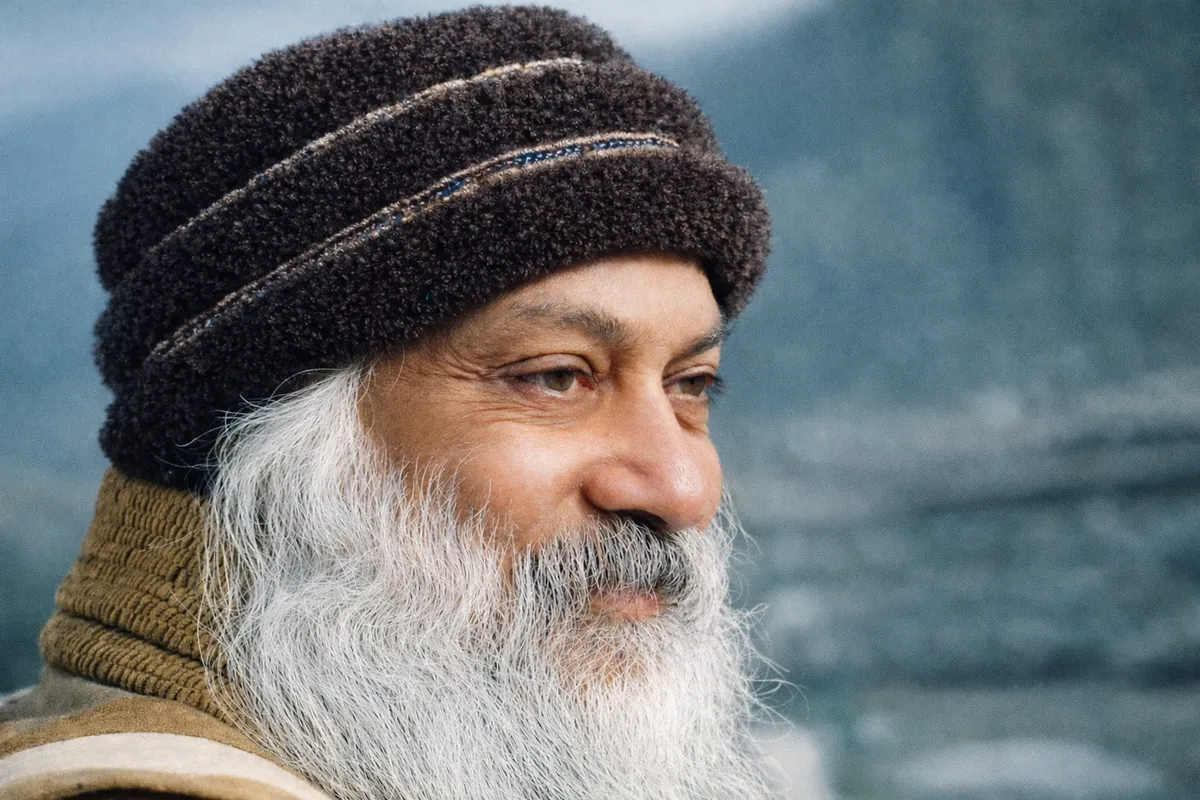
According to Osho, viraha is a paradox: the devotee is simultaneously miserable and happy. The ache of separation wounds, yet remembrance of the Beloved, the sensed nearness, and the first notes of the flute bring joy. Tears and smiles merge; sorrow becomes sweet fuel for the journey. Restless, sleepless, he feels his old world collapse as his rhythm aligns with the Divine, while uncertainty about union persists.
Missing God hurts and feels good at the same time because the pain shows love is alive and drawing you closer.
From the Discourses
Passages where Osho speaks to this question — each links to the complete discourse.
Osho, in the state of separation (viraha), is the devotee miserable or happy?
And there is delight in it. There is delight even in weeping! For the first time crying does not seem the opposite of joy. This is the secret that unfolds in the state of separation. For the first time one feels a harmony between tears and smiles. Tears themselves seem to smile; tears themselves seem to dance. Ordinarily we have known tears only for sorrow; the devotee comes to know the tears of joy. The pang does sting, yes—but within the pang is a sweetness, a honeyed savor. Call it a sweet pain—honey-drenched, intoxicating. The arrow of separation pierces the heart, and a stream of nectar flows. This happens together. I have tasted such rapture that even feeling it became difficult; as your pain kept dwelling in my heart, it itself became my heart. At first, life in love was impossible; now the end is such that even dying has…
Osho, in the state of separation (viraha), is the devotee unhappy or happy?
Both unhappy and happy. The devotee’s state of separation is a great paradox! He is unhappy because the Divine seems just about to be found, and yet is not found. The sound of His footsteps seems to be approaching—now He comes, now He comes—and still the meeting has not happened. The taste has touched the tongue, but the ocean has not yet been reached. So he is unhappy and happy too—happy because he is blessed. How often does even this happen? Only in the lives of a few blessed ones. When he looks back at others, he finds himself happy: at least I am weeping, but I am weeping for the Divine. I am more blessed than those who weep for money, for position and prestige; who weep over how to reach Delhi. I am better than them; I am blessed compared to them. The sufferings of this world no…
Question: Last question: Osho, what is viraha? On the path of devotion, viraha is half the journey and union the remaining half. There are only two steps in devotion—viraha and union. First viraha, then union. Only the one who longs in separation will arrive. Viraha means I do not know who I am. Viraha means I do not know where the Divine is, where it is hiding. Viraha means I do not find the meaning of my life. Viraha means tears upon tears are spread over my soul; I am crying, I am calling; no way is seen, there is darkness; I grope, I wander; I fall, I rise. Viraha is thirst. Viraha is yearning. There is something that is not being revealed—and if it were to be revealed, life would find meaning, harmony would come into life, music would arise.
The more one attains the Divine, the more the veena of virah begins to sound. This may seem difficult to you. You will think: when God is not attained there should be longing; once attained, what longing? It will seem complex. But until you have known the Divine you cannot know longing. Longing is the experience of one who has known union. How will you know virah? How will you weep for the Divine? How will tears well up when you have no intimacy, no encounter—not even for a moment—with him? God is utterly unknown, almost non-existent for you. How will your whole body become a veena, your nerves strings, and the song of longing arise? Only after union is longing possible. Hence only the devotee knows virah. Then even being in the body for a moment, being in this world for a moment, feels like a distance.
Question: The third question: Osho, what is viraha? If you ask, you will not be able to understand; had you understood, you would not have asked. Even if you could understand, you still would not ask. Because viraha is not a theory, not some philosophical concept—it is the felt experience of love. But where will you learn to swim? In the drawing room, on cushions? Is that how one learns to swim? The reasoning sounds right: don’t go to the river until you can swim. The logic is flawless—one hundred percent correct. You won’t find a speck of error in it. But life is the opposite. If you don’t go to the river, how will you learn? You will have to take the risk. Yes, it is not necessary to start with the great oceans; learn at the river, learn by the shore, learn in the shallows.