
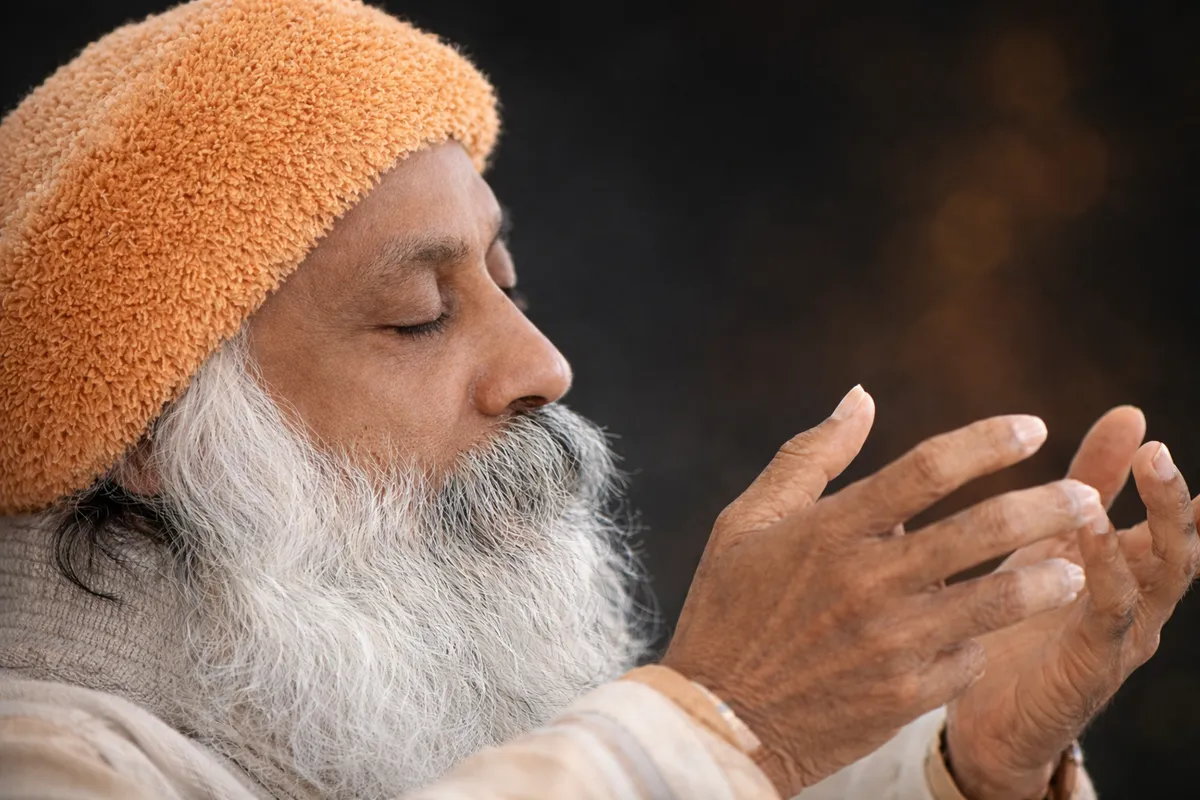
If you’re already totally free of wanting, nothing more is needed; since most aren’t, disciplined practice tunes you to receive truth safely and clearly.
From the Discourses
Passages where Osho speaks to this question — each links to the complete discourse.
Is not vairagya, non-attachment or desirelessness, enough in itself to free one from the worldly bondage? What is then the use of the yogic discipline, abhyasa?
Many people, sometimes without discipline -- through some accident, through some Master, through the grace of some Master or just through the presence of some Master -- get tuned. Their whole mechanism is not ready, but a part starts functioning. Then they are out of order. Then you will feel they are mad, because they will start saying things which look irrelevant. And they can also feel that they are irrelevant, but they cannot do anything. Something has begun in them; they cannot stop it. They feel a certain happiness. That's why they are called masts, the happy ones. But they are not Buddhalike, they are not enlightened. And it is said that for masts, for these happy ones who have gone mad, a very great Master is needed because now they cannot do anything with themselves. They are just in confusion -- happily in it, but they are a…
Osho, Shri Krishna says that through desirelessness and nonattachment, bondages are destroyed and the supreme state is attained. Please clarify its meaning and explain by what kind of practice or worship this attainment is made possible. For ordinary people, becoming directly desireless and nonattached does not seem possible.
First of all, one must understand the meaning of nonattachment. Nonattachment is among those few unfortunate words whose meaning has not been understood. People take nonattachment to mean dispassion or aversion (virakti). Nonattachment is not virakti. Virakti too is a kind of attachment—it is the name of attachment to the opposite. One person is attached to lust, to desire; another is attached to brahmacharya, the opposite of lust. One person is attached to wealth; another is attached to renouncing wealth. One person is attached to adorning the body; another is attached to making the body ugly. But the one who makes his body ugly will appear to be a renunciate, the one who renounces wealth will appear to be a renunciate, because their attachments are negative. Attachment has two forms: being attached in favor of something, or being attached in opposition to something. The one who is attached in opposition…
ओशो, श्रीकृष्ण कहते हैं कि निष्कामता और अनासक्ति से बंधनों का नाश होता है और परमपद की प्राप्ति होती है। कृपया इसका अर्थ स्पष्ट करते हुए समझाएं कि किस साधना या उपासना से यह उपलब्धि होगी? सामान्यजन के लिए सीधे निष्काम व अनासक्त होना तो संभव नहीं दिखता।
सबसे पहले तो अनासक्ति का अर्थ समझ लेना चाहिए। अनासक्ति थोड़े से अभागे शब्दों में से एक है जिसका अर्थ नहीं समझा जा सका है। अनासक्ति से लोग समझ लेते हैं--विरक्ति। अनासक्ति विरक्ति नहीं है। विरक्ति भी एक प्रकार की आसक्ति है। विरक्ति विपरीत आसक्ति का नाम है। कोई आदमी काम में आसक्त है, वासना में आसक्त है। कोई आदमी काम के विपरीत ब्रह्मचर्य में आसक्त है। कोई आदमी धन में आसक्त है। कोई आदमी धन के त्याग में आसक्त है। कोई आदमी शरीर के श्रृंगार में आसक्त है, कोई आदमी शरीर को कुरूप करने में आसक्त है। …
Questioner: krishna says that by giving up desiring and attachment, which he calls niskamta and anasakti respectively, one is released from bondage and he attains to the supreme. But it is so difficult for ordinary men and women to be free of desiring and attachment. Please explain the significance of desirelessness and non-attachment and ways to achieve them.
In the first place try to understand the meaning of the word anasakti or non-attachment. It is unfortunately one of the most misunderstood words. Non-attachment is generally taken to mean aversion, but it is not aversion. Aversion is a kind of attachment -- the opposite of attachment. Someone is attached to sex and someone else is attached to its opposite -- brahmacharya or celibacy. Someone is attached to wealth; he is running after wealth, and someone else is attached to renunciation of wealth; he is running away from wealth. One person is obsessed with the idea of looking handsome; another person is obsessed with the idea of looking ugly. But those who are averse to sex, money or good looks appear to be non-attached because their attachments are negative. Attachment has two faces, positive and negative. You can fancy a thing so much that you madly run after it, you…
When no desire arises for objects worthy of being enjoyed, know this as the limit of nonattachment. When no I-ness arises, know this as the limit of knowing.
WHEN THE DISSOLVED DESIRES DO NOT ARISE BACK AGAIN, THIS IS THE LIMIT OF RELAXEDNESS, AND SUCH A STHITPRAGYA, A SEEKER, STABLE IN WISDOM, EVER REMAINS IN BLISS. HE WHOSE SELF IS ABSORBED ONLY IN BRAHMA, THE ULTIMATE REALITY, REMAINS DESIRELESS AND ACTIONLESS. WHEN PURIFIED BY ITS ONENESS WITH BRAHMA AND DROWNED IN THIS ONE SINGLE RAPTURE, THE ACTIVITIES OF MIND ARE CHOICELESS AND REMAIN ONLY AS THE CONSCIOUSNESS, THEN IT IS CALLED PRAGYA, THE WISDOM. HE WHO ALWAYS HAS SUCH A PRAGYA IS CALLED JIVANAMUKTA, THE ONE LIBERATED WHILE LIVING. ONE WHO HAS NO I-NESS FOR HIS BODY AND THE SENSES, AND NO MY-NESS FOR THE OTHER THINGS, IS A JIVANAMUKTA, THE ONE LIBERATED WHILE LIVING. WHEN NO DESIRE ARISES FOR OBJECTS WORTHY OF BEING ENJOYED, THEN KNOW THIS AS THE LIMIT OF NONATTACHMENT. ... WHEN NO I-NESS ARISES, KNOW THIS AS THE LIMIT OF KNOWING. ... People come to me
Osho, what is attachment? Why do we become so attached to things, ideas and persons? And is there freedom from attachment?
“So do one thing,” she told the courtesan. “I will pay you whatever you ask. Go to him at midnight. He meditates at midnight—has done so for thirty years. I want to know whether meditation has happened or not before I die. His hut door is only latched; no one ever goes there. Open it and go in. Whatever he says, notice every word and tell me. Go and embrace him—then come back and report. Before I die, I want to be sure that my service was not in vain.” The courtesan went. She opened the door. The monk was startled. He opened his eyes—he had been sitting in meditation—and shouted, “You wicked woman! Why are you here? Get out! What need have you to come at midnight?” But his tongue faltered; his body trembled. The woman had taken her money; she went right in. He cried, “Stay back! Why…
पहला प्रश्न: ओशो, आसक्ति क्या है? हम चीजों, विचारों और व्यक्तियों से इतने आसक्त क्यों हो जाते हैं? और क्या आसक्ति से छुटकारा भी है?
तो तू एक काम कर--उसने वेश्या को कहा--कि जो तुझे लेना हो उतने पैसे मैं दूंगी। तू आधी रात आज चली जा। वह फकीर आधी रात को ध्यान करता है। तीस साल से कर रहा है, अभी तक हुआ ध्यान या नहीं, यह मैं जानना चाहती हूं। मरने के पहले यह पक्का कर लेना चाहती हूं कि जिसकी सेवा की, व्यर्थ ही तो नहीं की। तो तू चली जाना भीतर। उसकी झोपड़ी का द्वार अटका ही रहता है, क्योंकि कोई कभी जाता ही नहीं। तू द्वार खोल लेना। और वह कुछ भी कहे, एक-एक बात का खयाल रखना, मुझे तुझे बताना पड़ेगा। और जाकर एकदम उसका आलिंगन कर लेना। वह क्या कहता है, क्या करता है, बस तू लौट कर मुझे बता देना। मरने के पहले मैं यह जान लेना चाहती हूं। वह वेश्या गई। उसने दरवाजा खोला। दरवाजा खोला तो साधु एकदम घबड़ाया। उसने आंख खोल कर देखा साधु ने। ध्यान करने बैठा था, एकदम चिल्लाया कि अरी दुष्ट स्त्री! …