
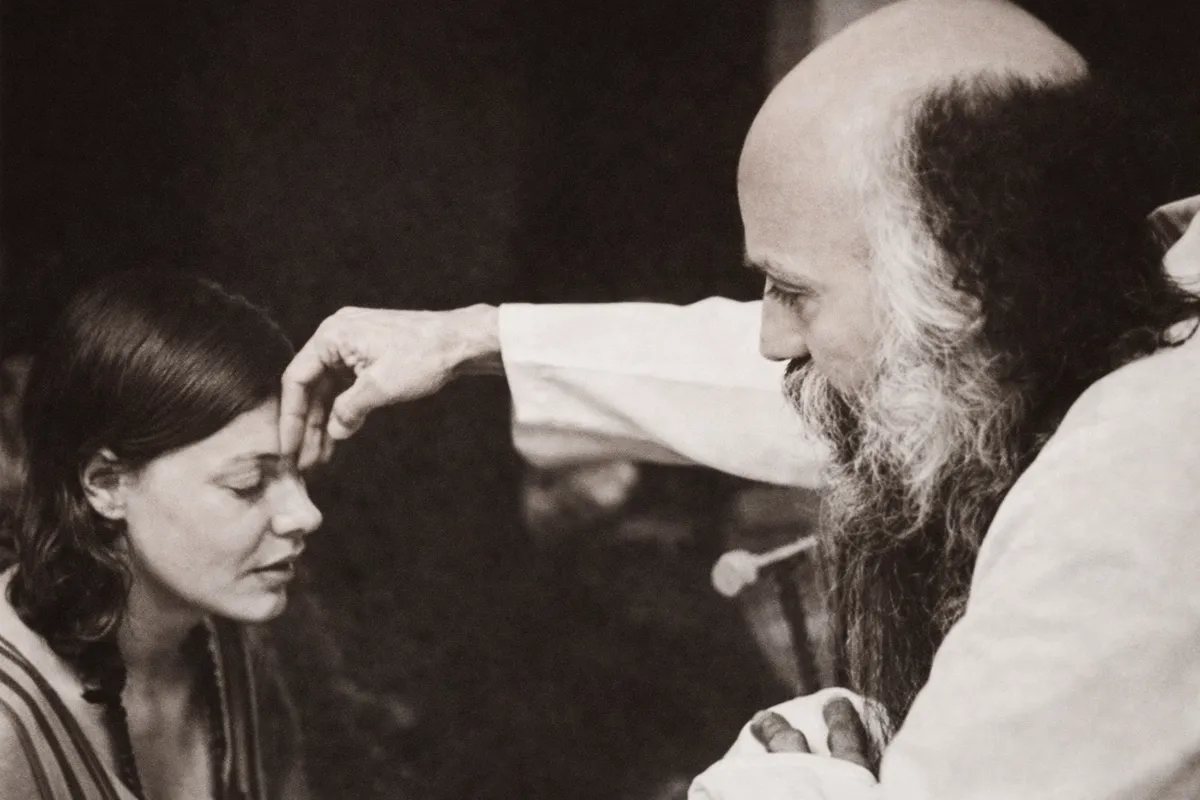
Osho's perspective on Vairagya
When Osho Spoke About Vairagya
Passages from the discourses where this theme comes alive.
Beloved Osho, is vairagya, nonattachment, a method, a means, an intermediate stage, or an end in itself?
It is all -- because means and ends are not two things. The way and the goal are not two things. The way is just the beginning of the goal, and the goal is just the ending of the way. So please, don't divide, and don't think in terms of the means being different from the end. Means are the end. Once you can conceive of this, the quality of your effort will change immediately. Ordinarily mind is always concerned with the end; means are used, exploited, to reach the end. If you could avoid the means you would like to avoid them; if you could achieve the end directly without any means, if you could reach the goal without the way, without the path, you would like to do so. You would like to reach the goal immediately. The mind divides ends and means; end is meaningful, means are…
Is not vairagya, non-attachment or desirelessness, enough in itself to free one from the worldly bondage? What is then the use of the yogic discipline, abhyasa?
Many people, sometimes without discipline -- through some accident, through some Master, through the grace of some Master or just through the presence of some Master -- get tuned. Their whole mechanism is not ready, but a part starts functioning. Then they are out of order. Then you will feel they are mad, because they will start saying things which look irrelevant. And they can also feel that they are irrelevant, but they cannot do anything. Something has begun in them; they cannot stop it. They feel a certain happiness. That's why they are called masts, the happy ones. But they are not Buddhalike, they are not enlightened. And it is said that for masts, for these happy ones who have gone mad, a very great Master is needed because now they cannot do anything with themselves. They are just in confusion -- happily in it, but they are a…
Osho, Shri Krishna says that through desirelessness and nonattachment, bondages are destroyed and the supreme state is attained. Please clarify its meaning and explain by what kind of practice or worship this attainment is made possible. For ordinary people, becoming directly desireless and nonattached does not seem possible.
First of all, one must understand the meaning of nonattachment. Nonattachment is among those few unfortunate words whose meaning has not been understood. People take nonattachment to mean dispassion or aversion (virakti). Nonattachment is not virakti. Virakti too is a kind of attachment—it is the name of attachment to the opposite. One person is attached to lust, to desire; another is attached to brahmacharya, the opposite of lust. One person is attached to wealth; another is attached to renouncing wealth. One person is attached to adorning the body; another is attached to making the body ugly. But the one who makes his body ugly will appear to be a renunciate, the one who renounces wealth will appear to be a renunciate, because their attachments are negative. Attachment has two forms: being attached in favor of something, or being attached in opposition to something. The one who is attached in opposition…
ओशो, श्रीकृष्ण कहते हैं कि निष्कामता और अनासक्ति से बंधनों का नाश होता है और परमपद की प्राप्ति होती है। कृपया इसका अर्थ स्पष्ट करते हुए समझाएं कि किस साधना या उपासना से यह उपलब्धि होगी? सामान्यजन के लिए सीधे निष्काम व अनासक्त होना तो संभव नहीं दिखता।
सबसे पहले तो अनासक्ति का अर्थ समझ लेना चाहिए। अनासक्ति थोड़े से अभागे शब्दों में से एक है जिसका अर्थ नहीं समझा जा सका है। अनासक्ति से लोग समझ लेते हैं--विरक्ति। अनासक्ति विरक्ति नहीं है। विरक्ति भी एक प्रकार की आसक्ति है। विरक्ति विपरीत आसक्ति का नाम है। कोई आदमी काम में आसक्त है, वासना में आसक्त है। कोई आदमी काम के विपरीत ब्रह्मचर्य में आसक्त है। कोई आदमी धन में आसक्त है। कोई आदमी धन के त्याग में आसक्त है। कोई आदमी शरीर के श्रृंगार में आसक्त है, कोई आदमी शरीर को कुरूप करने में आसक्त है। …
Questioner: krishna says that by giving up desiring and attachment, which he calls niskamta and anasakti respectively, one is released from bondage and he attains to the supreme. But it is so difficult for ordinary men and women to be free of desiring and attachment. Please explain the significance of desirelessness and non-attachment and ways to achieve them.
In the first place try to understand the meaning of the word anasakti or non-attachment. It is unfortunately one of the most misunderstood words. Non-attachment is generally taken to mean aversion, but it is not aversion. Aversion is a kind of attachment -- the opposite of attachment. Someone is attached to sex and someone else is attached to its opposite -- brahmacharya or celibacy. Someone is attached to wealth; he is running after wealth, and someone else is attached to renunciation of wealth; he is running away from wealth. One person is obsessed with the idea of looking handsome; another person is obsessed with the idea of looking ugly. But those who are averse to sex, money or good looks appear to be non-attached because their attachments are negative. Attachment has two faces, positive and negative. You can fancy a thing so much that you madly run after it, you…
Is non-attachment enough to free one from worldly bondage, and what is the use of yogic discipline?
outcomeProfound Quotes on Vairagya
Explore our structured collection of meaning-mapped quotes regarding Vairagya.