
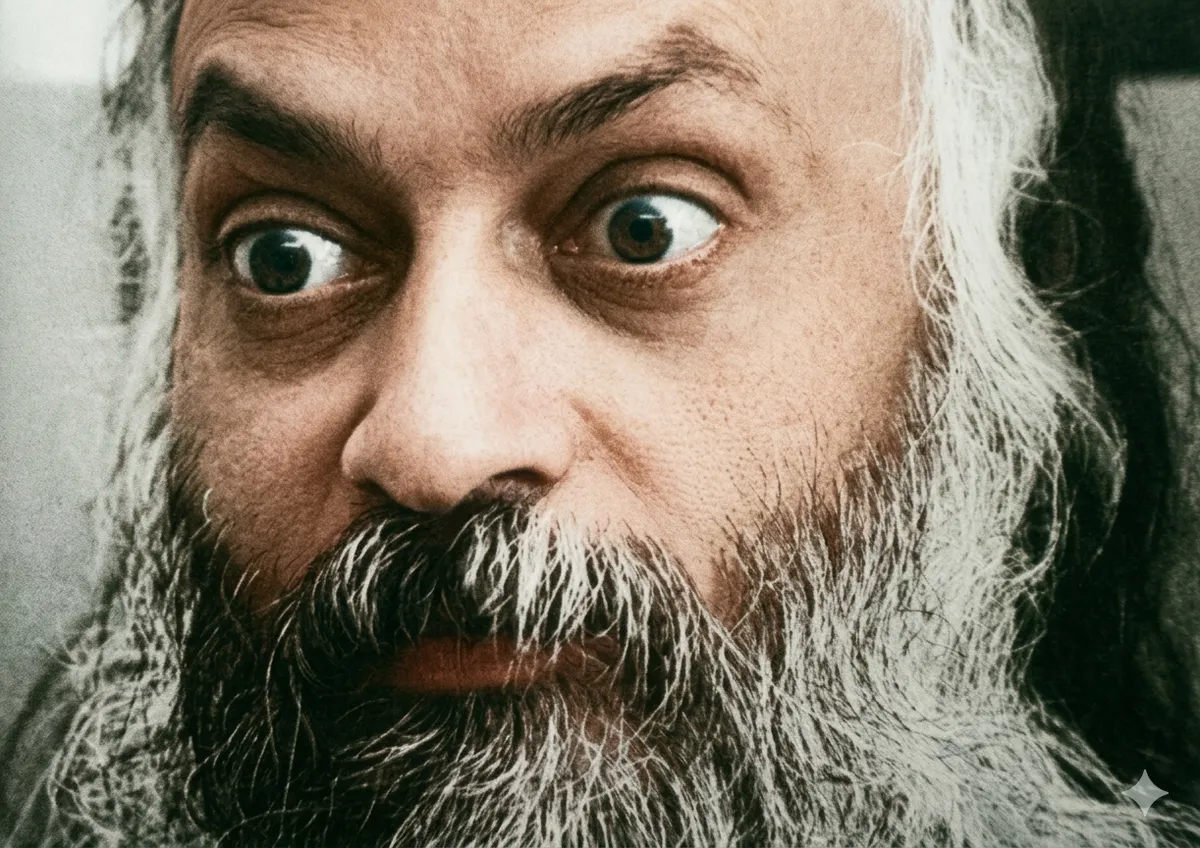
You go out, learn from life, and then come home to your true self—simple like a child, but awake inside.
From the Discourses
Passages where Osho speaks to this question — each links to the complete discourse.
Osho, it is said that the human being is the highest point of evolution, and that by evolving the human becomes God. Then is entering Tao a further evolution or a return?
Both. Returning is the further evolution. Going back is going forward—because behind you lies the original source. The very place from which you have come is the ultimate goal. The original origin is the final destination. You become a circle; only then are you complete. When you draw a circle, the point from which you begin is the very point to which you return. And the circle is the symbol of completeness in this world. That is why we have also taken the circle as the symbol of zero. Zero and the whole are two ways of saying the same thing. You have to return to where you came from. And remember: when you return, you will not be the same as when you came. This whole journey—this path—will ripen you, awaken you, fill you with awareness. One must pass through the world and return to the original source. Hence…
चौथा प्रश्न: ओशो, माना जाता है कि मनुष्य विकास का श्रेष्ठतम बिंदु है और मनुष्य ही विकसित होकर भगवान हो जाता है। तब ताओ में प्रवेश आगे का विकास है या पीछे लौटना है?
दोनों। पीछे लौटना ही आगे का विकास है। पीछे जाना ही आगे जाना है। क्योंकि पीछे मूल स्रोत है। जहां से तुम आए हो, वही पहुंच जाना अंतिम लक्ष्य है। क्योंकि मूल उदगम ही आखिरी मंजिल है। तुम वर्तुल बन जाओगे, तभी तुम पूर्ण होओगे। तुम एक वर्तुल खींचते हो; तो जहां से तुम शुरू करते हो, जिस बिंदु से वर्तुल को, वहीं वर्तुल वापस लौट जाता है। और वर्तुल इस जगत में पूर्णता का चिह्न है। इसलिए तो हमने वर्तुल को शून्य का भी चिह्न बनाया है। शून्य और पूर्ण एक ही चीज को कहने के दो ढंग हैं। तुम्हें वहीं लौट जाना है जहां से तुम आए हो। और ध्यान रखना, जब तुम लौटोगे तो तुम वही न रहोगे जैसे कि तुम तब थे जब आए। क्योंकि यह सारी यात्रा, यह यात्रा-पथ तुम्हें प्रौढ़ कर देगा, तुम्हें जगा देगा, होश से भर देगा।
Osho, yoga is a method of upward ascent; it seeks to take energy, power, upward. And Lao Tzu’s method seems exactly the opposite—to bring energy downward, toward the navel. So a question naturally arises: between these two methods, which one is right?
A disciple of Lao Tzu, Lieh Tzu, was once asked: We have heard that the Buddha attained enlightenment sitting under a tree. And we have heard that some yogi, chanting a mantra, sitting under a tree, attained truth by his mantra. Lieh Tzu, what is your view? Lieh Tzu said: As we understand it, chanting mantras, doing practices, performing yogasanas—these are for those who cannot remain without doing. But the real point is not that Buddha arrived by practice; he arrived because he sat. The essential thing is: he sat, therefore he arrived. Some yogi kept reciting a mantra and arrived; the mantra is not the essential thing. He arrived because he sat. The mantra is a pretext—for he cannot sit empty, so he keeps reciting. Lieh Tzu is saying: whoever has arrived, has arrived because they sat and left everything. Some can sit having left everything; they will not…
ओशो, योग ऊर्ध्वगमन की पद्धति है, ऊर्जा को, शक्ति को ऊपर की ओर ले जाना है। और लाओत्से की पद्धति ठीक विपरीत मालूम पड़ती है--ऊर्जा को नीचे की ओर, नाभि की ओर लाना है। तो प्रश्न उठना बिलकुल स्वाभाविक है कि इन दोनों पद्धतियों में कौन सी पद्धति सही है?
लाओत्से का एक शिष्य हुआ, लीहत्जू। लीहत्जू से किसी ने जाकर पूछा, कि हमने सुना है कि बुद्ध एक वृक्ष के नीचे बैठ कर और ज्ञान को उपलब्ध हो गए। और हमने सुना है कि कोई योगी मंत्र का जाप करके और वृक्ष के नीचे बैठ कर जाप से सत्य को उपलब्ध हो गया। लीहत्जू, तुम्हारा क्या खयाल है? तो लीहत्जू ने कहा, जहां तक हम समझते हैं, मंत्र करना, साधना करनी, योगासन करना, ये उन लोगों के काम हैं, जो बिना किए नहीं रह सकते हैं। लेकिन असली बात यह नहीं है कि बुद्ध साधना करके पहुंच गए; बुद्ध बैठ गए, इसलिए पहुंच गए। असली बात, बैठ गए, इसलिए पहुंच गए। कोई योगी मंत्र पढ़ता रहा और पहुंच गया; मंत्र असली चीज नहीं है, बैठ गया, इसलिए पहुंच गया। मंत्र तो बहाना है; क्योंकि वह खाली नहीं बैठ सकता, इसलिए मंत्र पढ़ता रहा।
Do they simply have to be endured? They do have to be endured. So his freedom is not license. There is a deep check upon it. He is free in that he can act contrary to nature. But whatever consequences arise from acting contrary—painful ones—he will have to endure them.
This kind of man is not what we ordinarily call a “seeker.” The seeker we speak of is usually a reaction to the householder. If the householder runs a shop, the seeker does not; if the householder earns wealth, the seeker renounces it; if the householder marries, the seeker does not. But his rules are derived from the householder—he is only a reaction. Lao Tzu says, “I am no one’s reaction. It does not matter what others do. I neither follow anyone to do as he does, nor go against anyone to do the opposite. I let happen what arises from within.” Allowing nature to happen means not imitating anyone, not copying anyone, not building one’s personality in opposition to anyone. Whatever can happen from within, whatever wants to happen—we allow it. No obstruction, no condemnation, no opposition, no struggle, no conflict. Let what happens, happen. This means dropping notions…
प्रश्न: झेलने ही पड़ते हैं? वे झेलने ही पड़ते हैं। तो उसकी स्वतंत्रता स्वच्छंदता नहीं है। उस पर एक गहरी रुकावट है। स्वतंत्र है वह कि वह प्रकृति से प्रतिकूल काम करे। लेकिन प्रतिकूल काम करने से जो भी परिणाम होंगे दुखद, वे उसे झेलने ही पड़ेंगे।
यह जो आदमी है, यह साधारणतः जिनको हम साधक कहते हैं, वैसा आदमी नहीं है। हम जिसे साधक कहते हैं वह आमतौर से, हम जिसे साधारण आदमी कहते हैं, उससे विपरीत होता है। अगर यह आदमी दुकान करता है तो वह आदमी दुकान नहीं करता। अगर यह आदमी धन कमाता है तो वह आदमी धन छोड़ देता है। अगर यह आदमी विवाह करता है तो वह आदमी विवाह नहीं करता। लेकिन उसके करने का जितना भी नियम है वह इसी गृहस्थ से मिलता है। वह सिर्फ इसका रिएक्शन होता है। लाओत्से कहता है कि हम किसी के रिएक्शन नहीं हैं, हम किसी की प्रतिक्रिया नहीं हैं। कौन क्या करता है, इससे प्रयोजन नहीं है। न हम किसी के पीछे जाते कि वैसा करें जैसा वह करता है, न हम किसी के प्रतिकूल जाते हैं कि वैसा करें जैसा वह नहीं करता है। हम तो वही होने देते हैं जो हमारे भीतर से होता है। स्वभाव को होने देने का मतलब यह है कि हम किसी का अनुकरण न करें, किसी की नकल न करें, किसी के विरोध में आयोजन न करें अपने व्यक्तित्व का। जो हो सकता है भीतर से, जो होना चाहता है, वह हम होने दें। …
Osho. I have heard that patanjali and lao tzu came to a stream. Patanjali began to cross the stream by walking on the surface of the water. Lao tzu stood on the bank and called him to come back. "what's the matter?" patanjali inquired. "that is no way to cross a stream," said lao tzu, and led him to a place where the water was shallow, and they waded across together.
The king opened it and found the same grain again -- the same grain of wheat that Zarathustra had given him before. He thought there must be something mysterious and magical in it, so he put it in a golden box and hid it among his treasures. Almost every day he looked at it expecting some miracle to happen, such as the turning of the grain of wheat into something or someone that would teach him all he wished to know. Months went by, and then years, but nothing happened. At last the king lost patience and said. "It seems that Zarathustra has deceived me again. Either he is making a mock of me or else he does not know the answers to my questions, but I will show him that I can find the answers without his help." So the king sent a caravan to a great Indian mystic,…