
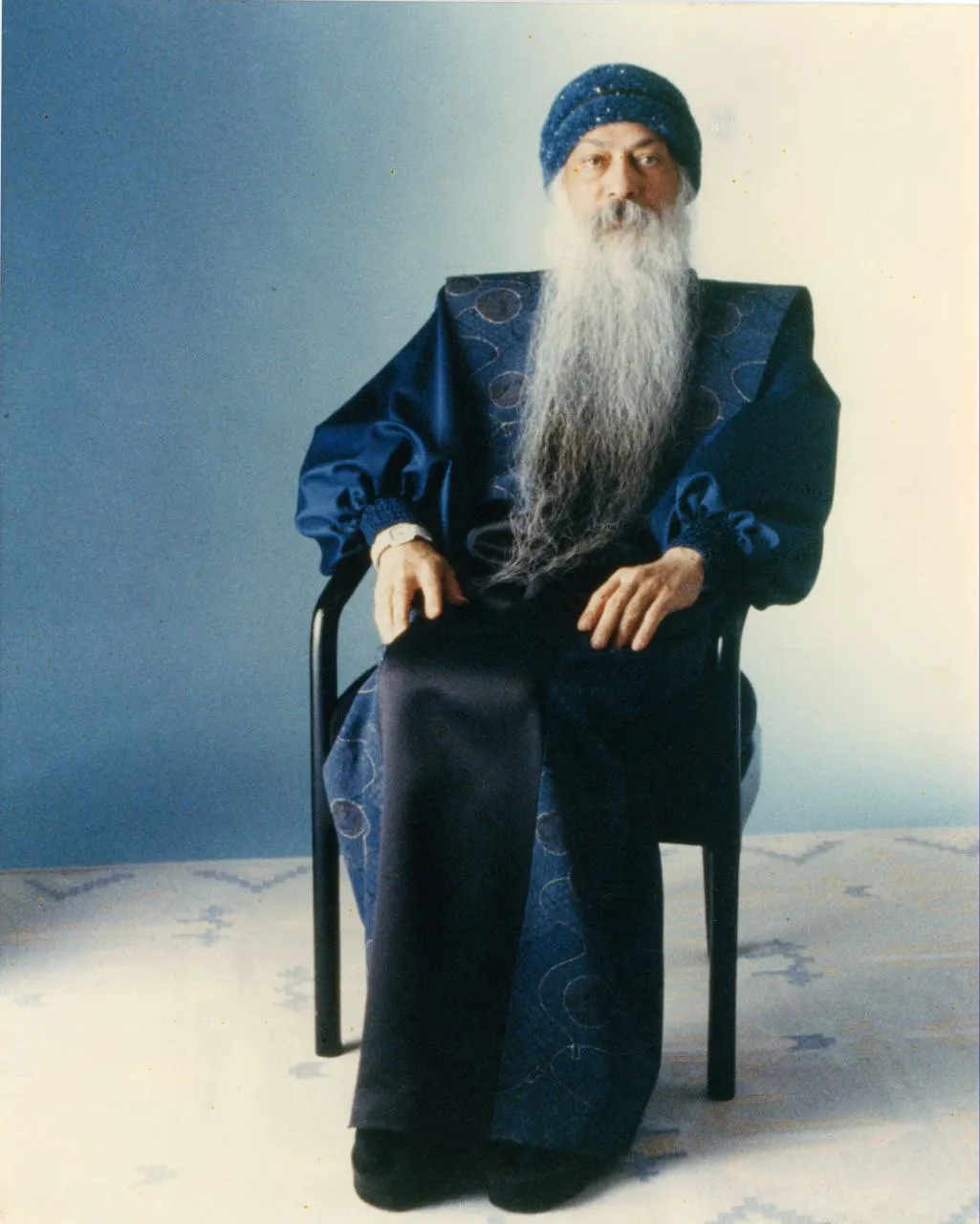
According to Osho, enlightenment is not beyond nature at all; it is the very nature of things - your own life-source, already present where you are. Seeking it as a distant goal or 'supernature' only feeds the ego and creates misery. Drop borrowed ideals, stop striving to be someone else, and relax into your intrinsic being; rejoicing in yourself reveals the enlightenment that has always been.
Enlightenment isn’t somewhere else; it’s simply you being yourself right now, without trying to become someone else.
From the Discourses
Passages where Osho speaks to this question — each links to the complete discourse.
Question: BELOVED MASTER, IS ENLIGHTENMENT BEYOND THE NATURE OF THINGS? Milarepa, enlightenment is the very nature of things. But it has never been said that way; on the contrary, people's minds have been corrupted by creating a goal against nature, giving it beautiful names, "supernature." And man was caught in this because of a very simple reason: The nature of things is already where you are. It is not an excitement and it is not a challenge and it does not call on you to prove your ego. It is not a faraway star. Mind wants for its nourishment something very difficult, something almost impossible. Only if you can achieve the impossible can you feel you are somebody special. Enlightenment is not a talent. It is not like somebody being born a painter or a poet or a scientist -- those are talents.
Beloved Osho, what is enlightenment? Have the experience and the idea of enlightenment evolved with time?
So nirvana is just like darkness. The light is put off and your reality is all there, with all its beauty, benediction, blessing. But there is no word in English to translate nirvana. Jainas use the word moksha. Moksha means absolute freedom, ultimate freedom, freedom from all fetters. And the biggest fetter is the ego. Other fetters are just parts of the ego: greed, lust, ambition, anger. All that is thought to be sin in other religions, in Jainism is thought only to be a fetter. But the root, the main root of the whole tree of your slavery, is the ego. So cut the main root and all other roots will die of their own accord. Don't bother to cut small roots, branches, leaves, because they will come again. Cut the main root and the whole tree will die. And when all your fetters fall, what remains? The unfettered…
Beloved Osho, is it possible to become enlightened in a really easy and relaxed way, with not too much effort and lots of naps?
Gayano, you are asking me, a man who has never done anything. Just through relaxation ... without any effort and lots of naps! Mostly I am asleep. I just get up to talk to you in the morning, then I go back to sleep; then I get up again in the evening to talk to you and go back to sleep. My total hours of sleep must be eighteen. Six hours I am awake, two hours with you, one hour for my bath, for my food and the remainder I am in absolute samadhi. And I don't even dream -- so lazy! And you are asking me the question. This is my whole philosophy, that you should not make any effort, that you should relax and enlightenment comes. It comes when it finds you are really relaxed, no tension, no effort and immediately it showers on you like thousands of…
What is enlightenment?
He had read all the Buddhist scriptures -- there are thousands of them. It is said about this Chikanzenji that he had all these scriptures in his room and he was constantly reading day and night. And his memory was so perfect he could recite whole scriptures -- but still nothing happened. Then one day he burned his whole library. Seeing those scriptures in the fire he laughed. He left the monastery, he left his guru, and he went to live in a ruined temple. He forgot all about meditation, he forgot all about yoga, he forgot all about practising this and that, he forgot all about virtue, SHEELA, he forgot all about discipline and he never went inside the temple to worship the Buddha. But he was living in that ruined temple when it happened. He was mowing down the weeds around the temple -- not a very religious…
Question: BELOVED OSHO, DON'T CONSCIOUSLY AWAIT ENLIGHTENMENT WHETHER YOU'RE HAPPY OR ANGRY, IN QUIET OR NOISY PLACES, YOU STILL MUST BRING UP CHAO CHOU'S SAYING, "A DOG HAS NO BUDDHA-NATURE." ABOVE ALL, DON'T CONSCIOUSLY AWAIT ENLIGHTENMENT. IF YOU CONSCIOUSLY AWAIT ENLIGHTENMENT, YOU'RE SAYING, "RIGHT NOW I'M DELUDED." IF YOU WAIT FOR ENLIGHTENMENT, CLINGING TO DELUSION, THOUGH YOU PASS THROUGH COUNTLESS EONS YOU WILL STILL NOT BE ABLE TO GAIN ENLIGHTENMENT. AS YOU BRING UP THE SAYING, JUST AROUSE YOUR SPIRIT, AND SEE WHAT PRINCIPLE IT IS. CONSTANTLY TAKE THE TWO CONCERNS -- NOT KNOWING WHERE WE COME FROM AT BIRTH AND NOT KNOWING WHERE WE GO AT DEATH -- AND STICK THEM ON THE POINT OF YOUR NOSE.