
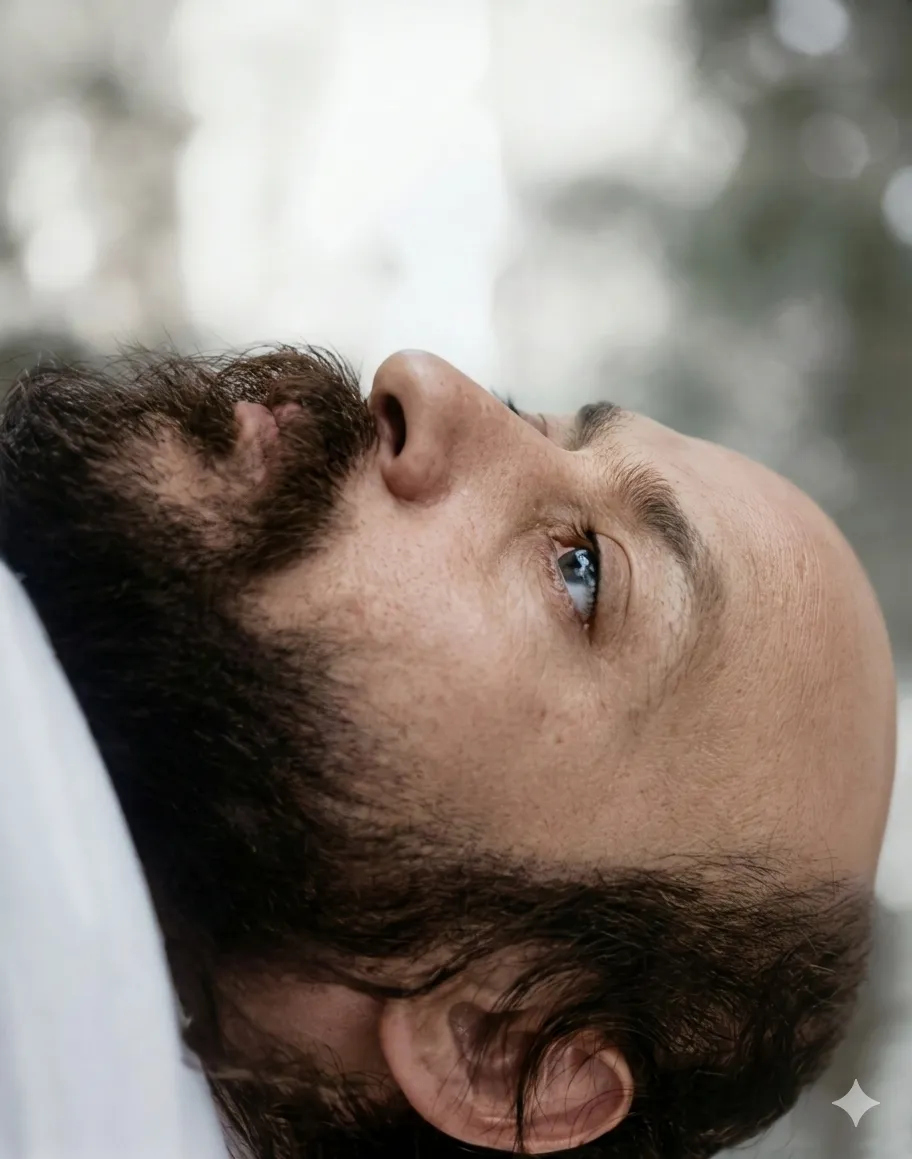
Gently watch your thoughts and urges without fighting or following them, and they settle and transform by themselves.
From the Discourses
Passages where Osho speaks to this question — each links to the complete discourse.
Beloved master, "he has tamed his horses...." yes! But how to do it? What is the way to tame them? I either control, repress and stop myself, or I am led by my senses and driven by my "animal." with both I feel not at ease and I constantly move from one side, repression, to the other -- driven. How to come out of this trap? Is watching and awareness all there is to do?
But I understand your trouble; this is the trouble of almost everybody in the world. Either you control or you start indulging, and you don't know how to remain exactly in the middle. Indulgence is also destructive. Repression is destructive, indulgence is destructive -- because these are two extremes. One fasts for many days; he is trying to control, repress his hunger, his body's needs. Another eats too much, goes on stuffing. It is said that Nero used to have four physicians always around him because he was a lover, a mad lover, of food; he was obsessed with food. He would eat too much, and the physicians' work was to help him vomit so that he could eat again. And this he would do many times in the day. Otherwise you can eat only once, if you live in a primitive, aboriginal part of Africa... because for centuries they…
Beloved master, what is the relationship between mastery over the self and control?
Nasruddin said, "I am a poor sinner, my dream was very ordinary -- very ordinary, not worth even telling. But because you insist and because we have agreed, I will tell you. In my sleep God appeared and he said, 'You fool! What are you doing? Eat the halva!' So I have eaten it -- because how can I deny his order? There is no halva left now!" Self-control gives you the subtlest ego. Self-control has more self in it than anything else. But self-mastery is a totally different phenomenon; it has no self in it. Control is cultivated, practiced; with great effort you have to manage it. It is a long struggle, then you arrive at it. Mastery is not a cultivated thing, it is not to be practiced. Mastery is nothing but understanding. It is not control at all. For example, you can control anger, you can repress…
If one is in the situation of muso's disciple -- wishing to terminate a samurai for daring to assault the master -- should one do it with concrete totality, and meditate after- wards, or suppress the ego-based impulse, or is there a third alternative?
The first thing, and the most basic to be understood, is that whatsoever you do, it should not be a reaction. If it is an act then there is no problem. If Muso's disciple had acted out of his spontaneity, Muso would have certainly blessed him, but he started saying, that he would like to do this, he cannot allow this man to live any more, he has insulted his master.... If he had acted rather than brooding about it, rather than bringing the mind in; if he had acted with no-mind, the master would have certainly blessed him. Action is always good; reaction always bad. So try first to understand this term 'reaction'. It means you are acting unconsciously. Somebody is manipulating you. Somebody says something, does something, and you react. The real master of the situation is somebody else. Somebody comes and insults you and you react, you…
Osho, you have earlier said, “Live moment to moment, live in the present.” Now you are saying, “Return to the past.” What should we do?
So it is with the mind—there are ruts. The past means endless grooves. However much you understand, your intellect agrees, you make decisions, you resolve—at the moment of resolve you feel something is going to change. But not even an hour passes before your decision breaks. Then only self-condemnation is produced, nothing else. Your saints, your fakirs, your priests and pundits—most of the time they only succeed in producing self-condemnation in you, nothing else. Their words are logically correct. You cannot even say they are wrong; you have to admit they are right. In that admission you take a decision. But against what are you deciding? Inside are grooves carved since who knows when, deep tracks. Walking in them has become a habit. It is easy to walk in them. They will pull you again and again. The meaning of returning into the past is: these grooves must be erased.…
दूसरा प्रश्न: ओशो, आपने पहले कहा है, क्षण-क्षण जीयो, वर्तमान में जीओ। अब आप कह रहे हैं, अतीत में लौटो। हम क्या करें?
ठीक मन पर लीकें हैं। अतीत का अर्थ है, अनंत लीकें। तो आप कितनी ही बातें समझ लेते हैं; बुद्धि सहमत हो जाती है; निर्णय ले लेते हैं; संकल्प कर लेते हैं। और जब संकल्प करते हैं, तब सोचते हैं कि कुछ होने-जाने वाला है। घड़ी भी नहीं बीत पाती कि जो आपने निर्णय लिया था, वह टूट जाता है। और तब सिर्फ आत्मग्लानि पैदा होती है, और कुछ भी नहीं। आपके संत, आपके फकीर, आपके पंडित-पुरोहित, आप में सिर्फ आत्मग्लानि पैदा करवा पाते हैं और कुछ भी नहीं। क्योंकि उनकी बातें तो तर्कयुक्त हैं। आप भी कह नहीं सकते कि वे गलत कह रहे हैं। स्वीकार करना पड़ता है कि ठीक कह रहे हैं। उस स्वीकृति में आप निर्णय लेते हैं। लेकिन निर्णय किसके खिलाफ ले रहे हैं! न मालूम कितनी लंबी लकीरें भीतर हैं, गहरे खांचे हैं। उनमें चलने की आदत हो गई है। उनमें चलना सुगम है। …