
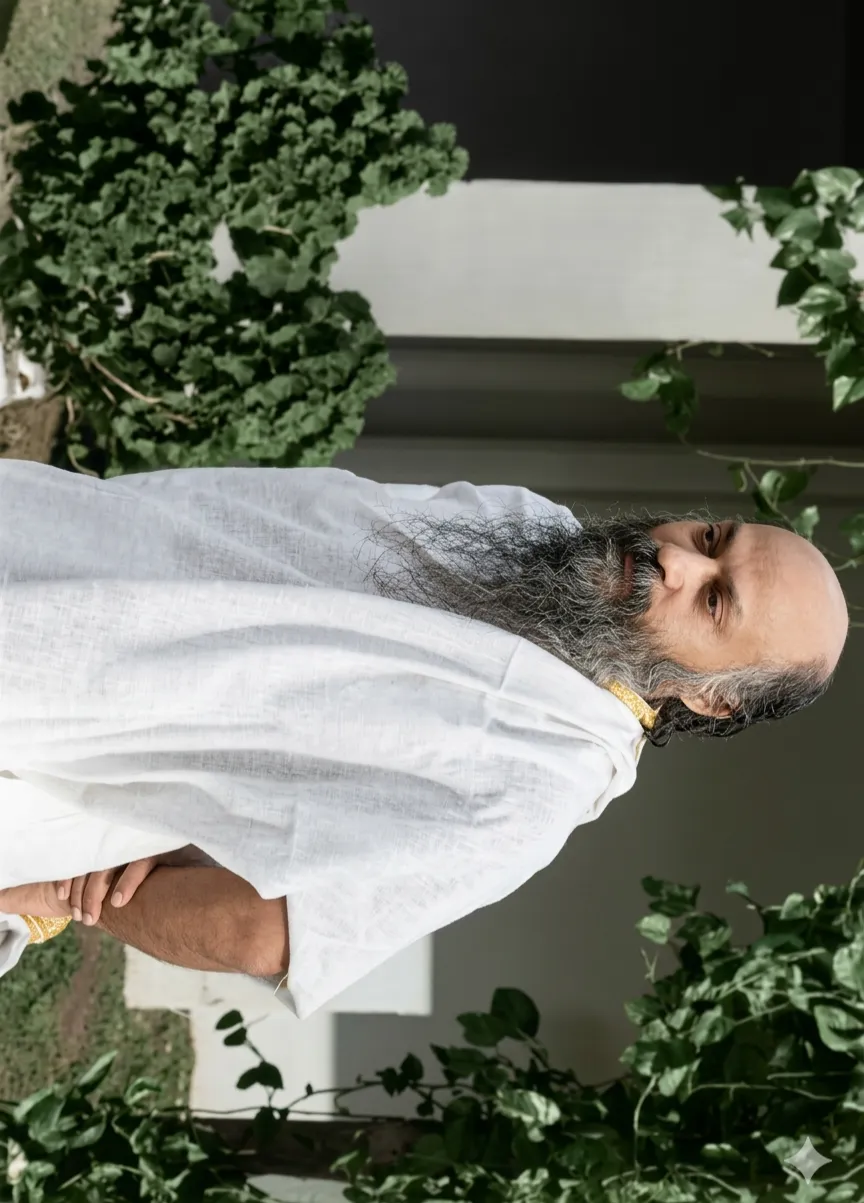
According to Osho, there are no ordinary people; meditation is simply remembering your inner being. Introduce it by turning attention inward: sit silently, close your eyes, watch thoughts and emotions without identifying, and discover the watcher. Then carry this witnessing into all activities. Meditation is disidentification from the nonessential, a continual remembrance like finding glasses already on your nose: natural, effortless, and for everyone.
Sit quietly, notice thoughts and feelings come and go, remember you’re the one watching, and keep that gentle noticing throughout the day.
From the Discourses
Passages where Osho speaks to this question — each links to the complete discourse.
How to introduce meditation to the daily life of so-called ordinary people?
The question is good because it says "so-called ordinary people." In fact, there are only so-called extraordinary people; ordinary people are just real people, not so-called. Extraordinary people are so-called; they are phony, unreal. There is no problem in introducing meditation into people's lives -- I will not call them ordinary because I don't see anybody who is extraordinary. The whole distinction is created by egoists. Everybody is a unique individual; either everybody is ordinary or everybody is extraordinary, but there is no distinction between the two. I will just use the word `people'. Gautam Buddha was just like you before he became enlightened. I was just like you before I entered into my innermost core. There is no speciality in it. Only one thing is missing: you have never endeavored, you have never tried -- you have been looking only outside. Your education teaches you to look outside, your…
Question: BELOVED OSHO, WHAT IS THE BEST WAY TO ENCOURAGE PEOPLE IN MEDITATION? The first thing: for a patient to go to the doctor, you must make him realize that he is sick; otherwise there is no need to go to the doctor. So the people you want to encourage into meditation: first you have to make them aware that they are frustrated, perhaps for so long that they have forgotten that they are sad. They cannot remember when they laughed from their very hearts. They have become robots -- they do things because they have to be done but there is no joy in doing them. They are living an accidental life. Their birth is accidental, their marriage is accidental, their children are accidental, their job is accidental. Their life has no sense of intrinsic growth and direction. That's why they cannot feel like rejoicing.
Osho, what is the first experience of samadhi like?
You will know only when it happens. It cannot be said; at most a few hints can be given. It is as if, in the dark, a lamp is suddenly lit. Or as if a dying patient, right at the edge of death, suddenly finds a medicine that works; life’s wave, life’s thrill spreads again—so it is. As if a corpse becomes alive—such is the first experience of samadhi. It is the taste of nectar. The experience of the ultimate music. But it will be only when it happens; and only then will you understand. You will not understand by my saying it. It is as with love. How can anyone explain it? To someone who has never loved, never known love, no matter how many explanations you offer—he will hear it all and still ask, “I haven’t understood; please explain a little more.” It is like explaining light to…
Osho said that there was no need to try to still the mind, to stop the thoughts. He said that just as the traffic goes by and one remains on the sidewalk, unaffected, just a watcher, so one should simply witness the thoughts as they went by. We are not our thoughts, and recognising that we are the witness is enough. The very acceptance of the thoughts makes one more relaxed. The relaxation helps to create a distance, to separate oneself. To evaluate a thought as good or bad means that you are attached to your thoughts -- so one should not put labels on them.] ... put yourself aside, sit under a tree, and just watch the traffic. Soon, one day, the traffic disappears and the road is empty. Suddenly there is an interval and in that interval is meditation. But that interval cannot be created or cultivated.
Osho, you say that if there is awareness, then how are the two to be brought into harmony?
That is precisely the practice of active meditation: awareness. Awareness is the very means of going into emptiness in relation to all actions, to the movements of the mind as well. For example, if you lie there for half an hour—what will you do? In that half hour, whatever thoughts are moving in your mind, you are to be simply aware of them. Simply a witness—what else will you do? Just become a witness. Keep silently watching; let them move. But obstacles arise in our seeing. We become absorbed. We fail to remain a witness. We don’t even notice when we have become one with those very thoughts. That sense of awareness fades; a kind of stupor, a moorchha, comes in. A thought comes, a memory arises, and we stop being the watcher. We become part of that thought and of its flow. That is moorchha. And the opposite is…