
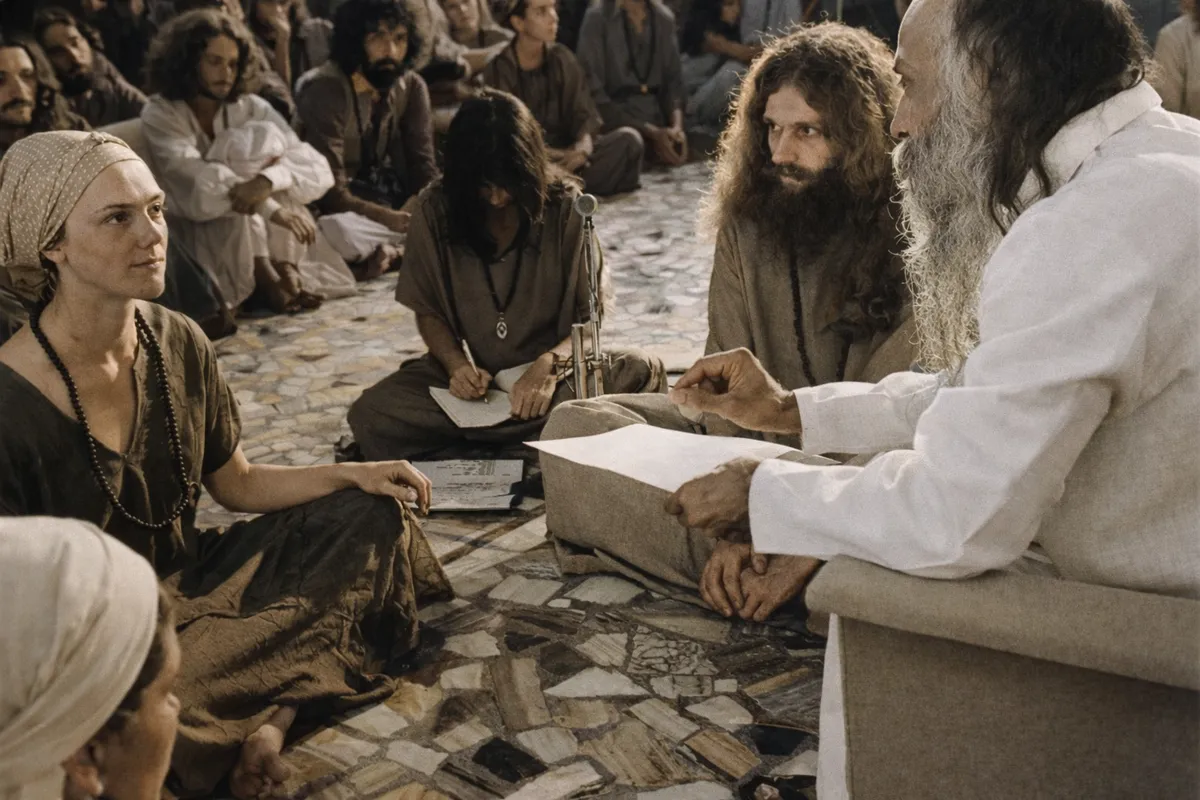
Go to the Master not to get something, but to drop your ego and be empty so truth can fill you.
From the Discourses
Passages where Osho speaks to this question — each links to the complete discourse.
Osho, I earnestly pray that you do answer this question. How should I come for the Master’s darshan? When a disciple goes to the Master, how should he go? With the Master, how should the disciple be—what should he do and what should he not do? Asked by “Vishnu Chaitanya.”
A disciple is one in whom the unquenchable longing to learn has arisen; in whom the thirst to learn has been kindled. The thirst to learn is not ordinary; the urge to teach is very ordinary. The thirst to learn is extraordinary. Everyone wants to be a guru; to be a disciple is rare. You claim to know even what you do not know, because the claim of knowing satisfies the ego. You answer even about things you know nothing of—how could you admit that there is an answer and you don’t know it! You give such advice that, if someone followed it, he would fall into a ditch, because you are not advising from experience—you are enjoying the taste of advising. Have you seen how people relish giving advice! Just get caught in their clutches and everyone is eager to advise. It is good that people do not take…
पहला प्रश्न: ओशो, मेरे इस प्रश्न का उत्तर अवश्य दें, ऐसी प्रार्थना है। गुरु-दर्शन को कैसे आऊं? जब शिष्य गुरु के पास जाए तो कैसे जाए? गुरु के पास शिष्य किस तरह रहे, क्या-क्या करे और क्या-क्या न करे? पूछा है ‘विष्णु चैतन्य’ ने।
शिष्य का अर्थ होता है, जिसे सीखने की दुष्पूर आकांक्षा उत्पन्न हुई है; जिसके भीतर सीखने की प्यास जगी है। सीखने की प्यास साधारण नहीं होती; सिखाने का मन बड़ा साधारण है। सीखने की प्यास बड़ी असाधारण है। गुरु तो कोई भी होना चाहता है, शिष्य होना दुर्लभ है। जो तुम नहीं जानते, वह भी तुम दावा करते हो जानने का, क्योंकि जानने के दावे में अहंकार की तृप्ति है। जिन बातों का तुम्हें कोई भी पता नहीं है, उनका भी तुम उत्तर देते हो; क्योंकि यह तुम कैसे मानो कि उत्तर, और तुम्हें पता नहीं! तुम ऐसी सलाहें देते हो, जिन्हें कोई माने तो गड्ढे में गिरेगा, क्योंकि तुम किसी अनुभव से सलाह नहीं दे रहे हो। तुम तो सलाह देने का मजा ले रहे हो।
Question: BELOVED OSHO, HOW CAN I BECOME A DISCIPLE? What is the need to become a disciple? Why should you ask such a question? Do you feel your life is meaningless, that you need some meaning? Do you feel your life is empty and you would like fulfillment? Do you feel you are in darkness and you would like to be in the light? The whole thing depends on you. If you are contented as you are, if you are not missing anything as you are, there is no need to be a disciple. Why bother a master, and why go into an unnecessary search? But if you have emptiness, meaninglessness, anxiety, anguish, confusion, darkness; if you feel your whole life is nothing but misery, then to become a disciple is very simple.
Osho, you say the same thing in countless ways. But when I listen to you, it feels as if I am hearing it for the first time. And I feel so much joy that I don’t feel like going back home. What should I do—what can I do—so that I can just keep listening to you!
You will feel as if you have been made to rise out of season, before time—as if you were not yet to go and yet had to go. And if you go in that way, your home will become even more desolate than before. I do not want to make your home desolate; I want to make your home a temple. I want that when you go home, your home’s new form is revealed. I do not want to tear you away from home, from the world, from family life. That is the newness of my sannyas: I do not want to sever you from the world; I want to join you to the world in such a way that your connection with the world becomes a connection with the Divine. Let the world no longer be a barrier between you and the Divine; let it become a means. If…
पहला प्रश्न: ओशो, आप एक ही बात कहते हैं अनेक-अनेक ढंगों से। पर जब आपको सुनता हूं तो उस समय यही लगता है कि पहली बार सुन रहा हूं। और इतना आनंद मिलता है कि वापस घर लौटकर जाने का जी नहीं करता। क्या करूं, मैं क्या करूं कि आपको सुनता ही रहूं!
… ऐसा लगेगा जैसे अभी जाना न था और जाना पड़ा। और अगर ऐसे तुम गये, तो घर और भी उदास हो जाएगा। जितना पहले था, उससे भी ज्यादा। मैं तुम्हारे घर को उदास नहीं करना चाहता। मैं तुम्हारे घर को मंदिर बनाना चाहता हूं। मैं चाहता हूं कि तुम जब घर जाओ, तो तुम्हारे घर का अभिनवरूप प्रकट हो। मैं तुम्हें घर से, संसार से, गृहस्थी से तोड़ नहीं लेना चाहता। वही मेरे संन्यास का अभिनवपन है कि मैं तुम्हें संसार सेे तोड़ नहीं लेना चाहता। …
Osho, yesterday you explained that with joyful awareness (sukh-purvak surati) resolution happens on its own. Yet I find myself having to go through great effort, practice, and labor—why? How long, and why, must a seeker pass through so much effort, toil, and austerity?
If there is laziness in the mind, even little things feel like great effort. It’s a matter of your interpretation. In truth, you are not exerting at all. I tell you, those who are near me and engaged in “practice” are the people on earth who are laboring the least. You have no idea what real effort is. When a person is deeply lazy, even trivial things seem like toil. What are you actually doing? What is it you keep calling “great effort”? Which great effort are you making? You dance a little—and you call that great effort? Is dancing an effort? Dancing is joy! But your perspective is wrong. If you take joy to be effort, you have missed. Dancing is celebration, a juicy happening. Where is the effort in it? If even dancing is effort for you, then what would non-effort be? If I tell you, “Just sit…
छठवां प्रश्न: ओशो, कल आपने समझाया कि सुखपूर्वक सुरति से समाधान घटता है, परंतु, मुझे तो बड़े प्रयास, अभ्यास और श्रम से गुजरना पड़ रहा है, क्यों? साधक को बहुत प्रयास, श्रम और तपश्चर्या से कब तक और क्यों गुजरना पड़ता है?
आलस्य हो मन में, तो छोटी-छोटी चीजें बड़ा प्रयास मालूम होती हैं। तुम्हारी व्याख्या की बात है। कुछ भी तुम्हें श्रम नहीं करना पड़ रहा है। मैं तुमसे कहता हूं कि मेरे निकट जो लोग साधना में लगे हैं, पृथ्वी पर सबसे कम श्रम उन्हें करना पड़ रहा है। तुम्हें श्रम का कुछ पता ही नहीं है। मगर महाआलसी व्यक्तित्व हो; तो छोटी-छोटी बातें श्रम मालूम पड़ती हैं। कर क्या रहे हो तुम? किस बात को तुम बार-बार कहते हो कि बड़े प्रयास। कौन सा बड़ा प्रयास कर रहे हो? थोड़ा नाच लेते हो, इसको बड़ा प्रयास कहते हो? नाचना प्रयास है? नाचना तो आनंद है। लेकिन तुम्हारी दृष्टि गलत है! आनंद को प्रयास समझोगे, चूक गए। नाचना तो उत्सव है, एक रसपूर्ण घटना है, प्रयास क्या है? अगर नाचना भी प्रयास है, तो फिर अप्रयास क्या होगा?
Osho, the witness, the seer, consciousness is always separate—virginal and unbound. And the whole play of life is nothing but the movement of the gunas within themselves. In such a situation, if a person’s qualities of sattva, rajas, and tamas are calmed in a scientific or chemical way, or if a person is made sattvic, will he then attain that ever-free witness? If the witness is forever free and present, then by chemically altering the three gunas will it not be revealed? Would the person not then become religious? What is the fundamental difference between solving the problem arising from the
Sadhana means we are dissolving the current itself, not breaking the bulb. There is no point in breaking the bulb. In fact, the bulb is useful; it tells you whether the current is flowing or not, whether there is current or not. Your anger within tells you you are still sunk in ignorance. Lust tells you your life energies have not yet become aware. If we remove these elements, anger will stop manifesting and you will also stop knowing that you are in deep ignorance. It is as if a man is sick and we snatch away the symptoms of his disease so that he doesn’t even come to know he is ill. And keep in mind, anger is an opportunity. Only the unwise say anger is simply bad; I do not say so. Anger is an opportunity; you can use it badly or well. Anger is a chance. In…
पहला प्रश्न: ओशो, साक्षी, द्रष्टा, चैतन्य सदा ही अलग कुंवारा और अनबंधा है। और सारी जीवन-लीला गुणों का ही स्वयं में वर्तन है। ऐसी स्थिति में व्यक्ति से सत्व, रज, तम के गुणों को वैज्ञानिक या रासायनिक ढंग से शांत कर दिया जाए या व्यक्ति को सात्विक बना दिया जाए, तो क्या वह उस हमेशा से मुक्त साक्षी को उपलब्ध हो जाएगा? यदि साक्षी सदा ही मुक्त एवं उपस्थित है, तो त्रिगुणों को रासायनिक ढंग से बदल देने पर वह क्या प्रकट न हो जाएगा? क्या व्यक्ति तब धार्मिक नहीं हो जाएगा? त्रिगुणों से उत्पन्न समस्या को रासायनिक ढंग से हल करने में या साधना के माध्यम से हल करने में क्या मौलिक भिन्नता है?
साधना का अर्थ है कि हम बिजली की धारा को ही विलीन कर रहे हैं, बल्ब को नहीं तोड़ रहे हैं। बल्ब को तोड़ने का कोई अर्थ ही नहीं है। बल्कि बल्ब तो उपयोगी है। क्योंकि वह बताता है, धारा बह रही है या नहीं; धारा है या नहीं। आपके भीतर क्रोध यह बताता है कि अभी आप अज्ञान में डूबे हैं। वासना बताती है कि अभी आपके प्राण जागरूक नहीं हुए हैं। अगर ये तत्व हमने अलग कर लिए, तो क्रोध प्रकट होना बंद हो जाएगा और आपको यह पता चलना भी बंद हो जाएगा कि आप गहन अज्ञान में पड़े हैं। यह तो ऐसा हुआ, जैसे कोई आदमी बीमार हो और हम उसके बीमारी के लक्षण छीन लें, तो उसे यह भी पता न चले कि वह बीमार है। और यह भी खयाल में रहे कि क्रोध एक अवसर है। क्रोध सिर्फ बुरा है, ऐसा नासमझ कहते हैं; मैं नहीं कहता। …