
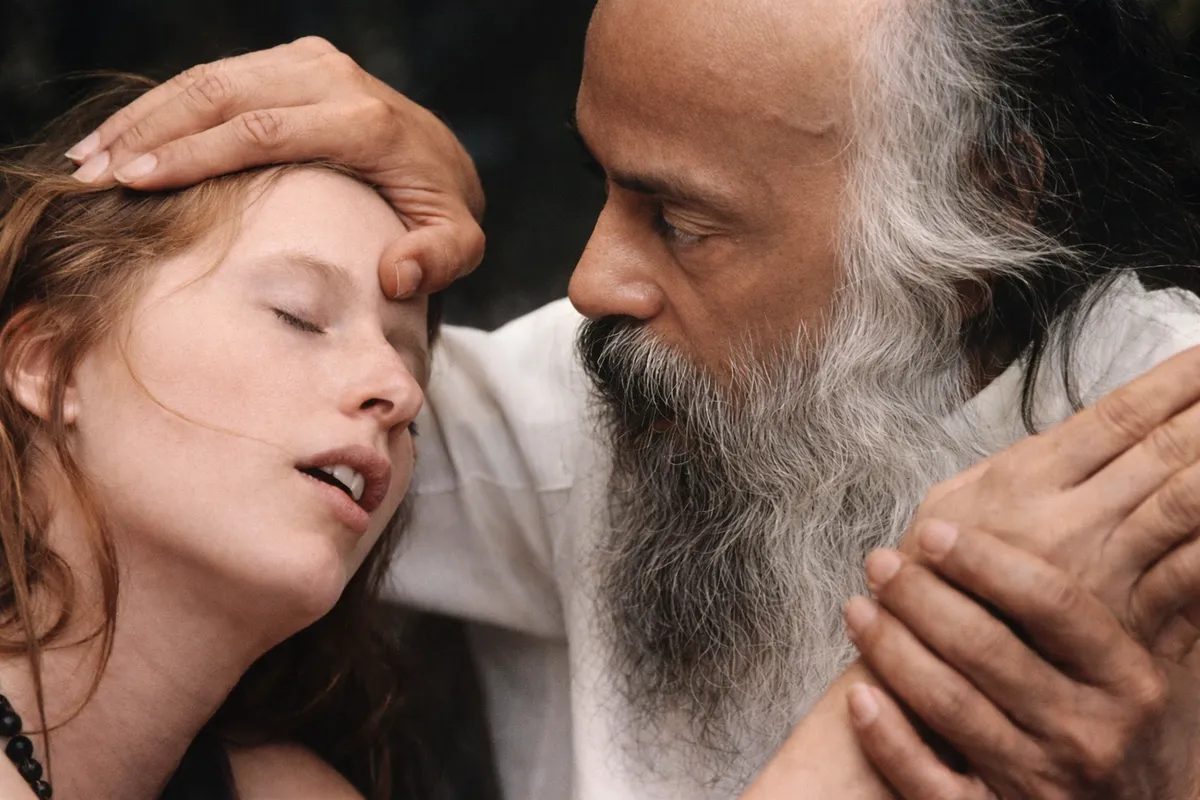
Sit quietly without trying to figure anything out; when your mind calms, real understanding shows up by itself.
From the Discourses
Passages where Osho speaks to this question — each links to the complete discourse.
Beloved master, what do you mean by understanding something in meditation? How does one go about it, and what part of oneself is involved in the understanding?
Nigel, meditation and understanding are synonymous. So when I say "understand in meditation," I am simply saying to be silent, quiet, cool, and see. You are not to do anything else, you have to be just silent, cool and calm, and see. And understanding arises on its own accord. It is the fragrance of being silent. Misunderstanding arises because your mind is very cloudy, noisy. Your mind never allows you to see that which is, never allows you to hear that which is said to you. Buddhas come and go but you remain the same. Yes, you become Christians and you become Buddhists, and you become Hindus, but you don't change. These are your strategies to escape change, to avoid the awakened ones. You ask me, "What do you mean by understanding something in meditation?" It is not a great problem. Meditation IS understanding. You are trying to figure it…
Osho, what is the first experience of samadhi like?
You will know only when it happens. It cannot be said; at most a few hints can be given. It is as if, in the dark, a lamp is suddenly lit. Or as if a dying patient, right at the edge of death, suddenly finds a medicine that works; life’s wave, life’s thrill spreads again—so it is. As if a corpse becomes alive—such is the first experience of samadhi. It is the taste of nectar. The experience of the ultimate music. But it will be only when it happens; and only then will you understand. You will not understand by my saying it. It is as with love. How can anyone explain it? To someone who has never loved, never known love, no matter how many explanations you offer—he will hear it all and still ask, “I haven’t understood; please explain a little more.” It is like explaining light to…
Osho, you say the same thing in countless ways. But when I listen to you, it feels as if I am hearing it for the first time. And I feel so much joy that I don’t feel like going back home. What should I do—what can I do—so that I can just keep listening to you!
You will feel as if you have been made to rise out of season, before time—as if you were not yet to go and yet had to go. And if you go in that way, your home will become even more desolate than before. I do not want to make your home desolate; I want to make your home a temple. I want that when you go home, your home’s new form is revealed. I do not want to tear you away from home, from the world, from family life. That is the newness of my sannyas: I do not want to sever you from the world; I want to join you to the world in such a way that your connection with the world becomes a connection with the Divine. Let the world no longer be a barrier between you and the Divine; let it become a means. If…
Osho, Patanjali and all the enlightened ones have spoken of samadhi. But Krishnamurti speaks of understanding. From samadhi it seems understanding can flower; but how can samadhi flower from understanding? Can the state of buddhahood be attained by understanding alone? Osho, please explain this properly.
Krishnamurti says there is no need to meditate separately. He is right. Those who said “do it separately” also know there is no real need to separate it. But they do not expect that you can be aware for twenty-four hours yet. Krishnamurti trusted you a little too much; Patanjali doesn’t trust you that much. Therefore Patanjali managed to take some of you to samadhi; Krishnamurti perhaps almost no one. He trusted you too much. You were crawling on your knees; Krishnamurti assumed you could run. Krishnamurti said what he had to say from his own standpoint; he did not take care of you. Patanjali speaks with your welfare in view—lifting you one step at a time. Patanjali has placed stairs; Krishnamurti speaks of a leap. You cannot gather the courage even to climb steps—what leap will you take! And it often happens that those who cannot muster the courage…
Osho, please explain how I can meditate over something without using my mind.
Meditation has nothing to do with mind; meditation simply means a state of no-mind. The functioning of the mind is the only disturbance in meditation. If you are trying to achieve meditation THROUGH mind you are bound to fail, doomed to fail. You are trying to achieve the impossible. A Zen initiate was meditating for years and whenever he would come to his Master, whatsoever experience he would bring to the Master, the Master would simply reject: "It is all nonsense. You go back and meditate again." One day the Master came to the but of the disciple -- he was sitting in a Buddha posture. The Master shook him and told him, "What are you doing here? If we needed stone Buddhas we have many in the temple! Just by sitting like a stone Buddha you will not attain to meditation. Do what I have been telling you to…