
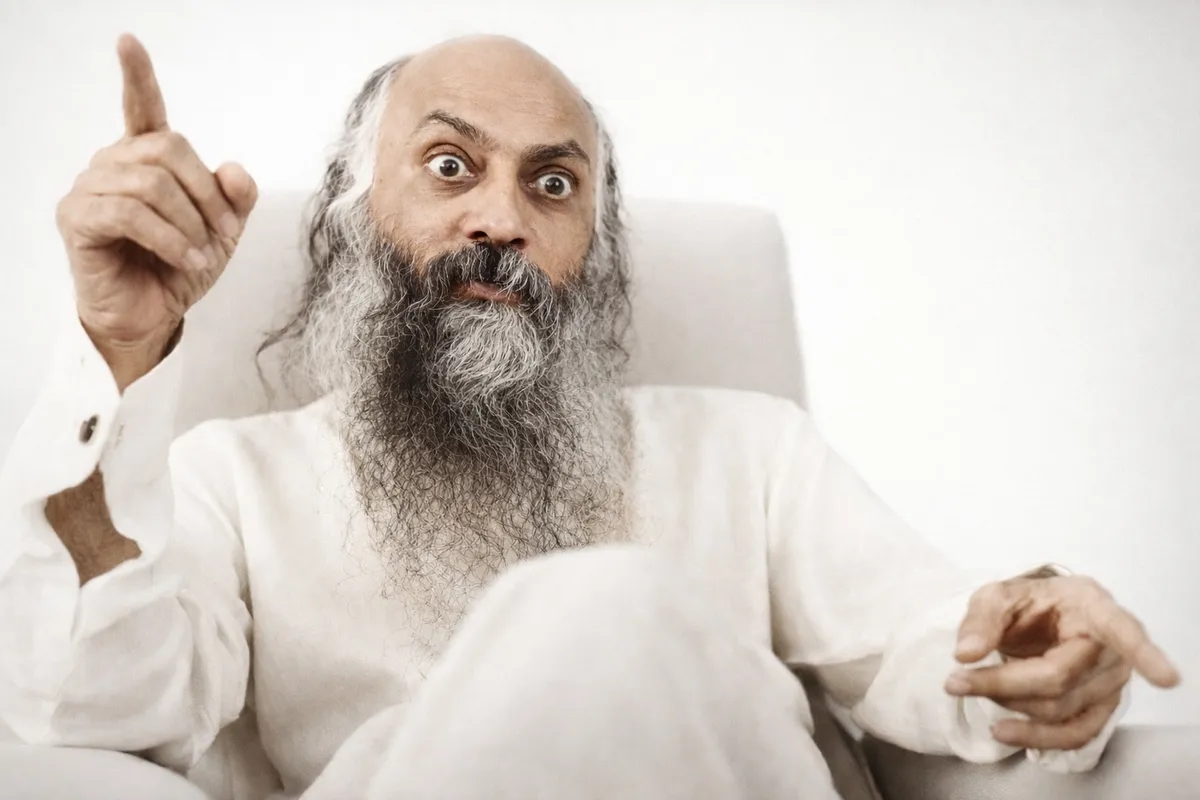
Love is like manure: hoard it as lust and it stinks (attachment); spread it as prayer and it makes flowers (dispassion).
From the Discourses
Passages where Osho speaks to this question — each links to the complete discourse.
Osho! You said that dispassion born of calculation or knowledge is false; only dispassion born of love is true dispassion. But love brings attachment; how can dispassion blossom from it?
Anand Maitreya! Love is a ladder; you can climb down it, and you can climb up it. Love is a doorway; you can enter through it, and you can go out through it. Love in itself produces neither attachment nor dispassion. Love is neutral. Everything is in your hands. How you use love determines the result. If love falls, it turns into attachment. If love flowers, it becomes dispassion. It is like manure: pile it up in the house and it will spread a stench; scatter the same manure in the garden and fragrance will arise. That very manure will nourish the trees; it will become the color, the juice, and the scent of flowers. The very manure which, if heaped inside the house, would make living unbearable—not only for you but for the neighbors too. So it is with love. Love is manure. If it remains locked in lust,…
पहला प्रश्न: ओशो! आपने कहा कि गणित या ज्ञान से उपजा वैराग्य झूठा है; प्रेमजनित वैराग्य ही वैराग्य है। लेकिन प्रेम तो राग लाता है; उससे वैराग्य कैसे फलित होगा?
आनंद मैत्रेय! प्रेम तो सीढ़ी है; उससे नीचे भी उतर सकते हो, उससे ऊपर भी चढ़ सकते हो। प्रेम तो द्वार है; उससे भीतर भी आ सकते हो, उससे बाहर भी जा सकते हो। प्रेम न तो राग पैदा करता है, न वैराग्य पैदा करता है। प्रेम तो तटस्थ है। तुम्हारे हाथ में सब है। प्रेम का कैसे उपयोग करोगे, परिणाम इस पर निर्भर होता है। प्रेम पतित हो तो राग बन जाता है। प्रेम विकसित हो तो वैराग्य बन जाता है। जैसे घर में कोई खाद को इकट्ठा कर ले तो दुर्गंध फैलेगी और उसी खाद को बगिया में छितरा दे तो सुगंध उठेगी। वही खाद वृक्षों का पोषण बनेगी; फूलों में रंग, रस और गंध बनेगी। वही खाद, जो घर में इकट्ठी कर ली होती तो जीना दूभर हो जाता--तुम्हारा ही नहीं, पड़ोसियों का भी। ऐसा ही प्रेम है। प्रेम तो खाद है। अगर कामवासना में ही बंद रह गया तो सड़ांध पैदा होगी और अगर प्रार्थना में मुक्त हो गया तो परम सुवास पैदा होगी।
Osho, isn’t love inherently laced with attachment and possessiveness?
Rabi‘a, a woman mystic, was sitting in her house. A fakir named Hasan was her guest. Morning came; the sun rose. Hasan went outside and called loudly, “Rabi‘a, what are you doing inside? Come out and see how beautiful the sun is—behold God’s creation!” Rabi‘a said, “Hasan! Better you come inside—for you are seeing God’s creation outside; within I am seeing the One Himself.” Creation is beautiful. But will you compare it with the Creator? A song is beautiful; it carries a slight hint of the singer’s soul. These carvings all around are beautiful, but they are a tiny work of the artist. The artist is not exhausted in the paintings, nor is the Creator finished in the creation. From that Creator infinite creations can arise, and still He remains as He is—unchanged. The Ishavasya says: “From the Full, the Full is taken, yet the Full remains.” From that God,…
दूसरा प्रश्न: ओशो, क्या प्रेम में राग और आसक्ति निहित नहीं है?
राबिया, एक फकीर औरत अपने घर में बैठी थी। हसन नाम का एक फकीर उसके घर मेहमान था। सुबह हो गई, सूरज उगा। हसन बाहर गया, और उसने जोर से आवाज दी कि राबिया, भीतर क्या कर रही है? बाहर आ, देख कितना सुंदर सूरज निकला है, परमात्मा की सृष्टि को देख! राबिया ने कहा: हसन! बेहतर हो तू ही भीतर आ जा, क्योंकि तू परमात्मा की सृष्टि को देख रहा है बाहर, भीतर मैं स्वयं उसी को देख रही हूं। सृष्टि सुंदर है। लेकिन स्रष्टा से थोड़े ही मुकाबला करोगे? गीत सुंदर है। …
Osho, in the Gita there is, in many places, a call for a wisdom free of attachment and possessiveness for the attainment of the Supreme, and alongside it, a call for love and devotion as well. Are love and devotion possible without attachment and clinging?
Only then are they possible. If love carries attachment, it becomes moha—infatuation. If love is free of attachment, it becomes bhakti—devotion. Love stands between the two: moha and bhakti. If love falls into attachment, it turns into moha; if it is freed from attachment, it becomes bhakti. Love is in the middle. Understand it rightly: love is not a fixed state, it is a transition. If you do not move in time, love sinks downward and becomes moha. If you move swiftly, love rises and becomes bhakti. Love in itself is a journey; not a static condition, but a passage—the journey between moha and bhakti. And if you have loved anyone—anyone at all—you will have known both possibilities. If you have loved your son, if you are a mother and have loved your son; or you are a wife and have loved your husband; or a husband and have loved…
तीसरा प्रश्न: ओशो, गीता में जगह-जगह परमात्म-प्राप्ति के लिए आसक्ति और ममत्व से रहित बुद्धि की मांग है, साथ-साथ प्रेम और भक्ति की भी। क्या आसक्ति और लगाव के बिना प्रेम और भक्ति संभव है?
तभी संभव है। अगर प्रेम में आसक्ति है, तो वह मोह हो गया। अगर प्रेम में आसक्ति नहीं है, तो वह भक्ति हो गयी। प्रेम तो दोनों के मध्य में है, मोह और भक्ति। अगर प्रेम आसक्ति में गिर जाए, तो मोह हो जाता है। अगर प्रेम आसक्ति से मुक्त हो जाए, तो भक्ति हो जाता है। और प्रेम दोनों के मध्य में है। अगर ठीक से समझो, तो प्रेम कोई अवस्था नहीं है, संक्रमण है। अगर तुमने जल्दी न की, तो प्रेम नीचे गिरेगा और मोह बन जाएगा। अगर तुमने जल्दी की, तो प्रेम भक्ति बन जाएगा। प्रेम अपने आप में एक यात्रा है। प्रेम कोई स्थिर स्थिति नहीं है, संक्रमण है; मोह और भक्ति के बीच की यात्रा है। और अगर तुमने किसी को भी प्रेम किया है, किसी को भी, तो तुमने दोनों बातें जानी होंगी। अगर तुमने अपने बेटे को प्रेम किया है, अगर तुम मां हो और अपने बेटे को प्रेम किया है; या पत्नी हो और पति को प्रेम किया है; या पति हो और अपनी पत्नी को प्रेम किया है; या मित्र को प्रेम किया है; अगर तुमने प्रेम किया है, तो तुमने सब बातें जानी होंगी। …
Osho, you have titled this series of talks “Sahaj Yoga.” Do “sahaj” and “yoga” not seem mutually opposed?
Anand Maitreya! They don’t just seem opposed, they are opposed. But no ultimate truth of life can manifest without contradiction. Life is made of opposites—darkness and light, day and night, woman and man, negative electricity and positive electricity, birth and death. The very structure of life is woven of opposites. Hence the opposites are not only opposed; they are complementary to each other. If you have labored hard all day, you will be able to sleep deeply. Labor and rest are opposites, yet only the one who has worked can rest deeply—and the one who has not worked cannot. So the opposites are not only opposed, they complete each other. And only the one who has rested deeply at night can rise in the morning and engage in work again. One who has not rested through the night will not be able to work in the morning. Look closely at…
पहला प्रश्न: ओशो, आपने इस प्रवचनमाला का शीर्षक दिया है--सहज-योग। क्या सहज और योग परस्पर-विरोधी नहीं लगते?
आनंद मैत्रेय! विरोधी लगते ही नहीं, विरोधी हैं। लेकिन जीवन का कोई भी परम सत्य बिना विरोधाभास के प्रगट हो ही नहीं सकता। जीवन बना है विरोधों से--अंधेरा और प्रकाश, दिन और रात, स्त्री और पुरुष, ऋण विद्युत-धन विद्युत, जन्म-मृत्यु। जीवन की संरचना विरोधों से है। इसलिए विरोधी विरोधी ही नहीं हैं, एक-दूसरे के परिपूरक भी हैं। दिन भर श्रम किया खूब तो गहरी नींद सो सकोगे। श्रम और विश्राम विरोधी हैं, पर जिसने श्रम किया है वही गहरा विश्राम कर सकेगा। और जिसने श्रम नहीं किया वह गहरा विश्राम भी न कर सकेगा। तो विरोधी विरोधी ही नहीं हैं, एक-दूसरे के परिपूरक भी हैं। और जिसने रात्रि गहरा विश्राम किया है वही सुबह जागकर फिर श्रम में संलग्न हो सकेगा। जो रात-भर विश्राम नहीं कर सका वह सुबह श्रम में भी न लग सकेगा।
Osho, according to the saints, only when dispassion (vairagya) arises does the journey toward the Divine become possible. And you say that spiritual practice is possible while living in the world. Kindly speak on this apparent contradiction.
Anand Maitreya! There is not the slightest contradiction. There is no opposition at all, not even the appearance of it. It may seem so because centuries of conditioning do not allow you to see clearly; they put sand in the eyes. The saints are right: without the arising of dispassion one cannot journey toward the Divine. And when I say, “Only by living in the world is spiritual practice possible,” I am not saying anything contrary to the saints. Without being in the world, how will dispassion even arise? The world itself is the opportunity for dispassion. In the world dispassion becomes dense. One who runs away from the world will have an unripe dispassion. And if dispassion is unripe, attachment will sprout again—new shoots and fresh leaves will appear. Understand this seemingly upside-down point well. The worldly person often thinks of renunciation! There is so much sorrow, pain, and…
पहला प्रश्न: ओशो, संतों के अनुसार वैराग्य के उदय होने पर ही परमात्मा की ओर यात्रा संभव है। और आप कहते हैं कि संसार में रह कर धर्म-साधना संभव है। इस विरोधाभास पर कुछ कहने की अनुकंपा करें।
आनंद मैत्रेय! विरोधाभास रंचमात्र भी नहीं है। विरोध तो है ही नहीं, आभास भी नहीं है विरोध का। दिखाई पड़ सकता है विरोध, क्योंकि सदियों के संस्कार ठीक-ठीक देखने नहीं देते, देखने में अड़चन डालते हैं, आंखों में धूल का काम करते हैं। संत ठीक कहते हैं कि वैराग्य के उदय हुए बिना परमात्मा की ओर यात्रा नहीं हो सकती। और जब मैं कहता हूं: संसार में रह कर ही धर्म-साधना संभव है, तो संतों के विपरीत कुछ भी नहीं कह रहा हूं। संसार में बिना रहे वैराग्य ही कैसे पैदा होगा? संसार ही तो अवसर है वैराग्य का। संसार में ही तो वैराग्य सघन होगा। जो संसार से भाग जाएगा, उसका वैराग्य कच्चा रह जाएगा। और कच्चा वैराग्य रहा, तो राग फिर नये अंकुर फोड़ देगा, नये पल्लव निकल आएंगे।