
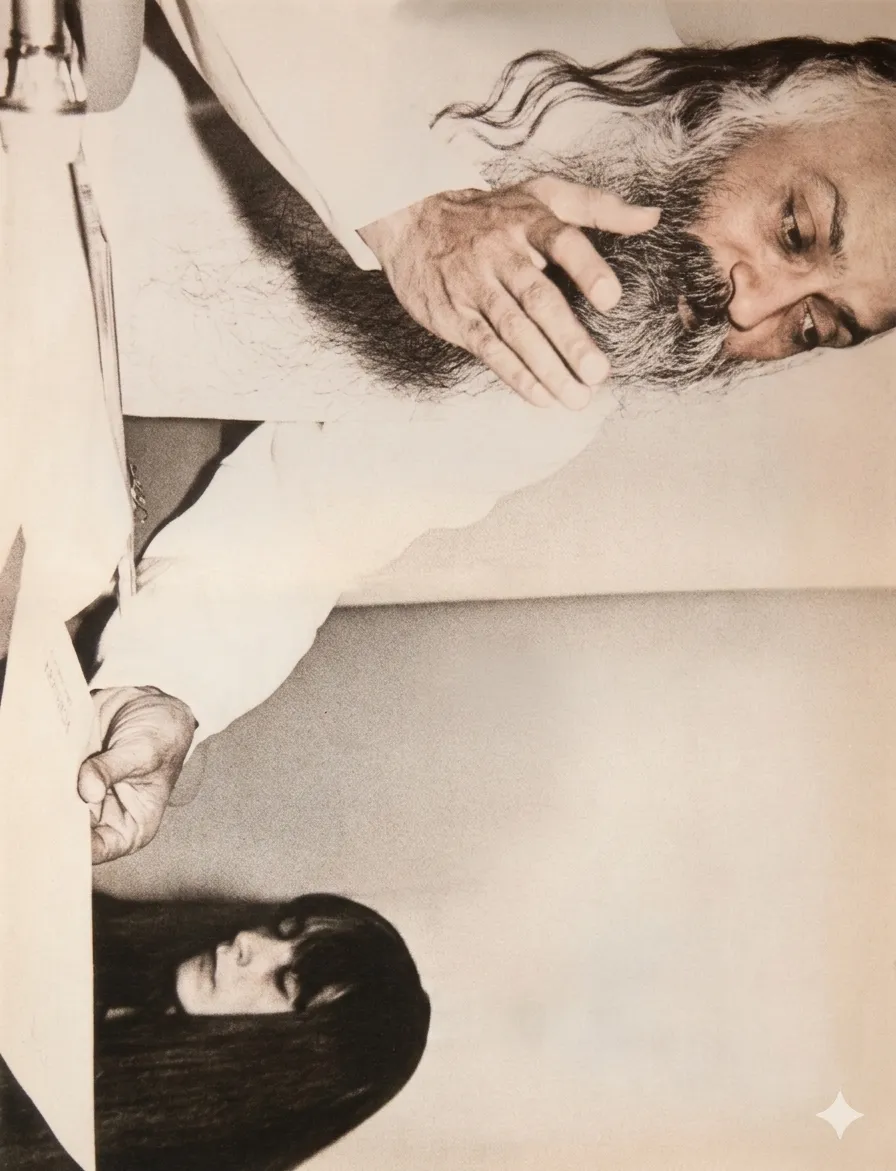
According to Osho, make meditation wholehearted by dropping fear and the need to control, and entering a total let-go. Withholding divides you, wastes energy, and makes practice false. Decide to move totally or not at all; surrender fully (ideally in a trusted setting with a guide) until you taste the blissful freedom beyond “madness.” This fearless wholeness gives a glimpse of the real and births true mastery.
Let go of fear and control, jump in completely, and trust you’ll come back clearer and stronger.
From the Discourses
Passages where Osho speaks to this question — each links to the complete discourse.
I am trying to do the meditations, making an effort, but the effort seems to be halfhearted. How can I make it wholehearted?
IT IS HALFHEARTED BECAUSE YOU ARE WITHHOLDING YOURSELF. If you are jumping, dancing, screaming, you are not moving totally in it because of some fear. That fear creates a division. You are afraid that if you move totally in it, it may not be possible for you to come back. That is the fear. If you express your madness wholeheartedly, the fear is there that you may not be able to come back from the madness, that it may take over, it may possess you. This fear creates a division. The major part stays in control and only the minor part is allowed to move. Then the movement becomes false because it is just imposed. The major part is still in control. Lose control! And don't be afraid; fear is the barrier. The division comes through fear. Then you go on protecting yourself and, at the same time, allowing. Both…
These are three concentric circles around the center. Of course the heart is closer to being, so it is better to be in the heart than to be in the mind. The mind is closer than the body; it is better to be in the mind than in the body. But the ultimate goal is to be just your being -- no action, no thought, no feeling, just pure witnessing. And then the satori happens and one becomes full of light, full of truth. Then to live is a blessing. Before it, it is just a drag; after it, it is a dance. (Really, meditation is a journey, Osho told Bhavan, from your head to your heart to your being.) Meditation is not-knowing, it is not like knowledge, It is far closer to feeling. It is not like logic, it is far more like love.
Osho, yesterday you said that when anger is watched consciously, it dissolves. But why is it that when sexual desire arises, even in awareness its intensity persists? Why is it so?
There is no entanglement in the breath. If you try to practice on anger… Anger is not happening every moment; it happens sometimes. And when it happens, it happens with such intensity that you are already going deep into it; so much is at stake in those moments that you may think, “We will look into awareness later; first let’s settle this now.” Lust is very deep, because existence has made it so deep; life depends on it. If lust were so easy that you decided and were freed, perhaps you would not even have been born—because many before you would have become free, and the possibility of your being would have been almost nil. But your parents, and their parents, did not become free; therefore you are. You too will not get free so easily, because your children are also to be—they are waiting: “Do not run away midway.”…
Once you can remain in your body, but unconnected with it, meditation has happened. This is the first satori. Many hours may pass but you will not feel the passage of time. But this happens only when fear has disappeared and your mind has become acclimatised to the new experience and it is not too terrified by it but becomes curious. Your mind will become so interested that it wants to know more about it and the fear will become transformed into a witnessing of what has happened. Go into it more and more, little by little, and if you start feeling that you will go mad, absorb that madness also by and by. Many people have gone mad. If they are working without a master and not knowing what to do, they land themselves in something which they cannot manage, and they can go mad.
Another friend has asked: If a seeker takes sannyas, will it help him in meditation?
To those friends who come to watch, I would say: try doing it as well. Because from outside, nothing at all can be seen. You will see people dancing and jumping; what is happening within them, you will have no idea. And what is happening within—that alone is the real thing. If that could be seen, something would be seen; otherwise, nothing has been seen. Some things can be seen from the outside; some things can be seen only from within. Meditation and religion are such things that can be seen only from within; they cannot be seen from the outside. Look from the outside too—one day, stand outside and watch; another day, stand inside and watch as well. Standing outside, chatting and laughing, let no one think that he is very intelligent. Having watched from outside, do not conclude that these people are mad and I am wise. In…