
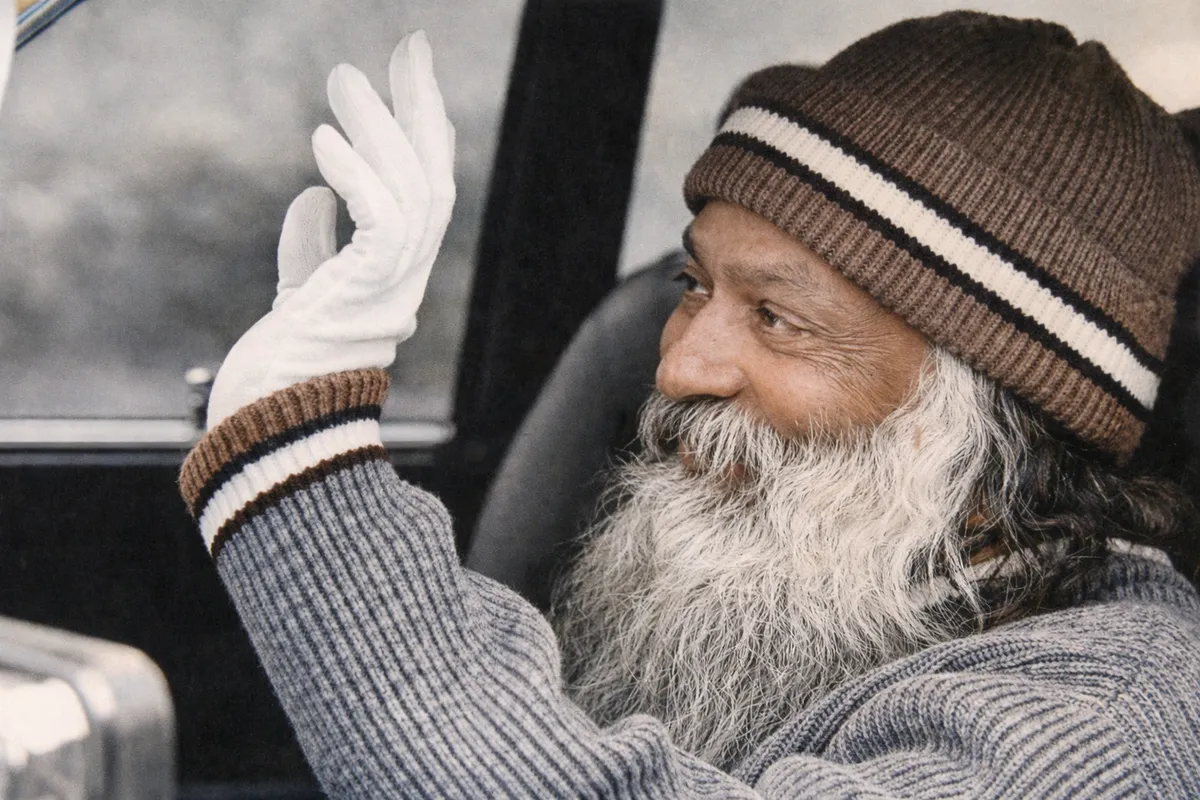
Reading can hurt if you hoard facts, but if you read calmly with your whole heart, like listening to music, it can make you wiser.
From the Discourses
Passages where Osho speaks to this question — each links to the complete discourse.
Question: BELOVED OSHO, YOU SAY THAT MIND'S SUBSTANCE IS MEMORY AND INFORMATION. DOES READING THEREFORE INFLATE AND INVIGORATE THE MIND? It depends. It depends on you. You can use reading as a food for the ego. It is very subtle. You can become knowledgeable; then it is dangerous and harmful. Then you are poisoning yourself, because knowledge is not knowing, knowledge is not wisdom. Wisdom has nothing to do with knowledge. Wisdom can exist in total ignorance also. If you use reading just as a food for the mind, to increase your memory, then you are in a wrong direction. But reading can be used in a different way; then reading is as beautiful as anything else in life.
You have asked in passing: what if one reads good literature? You ask—if one reads good literature, will that be right nourishment or not? Because to watch films is bad nourishment; to read trashy literature is bad nourishment. But if one reads good literature?
If someone concludes, “The soul exists, therefore what is there to gain?” he will ruin his life. This is mere talk—borrowed logic. You have heard others say the soul is within; then you have concluded, “If it is within, what is there to gain?” This is your trick to avoid awakening. In that sentence are two people’s conclusions, not one. “The soul is”—this belongs to Mahavira, to Buddha, to Krishna. “Then what is there to gain?”—this belongs to you. If the first is also yours, then there is no problem. If the first is another’s, you cannot draw your conclusion from someone else’s experience. Your experience will give your conclusion; another’s cannot give it to you. So you are using a device. You are tacking on your half to someone else’s half—only to show that you do not wish to wake up from your sleep. You want life to go…
Osho, I am not saying we shouldn’t read the Upanishads or the Gita, am I?
Why would I say that the Gita and the Upanishads should not be read! I would not even say that so‑called forbidden books should not be read. I would say: read those too. How could I be opposed to reading? How could I be opposed to learning? My point is only this: read them as books, not as scripture. Do not read them as sacred, holy texts; read them as books. They are people’s experiences—understand them. But remember, their experience does not become your experience by reading. Their realization, their knowing does not become your knowing by reading. If this is kept in mind, what harm is there in reading? By all means, read. It is beneficial. These are the memories of humankind; certainly look into them—but with utter impartiality. A Hindu can hardly read the Quran properly. A Muslim can hardly read the Gita properly. He cannot. As long…
Reading is good after meditation, very good, but before it, it can be dangerous. If you read too much you can become addicted to books and they destroy you, because then information goes on being piled up and it becomes a heavy burden. Then it creates confusion, because you can read the bible and the koran and the gita, and they are different languages, such different attitudes, so opposite to each other, diametrically opposite to each other. Your mind simply starts falling into parts. You don't know what is true and what is right and what to do. Then a person becomes just a head, and goes on spinning. That is not going to help much; it can be very destructive. Books are good when you have been meditating. Then you can see the point.
Beloved Osho, you have told us that the mind becomes more and more quiet if we meditate regularly. Last year, when I was living in europe outside of a commune, thoughts became stronger and stronger during my meditations until I began to dread sitting. Now that I am with you again, this problem has gone away. But I wondered: how can one be a sannyasin for ten years, meditating every day, and have a mind which becomes more and more noisy?
Scientists say there is no reason for the body to die for at least three hundred years. It is just an old hypnosis, autohypnosis, which has made the idea prevalent that you have only seventy years to live. It goes so deep in your consciousness that by the seventieth year you start thinking you are sinking, you are gone. And anyway by the time you are retired at the age of sixty there is nothing to do. Death seems to be a relief, not a danger. We have not been capable enough and human enough to provide a situation where our old people can have some dignity, some self-respect, some pride. We have not been able to find dimensions where they can contribute to the world. And they are experienced and certainly capable of contributing enough -- enough for their self-respect, enough for them to live and not to feel…