
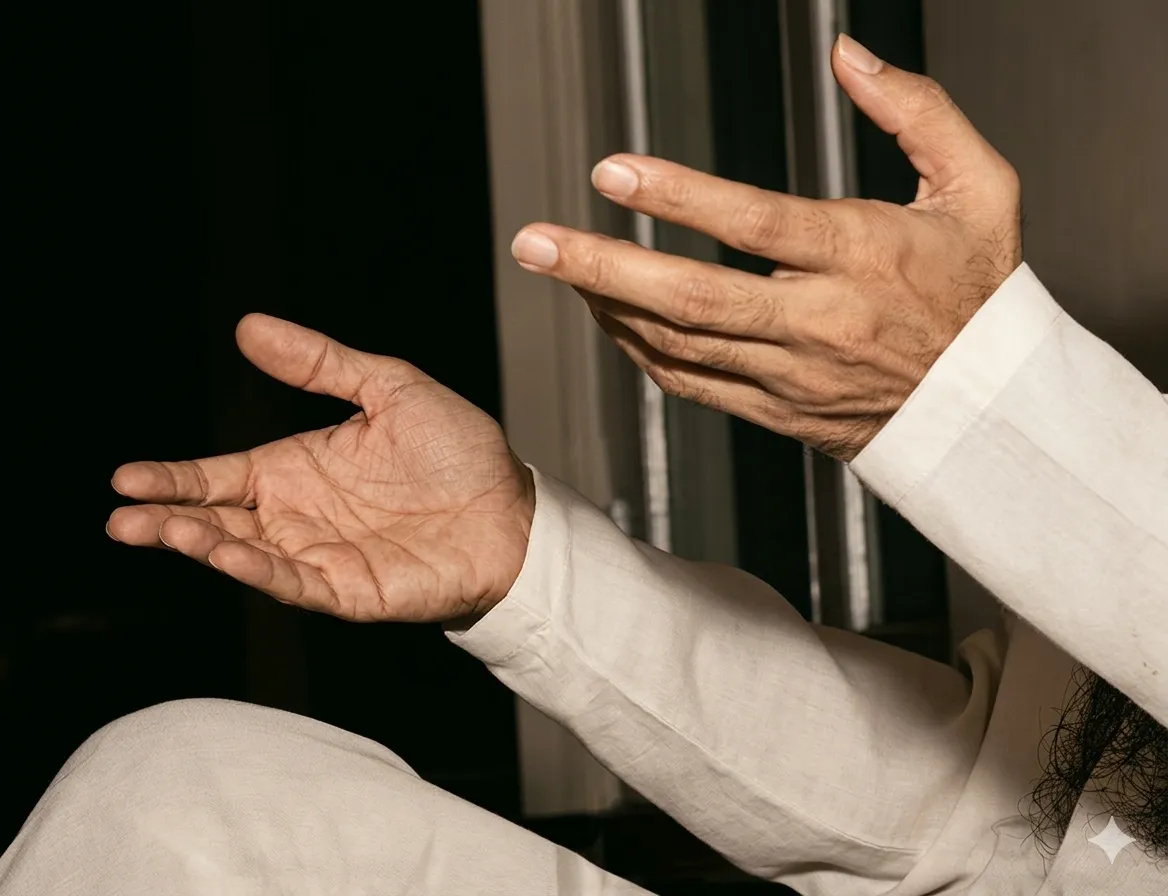
Don’t chase breathing tricks; live simply and watch your breath and actions with awareness—this naturally calms the mind.
From the Discourses
Passages where Osho speaks to this question — each links to the complete discourse.
Osho, some people say pranayama is helpful—does it really help?
No, in my understanding it is not helpful. That is why I deny every so‑called support. If I grant even a little, you will find in a few days that the support has become primary—you will start worrying about the support itself, and that becomes the whole work. No supports. I want to keep just one small point before your eyes: let nothing else come in between. No support. Otherwise, then everything in life becomes a support—eating and drinking, sleeping and waking, sitting—everything. Pranayama can be helpful for health. It is useful for health. But even that needs great care and understanding; otherwise it can also be useful in bringing ill‑health. About life and the body my view is: let them be lived very naturally, spontaneously. The more naturally and spontaneously you live them, the less you meddle, the better. Pranayama is not as valuable as simply allowing clean air…
प्रश्न: ओशो, प्राणायाम भी कोई कहता है इसमें कुछ सहायक है?
नहीं, मेरे मानने में तो कुछ सहायक नहीं है। और इसलिए मैं हर एक चीज को इंकार कर देता हूं कि वे सहारे अगर मैं थोड़े से भी कोई कहूं तो आप थोड़े दिन में पाएंगे कि यह तो गौण हो गया। उस सहारे ही की आप फिकर कर रहे हैं और वही काम...कोई सहायक नहीं है। यानी निपट मैं एक छोटी सी बात ही आपकी दृष्टि में रखे रहना चाहता हूं: कोई भी दूसरी चीज को बीच में नहीं आने देना। कोई सहायक नहीं है। और यूं तो फिर जीवन का हर काम सहायक है। खाने-पीने, सोने-उठने, बैठने से लेकर—सब। प्राणायाम स्वास्थ्य में सहायक होगा। स्वास्थ्य के लिए उपयोगी होगा। पर वह भी बहुत सोच-समझ कर करने जैसा है, नहीं तो अस्वास्थ्य लाने में भी उपयोगी हो जाता है। जीवन और शरीर के बाबत तो मेरी धारणा यह है कि उसको बहुत सहज, निसर्गतः जीने देना चाहिए। जितना सहज उसको निसर्गतः जीने दें, जितना उसमें कुछ उलटा-सीधा न करें, उतना अच्छा है। प्राणायाम का उतना मूल्य नहीं है, जितना स्वच्छ वायु का शरीर में पहुंच जाने का मूल्य है। …
Questioner: a great mystic of russia, george gurdjieff has written a memoir of his spirit ual adventures known as meetings with remarkable men. In the book he says that he was much impressed by a discussion with a sufi dervish on yogic pranayam and asanas. The dervish had warned him against all kinds of breathing exercises, because any change in the natural breathing system brings about disorder in life with disastrous results. What do you say about it?
My understanding is that sooner or later, this meditation that I am giving you is going to be a therapy of great significance, and it will unavoidably be come a way of treating the mentally ill and restoring them to health. And if it be possible that every child in the school goes through this meditation, he will be saved from insanity for the whole of his life. He will never be mad; he will be immune from this disease, because then he will be his own master, master of his body mind. The dervish, with whom Gurdjieff had a discussion on breathing, is a traveler of a different path. He never practiced breathing, and he experienced the situation of strangeness through some different way. And this is the trouble -- the trouble is, that the knower of one way loses no time in calling other ways wrong. But a…
Therefore one who masters pranayama becomes skillful in rising upward—he is expanding, extending, enlarging the upward current. These are two currents—two streams of air within the body. And between them sits Paramatma—or Atman, or consciousness—whatever name you wish. The thumb-sized Atman is present between these two currents. He pushes the air downward—He pushes the air upward. Prana—the air that goes upward. Apana—the air that goes downward. Western medical science has not yet recognized this double current; it holds that air is only of one kind. Hence many things based on the vital air which Ayurveda can accomplish allopathy cannot. One who understands these currents well can create great revolutions in life. A small child breathes: when a child breathes, his stomach rises and falls—the chest hardly moves. His breath is very deep. When you breathe, the chest rises and falls—your breath is shallow, not deep.
ये दो धाराएं हैं, दो करेंट हैं वायु के, शरीर के भीतर। और इन दोनों के मध्य स्थित है परमात्मा, या आत्मा, या चेतना, या जो भी नाम आप देना चाहें। वह जो अंगुष्ठ आकार का आत्मा है, वह इन दोनों धाराओं के बीच में उपस्थित है। वही वायु को नीचे की तरफ धकाता है, वही वायु को ऊपर की तरफ धकाता है। प्राण--ऊपर की तरफ जाने वाली वायु। अपान--नीचे की तरफ जाने वाली वायु। पश्चिम का चिकित्साशास्त्र अभी भी इस दोहरी धारा को नहीं पहचान पाया है। उनका खयाल है, वायु एक ही तरह की है। इसलिए वायु के आधार पर जो बहुत-से काम आयुर्वेद कर सकता है, वह ऐलोपैथी नहीं कर सकती। वायु की इन धाराओं को ठीक से समझ लेने वाला व्यक्ति जीवन में बड़ी क्रांतियां कर सकता है। छोटा बच्चा श्वास लेता है, तो आपने देखा है कि जब छोटा बच्चा श्वास लेता है तो उसका पेट ऊपर-नीचे जाता है। बच्चा लेटा है, श्वास लेता है, तो पेट ऊपर जाता है, नीचे जाता है। छाती पर कोई हलन-चलन भी नहीं होती। उसकी श्वास बड़ी गहरी है। …
Osho: No, no, not at their expense. Tell them about this method. They themselves will feel it. They will certainly feel the change, the transformation. Let them practise it--just as an experiment with their disturbed mind, their doubts. Let them experiment, just as an experiment. If 'something' happens, then the practice goes by itself. There is no need to convince them. And, the anarchy that is within must be exploded. It should not be stilled or cramped down. It must be expressed in total intensity. The calmness, the serenity, the Nirvana comes not by stilling the mind but by explosion. Then the stillness comes but it is not a cultivated composure. Express what you are, totally. Of course that means madness, because we are mad. So, if you express it, the madness will come out. Even you yourself will feel strange about it, unknown to yourself.
Osho, in this verse the fourth and final yajna is called the Yoga Yajna. In the Gita Press translation it is called the Ashtanga Yoga Yajna. Please clarify this as well.
Now a lovely thing: Om has A, U, and M. If you emphasize M, vibration immediately occurs at the navel. Islam has the word Allah. Sufi fakirs use the word Allah as with Om. “Allah”—the H lands just where M lands. “Allahu”—the Hu lands exactly at the navel where Om lands. Allah and Om are entirely different words, but the intent is one, and the result is one; the meaning too is one. The Sufi begins with Allah—Allah, then Lah, then Lahu, and finally only Hu remains. And Hu’s blow lands on the navel; and at the navel the sleeping master begins to awaken. By a thousand methods yoga awakens the sleeping master. And as soon as that master awakens, integration arises in the personality—yoga happens. Fragments gather together. The marketplace disappears; soldiers in formation stand. Then the personality obeys command. In the market’s crowd no one obeys; there is…
प्रश्न: ओशो, इस श्लोक का चौथा और आखिरी यज्ञ योग यज्ञ कहा गया है। गीता प्रेस के अनुवाद में इसे अष्टांग योग यज्ञ कहा गया है। कृपया इसे भी स्पष्ट करें।
अब यह बड़े मजे की बात है। ओम में अ, उ और म हैं। म आप जोर से कहें, तो नाभि पर फौरन कंपन होगा। इस्लाम के पास शब्द है, अल्लाह। सूफी फकीर ओम की तरह अल्लाह शब्द का प्रयोग करते हैं। अल्लाह, तो ह की चोट वहीं पड़ती है, जहां म की पड़ती है। अल्लाहू, तो हू की चोट ठीक वहीं पड़ती है नाभि पर, जहां ओम की पड़ती है। अब अल्लाह और ओम बिलकुल अलग-अलग शब्द हैं। लेकिन प्रयोजन एक है, और परिणाम एक है। अर्थ भी एक है। सूफी फकीर अल्लाह से शुरू करता है। अल्लाह, फिर लाह, फिर लाहू। और फिर हू ही रह जाता है। और हू की चोट नाभि पर पड़ती है। और नाभि पर सोया हुआ मालिक जगना शुरू होता है। हजार विधियों से योग सोए हुए मालिक को जगाता है। और उस सोए हुए मालिक के जगते ही व्यक्तित्व में इंटीग्रेशन, योग पैदा हो जाता है। खंड इकट्ठे हो जाते हैं। बाजार समाप्त हो जाता है। पंक्तिबद्ध सैनिक खड़े हो जाते हैं। फिर व्यक्तित्व आज्ञा मानता है। बाजार की भीड़ में कोई आज्ञा नहीं मानता। मानने का कोई सवाल भी नहीं है। …