
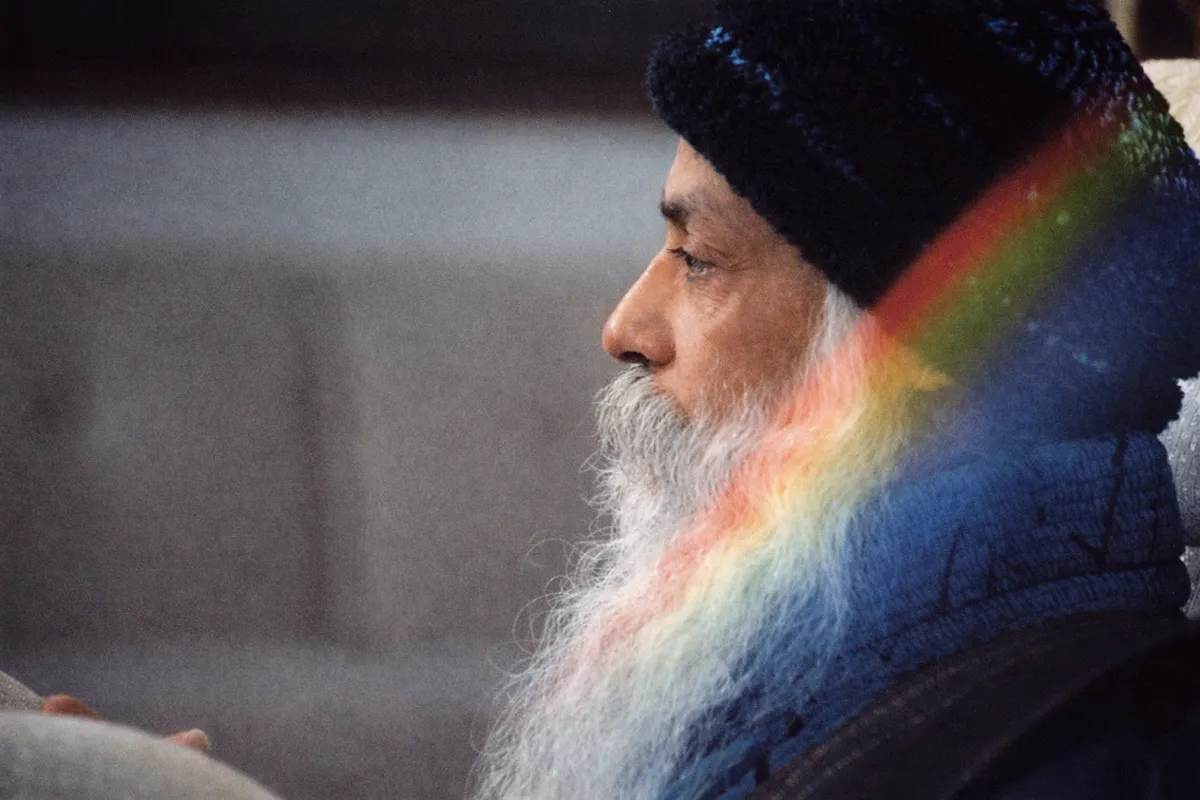
Breathing out spreads your energy; breathing in brings it back to a quiet center—this back-and-forth is how life and the divine move.
From the Discourses
Passages where Osho speaks to this question — each links to the complete discourse.
Osho, yesterday you explained that with joyful awareness (sukh-purvak surati) resolution happens on its own. Yet I find myself having to go through great effort, practice, and labor—why? How long, and why, must a seeker pass through so much effort, toil, and austerity?
If there is laziness in the mind, even little things feel like great effort. It’s a matter of your interpretation. In truth, you are not exerting at all. I tell you, those who are near me and engaged in “practice” are the people on earth who are laboring the least. You have no idea what real effort is. When a person is deeply lazy, even trivial things seem like toil. What are you actually doing? What is it you keep calling “great effort”? Which great effort are you making? You dance a little—and you call that great effort? Is dancing an effort? Dancing is joy! But your perspective is wrong. If you take joy to be effort, you have missed. Dancing is celebration, a juicy happening. Where is the effort in it? If even dancing is effort for you, then what would non-effort be? If I tell you, “Just sit…
छठवां प्रश्न: ओशो, कल आपने समझाया कि सुखपूर्वक सुरति से समाधान घटता है, परंतु, मुझे तो बड़े प्रयास, अभ्यास और श्रम से गुजरना पड़ रहा है, क्यों? साधक को बहुत प्रयास, श्रम और तपश्चर्या से कब तक और क्यों गुजरना पड़ता है?
आलस्य हो मन में, तो छोटी-छोटी चीजें बड़ा प्रयास मालूम होती हैं। तुम्हारी व्याख्या की बात है। कुछ भी तुम्हें श्रम नहीं करना पड़ रहा है। मैं तुमसे कहता हूं कि मेरे निकट जो लोग साधना में लगे हैं, पृथ्वी पर सबसे कम श्रम उन्हें करना पड़ रहा है। तुम्हें श्रम का कुछ पता ही नहीं है। मगर महाआलसी व्यक्तित्व हो; तो छोटी-छोटी बातें श्रम मालूम पड़ती हैं। कर क्या रहे हो तुम? किस बात को तुम बार-बार कहते हो कि बड़े प्रयास। कौन सा बड़ा प्रयास कर रहे हो? थोड़ा नाच लेते हो, इसको बड़ा प्रयास कहते हो? नाचना प्रयास है? नाचना तो आनंद है। लेकिन तुम्हारी दृष्टि गलत है! आनंद को प्रयास समझोगे, चूक गए। नाचना तो उत्सव है, एक रसपूर्ण घटना है, प्रयास क्या है? अगर नाचना भी प्रयास है, तो फिर अप्रयास क्या होगा?
Beloved Osho, yesterday you explained that pranayam is the method which expands the bio-energy and pratyahar is to return to the original source. First it is expansion, then it is return to the source. Why is it so?
Because life is made of contradiction and there is no other way for life to exist. Breath goes out, then goes in -- did you ever ask why it is so? When the breath has to go in then why is it taken out? But if the breath remains in and does not come out then the result will be death and not life. If the breath remains out and does not go in, even then it will be death and not life. Life is movement, movement between two opposites. It is like the flowing of a river between two banks. Breath goes out, goes in; comes in then goes out. Every moment it is pranayam and every moment it is pratyahar. When breath goes out it is pranayam; when the breath goes in, it is pratyahar. If your consciousness gets used to this type of rhythm, if this type…
Osho, what is prana and what is apana? What does it mean to offer prana into apana, and to offer apana into prana? Please clarify this again.
What is within us is also part of the outside. Right now a breath is inside me. A little while ago it was with you, it was yours. A little earlier it was with a tree, it belonged to the tree. Before that, somewhere else. Now it is within me. Before I can even say it is inside me, it has gone out. If we dedicate what is within us to the outer world of prana, if we know it too as given back to the outside, then nothing remains inside—everything becomes empty. This is one kind of surrender: to offer the inner breath into that vast net of prana spread through the atmosphere, to pour it there as an oblation, to consign it there. Or we can do the reverse. The whole outer pranic cosmos is also but a part of my within, spread outwards. If we dedicate that…
प्रश्न: ओशो, प्राण क्या है और अपान क्या है? अपान में प्राण का हवन क्या है और प्राण में अपान का हवन क्या है? इसे फिर से स्पष्ट करें।
जो हमारे भीतर है, वह भी बाहर का हिस्सा है। अभी मेरे भीतर एक श्वास है। थोड़ी देर पहले आपके पास थी, आपकी थी। और थोड़ी देर पहले किसी वृक्ष के पास थी, वृक्ष की थी। और थोड़ी देर पहले कहीं और थी। अभी मेरे भीतर है। मैं कह भी नहीं पाया कि मेरे भीतर है, कि गई बाहर। जो हमारे भीतर है, उसको अगर हम बाहर के प्राण-जगत में समर्पित कर दें, जानें कि वह भी दे दी बाहर को, तो भीतर कुछ बच नहीं रह जाता। सब शून्य हो जाता है। एक समर्पण यह है। …
Therefore one who masters pranayama becomes skillful in rising upward—he is expanding, extending, enlarging the upward current. These are two currents—two streams of air within the body. And between them sits Paramatma—or Atman, or consciousness—whatever name you wish. The thumb-sized Atman is present between these two currents. He pushes the air downward—He pushes the air upward. Prana—the air that goes upward. Apana—the air that goes downward. Western medical science has not yet recognized this double current; it holds that air is only of one kind. Hence many things based on the vital air which Ayurveda can accomplish allopathy cannot. One who understands these currents well can create great revolutions in life. A small child breathes: when a child breathes, his stomach rises and falls—the chest hardly moves. His breath is very deep. When you breathe, the chest rises and falls—your breath is shallow, not deep.
ये दो धाराएं हैं, दो करेंट हैं वायु के, शरीर के भीतर। और इन दोनों के मध्य स्थित है परमात्मा, या आत्मा, या चेतना, या जो भी नाम आप देना चाहें। वह जो अंगुष्ठ आकार का आत्मा है, वह इन दोनों धाराओं के बीच में उपस्थित है। वही वायु को नीचे की तरफ धकाता है, वही वायु को ऊपर की तरफ धकाता है। प्राण--ऊपर की तरफ जाने वाली वायु। अपान--नीचे की तरफ जाने वाली वायु। पश्चिम का चिकित्साशास्त्र अभी भी इस दोहरी धारा को नहीं पहचान पाया है। उनका खयाल है, वायु एक ही तरह की है। इसलिए वायु के आधार पर जो बहुत-से काम आयुर्वेद कर सकता है, वह ऐलोपैथी नहीं कर सकती। वायु की इन धाराओं को ठीक से समझ लेने वाला व्यक्ति जीवन में बड़ी क्रांतियां कर सकता है। छोटा बच्चा श्वास लेता है, तो आपने देखा है कि जब छोटा बच्चा श्वास लेता है तो उसका पेट ऊपर-नीचे जाता है। बच्चा लेटा है, श्वास लेता है, तो पेट ऊपर जाता है, नीचे जाता है। छाती पर कोई हलन-चलन भी नहीं होती। उसकी श्वास बड़ी गहरी है। …
Osho, if the goal is to attain shunya, the zero, then what is the need to awaken kundalini? And what is the need for sadhana?
This question arises because you think shunya means nothingness—so why practice? If there were something to gain, practice would be needed. You imagine that shunya means becoming a non-entity, so what is the point of sadhana? Sadhana seems necessary only when there is something to become. But you do not know that shunya means the whole; shunya means everything. Shunya does not mean nothing—shunya means all. Right now you cannot conceive what it means that shunya is everything. A well might say: “If going toward the ocean only means discovering that I do not exist, then why go?” The well sounds right. It says, “If I go toward the ocean and in the end it turns out that I am not, why should I go?” But whether you go or not makes no difference. That you are not is the fact; the question of going or not going does not…
प्रश्न: ओशो, अगर शून्य को ही उपलब्ध होना है तो कुंडलिनी जगाने की जरूरत क्या है? और साधना की जरूरत क्या है?
यह जो बात है न, क्योंकि तुम्हें समझ में आ रहा है कि शून्य यानी कुछ भी नहीं, इसलिए साधना की क्या जरूरत? कुछ हो तो जरूरत है। तुम्हें खयाल में आ रहा है कि शून्य यानी ना-कुछ हो गए। तो साधना की क्या जरूरत? साधना की जरूरत तो तब लगती है, जब कुछ हम हो जाएं। लेकिन तुम्हें यह पता नहीं कि शून्य का मतलब है पूर्ण; शून्य का मतलब है सब कुछ। शून्य का मतलब कुछ नहीं नहीं, सब कुछ। लेकिन अभी तुम्हारे खयाल में नहीं आ सकता कि शून्य यानी सब कुछ का क्या मतलब होता है। एक कुआं भी कह सकता है कि अगर सागर की तरफ जाने का मतलब इसी बात का पता चलना है कि मैं हूं ही नहीं, तो मैं जाऊं ही क्यों? यह ठीक कह रहा है कुआं। यह कहे कि अगर मैं सागर की तरफ जाऊं और आखिर में यही पता चलना है कि मैं हूं ही नहीं, तो मैं जाऊं क्यों? लेकिन तुम्हारे न जाने से फर्क नहीं पड़ता है। तुम नहीं हो, एक बात; तुम्हारे जाने, न जाने का सवाल नहीं। न जाओ, कुएं पर ही रुके रहो, कुएं ही बने रहो, लेकिन तुम हो नहीं कुआं। यह झूठ है सरासर। …