
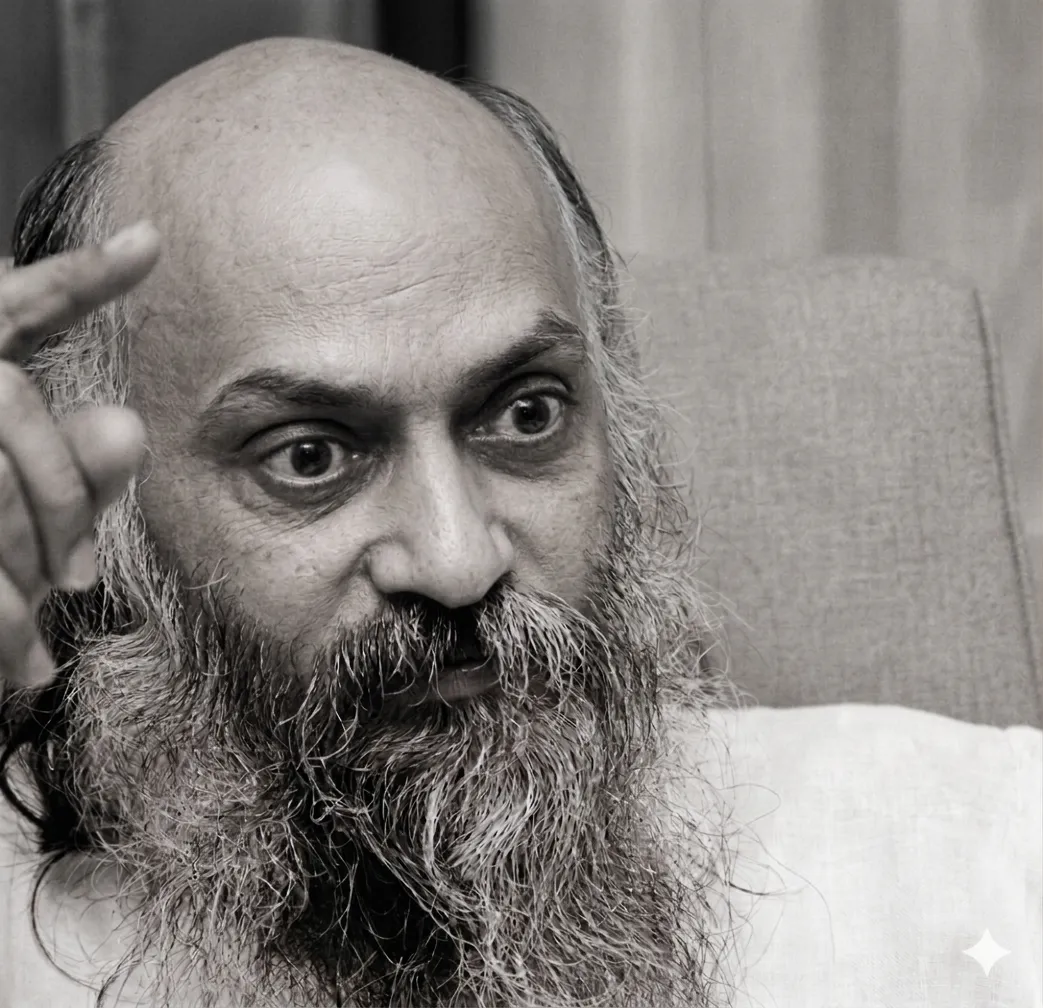
Birth feels like a trap only when we chase rewards; stop clinging to results and just do what needs doing now, and freedom happens by itself.
From the Discourses
Passages where Osho speaks to this question — each links to the complete discourse.
Osho, Sri Krishna says that the wise, by renouncing the fruits of action, are freed from the bondage of birth and attain the supreme state. So does Krishna consider birth to be a bondage? You, however, say that birth and the world themselves are nirvana.
Let me tell a small incident from the life of Mohammed. He is one of those few sannyasins I would like to see in the world. People bring him offerings every day—sweets, coins, something or other. By evening those who have come eat and drink; at dusk Mohammed tells his wife, “Now distribute everything, because evening has come.” Whatever there is is given away. By evening Mohammed becomes a fakir again. His wife would ask, “This isn’t right; it is proper to keep something for tomorrow.” Mohammed would say, “We will wait again tomorrow for whoever brings it today. And when today passes, tomorrow will pass too.” Then he would say to his wife, “Do you consider me an atheist, that I should make arrangements for tomorrow? Making arrangements for tomorrow is atheism. It announces a lack of trust in the cosmic energy, in the world-soul: the one who gave…
ओशो, श्रीकृष्ण कहते हैं कि ज्ञानीजन कर्मफल त्याग कर जन्मरूप बंधन से छूट जाते हैं और परमपद को प्राप्त करते हैं। तो क्या कृष्ण जन्म को बंधन मानते हैं? आप तो जन्म को, संसार को निर्वाण ही है, ऐसा कहते हैं।
मोहम्मद के जीवन में एक छोटी सी घटना है। मोहम्मद उन थोड़े से संन्यासियों में से हैं जैसे संन्यासी मैं दुनिया में देखना चाहूंगा। मोहम्मद को रोज लोग भेंट कर जाते हैं। कोई मिठाइयां दे जाता है, कोई रुपये दे जाता है, कोई कुछ कर जाता है। सांझ तक जो लोग आते हैं, खाते हैं, पीते हैं। सांझ को मोहम्मद अपनी पत्नी को कहते हैं कि अब सब बांट दो, क्योंकि सांझ हो गई। तो जो भी होता है, सब बांट दिया जाता है। सांझ मोहम्मद फिर फकीर हो जाते हैं। उनकी पत्नी उनसे पूछती भी है कि यह ठीक नहीं है, कल के लिए कुछ बचाना उचित है। तो मोहम्मद कहते हैं कि जो आज ले आया था, कल उसकी फिर प्रतीक्षा करेंगे। और जब आज बीत गया, तो कल भी बीत जाएगा। और फिर वे अपनी पत्नी से कहते हैं कि क्या तू मुझे नास्तिक समझती है कि मैं कल का इंतजाम करूं? कल का इंतजाम नास्तिकता है। कल का इंतजाम इस बात की सूचना है कि जिस समष्टि ने मुझे आज दिया, कल पता नहीं देगी, नहीं देगी! कल का इंतजाम अश्रद्धा है। …
Questioner: krishna says a man of wisdom, who gives up attachment to the fruit of action, is released from the bondage of birth and death and becomes one with the ultimate. How is it that krishna believes that life is a bondage? You don't believe so, you say this very life is freedom, this very world the nirvana. Please explain.
Mohammed answers, "Looking at your face tonight I can see you are not calm and peaceful as you always are. For sure there is some money in the house. Those who are worried become acquisitive and acquisitive people become worried. It is a vicious circle, So take out what you have saved and distribute it so that I can die in peace. Remember, this is my last night. I don't want to spoil it and appear before God with a guilty conscience." His wife hurriedly takes out the five dinars from under her pillow, and says to Mohammed, "But there is no one out there to receive this money, it is midnight." Mohammed says, "Just call out and someone will come." And someone, a beggar really appears at the door. Mohammed says to his wife, "Just see, if someone comes to take in the dead of night, someone else can…
Osho, Shri Krishna says that through desirelessness and nonattachment, bondages are destroyed and the supreme state is attained. Please clarify its meaning and explain by what kind of practice or worship this attainment is made possible. For ordinary people, becoming directly desireless and nonattached does not seem possible.
First of all, one must understand the meaning of nonattachment. Nonattachment is among those few unfortunate words whose meaning has not been understood. People take nonattachment to mean dispassion or aversion (virakti). Nonattachment is not virakti. Virakti too is a kind of attachment—it is the name of attachment to the opposite. One person is attached to lust, to desire; another is attached to brahmacharya, the opposite of lust. One person is attached to wealth; another is attached to renouncing wealth. One person is attached to adorning the body; another is attached to making the body ugly. But the one who makes his body ugly will appear to be a renunciate, the one who renounces wealth will appear to be a renunciate, because their attachments are negative. Attachment has two forms: being attached in favor of something, or being attached in opposition to something. The one who is attached in opposition…
ओशो, श्रीकृष्ण कहते हैं कि निष्कामता और अनासक्ति से बंधनों का नाश होता है और परमपद की प्राप्ति होती है। कृपया इसका अर्थ स्पष्ट करते हुए समझाएं कि किस साधना या उपासना से यह उपलब्धि होगी? सामान्यजन के लिए सीधे निष्काम व अनासक्त होना तो संभव नहीं दिखता।
सबसे पहले तो अनासक्ति का अर्थ समझ लेना चाहिए। अनासक्ति थोड़े से अभागे शब्दों में से एक है जिसका अर्थ नहीं समझा जा सका है। अनासक्ति से लोग समझ लेते हैं--विरक्ति। अनासक्ति विरक्ति नहीं है। विरक्ति भी एक प्रकार की आसक्ति है। विरक्ति विपरीत आसक्ति का नाम है। कोई आदमी काम में आसक्त है, वासना में आसक्त है। कोई आदमी काम के विपरीत ब्रह्मचर्य में आसक्त है। कोई आदमी धन में आसक्त है। कोई आदमी धन के त्याग में आसक्त है। कोई आदमी शरीर के श्रृंगार में आसक्त है, कोई आदमी शरीर को कुरूप करने में आसक्त है। …
Osho, if even sattvic action binds, then why are its fruits said to be knowledge and dispassion?
Because knowledge and dispassion can also bind. Certainly, Krishna’s statement appears paradoxical. The fruit of sattvic action is knowledge and dispassion. And Krishna also says that sattvic action binds. But ordinarily the so‑called saints explain that dispassion liberates, knowledge liberates. So the fruits that Krishna points to are commonly understood as liberating. But remember, whatever arises from sattvic action also carries the possibility of binding. You can be bound even by knowledge. Hence the Upanishads say: whoever declares, “I am self‑realized,” understand that he is not self‑realized. Whoever says, “I have attained dispassion,” understand that his attachment has shifted to dispassion. Sannyas can become householdership; it is in your hands. And the life of a householder can become sannyas; it is in your hands. Ignorance can be liberating, and knowledge can become bondage; it is in your hands. The Upanishads say that the knower understands, “I know nothing.” Socrates says,…
दूसरा प्रश्न: ओशो, सात्विक कर्म भी अगर बांधता है, तो उसका फल ज्ञान और वैराग्य क्यों कहा गया है?
निश्चित ही, कृष्ण की बात उलटी मालूम पड़ती है। सात्विक कर्म का फल है, ज्ञान और वैराग्य। और कृष्ण यह भी कहते हैं कि सात्विक कर्म भी बांधता है। लेकिन साधारणतः तथाकथित साधु-संत समझाते हैं कि वैराग्य मुक्त करता है, ज्ञान मुक्त करता है। तो कृष्ण सात्विक कर्म के जो फल बता रहे हैं, उन्हें तो साधारणतः लोग समझते हैं कि वे मुक्त करने वाले हैं। लेकिन ध्यान रहे, सात्विक कर्म से जो भी पैदा होगा, उसकी भी बांधने की संभावना है। आप ज्ञान से भी बंध सकते हैं। इसलिए उपनिषद कहते हैं, जो कहता हो मैं आत्मज्ञानी हूं, समझना कि वह आत्मज्ञानी नहीं है। जो कहता हो कि मैं वैराग्य को उपलब्ध हो गया हूं, समझना कि उसका राग वैराग्य से हो गया है। संन्यास भी गार्हस्थ बन सकता है। आपके हाथ में है। और गृहस्थी भी संन्यास हो सकती है। आपके हाथ में है। अज्ञान भी मुक्तिदायी हो सकता है और ज्ञान भी बंधन बन सकता है। …
Another friend has asked: if it is true that I come to rest in non-doing, settle into the Purusha, stop in the witnessing within my consciousness—then, as Krishna says, whatever conduct then occurs carries neither loss nor gain, no sin and no virtue. That friend has asked: when all my wanting has fallen, desire has dissolved, and when I have known my Purusha, then how will any conduct happen at all? When I have come to rest in my soul, how will any conduct happen?
This is worth thinking about. This question will arise, because all the conduct we know is born of desire. You walk because there is somewhere to reach. If someone says there is nowhere to reach—then walk as much as you like—you will say, Why would we walk? If walking has no meaning, no purpose, no reason, why walk? We are not mad to walk without cause when there is nowhere to get to—no urge, no desire, no destination. We act out of some craving. So the friend’s question is perfectly valid: when craving itself is gone, and it is understood that action is just an acting-out; when it is clearly seen that there is nothing to attain and nowhere to arrive—then what does Krishna mean by saying, “Let whatever conduct happen; then there will be neither rebirth nor any karmic result of conduct”? Why would conduct happen at all? This…
एक दूसरे मित्र ने पूछा है कि अगर यह बात सच है कि मैं कुछ न करने में ठहर जाऊं, पुरुष में ठहर जाऊं, अपने चैतन्य में साक्षीभाव से रुक जाऊं, तो कृष्ण कहते हैं, फिर जो भी वर्तन हो, उस वर्तन से कुछ भी हानि-लाभ नहीं है, कोई पाप-पुण्य नहीं है। उन मित्र ने पूछा है कि जब मेरी सब चाह मिट गई, वासना मिट गई, और जब मैंने अपने पुरुष को जान लिया, तो वर्तन होगा ही कैसे? जब मैं अपने आत्मा में ठहर गया, तो वर्तन होगा ही कैसे?
आप चलते हैं, क्योंकि कहीं पहुंचना है। कोई कहे कि कहीं पहुंचने की जरूरत नहीं है, फिर चलना हो जितना, चलो। तो आप कहेंगे, हम चलेंगे किसलिए? चलने का कोई अर्थ ही न रहा, कोई प्रयोजन न रहा, कोई कारण न रहा, तो चलेंगे किसलिए? कोई पागल तो नहीं हैं कि अकारण चलते रहें, जब कि कहीं पहुंचने को नहीं है, कोई वासना नहीं है, कोई चाह नहीं है, कोई मंजिल नहीं है। हम कर्म करते हैं किसी वासना से। तो उन मित्र का पूछना बिलकुल ठीक है कि जब वासना ही मिट गई और कर्म अभिनय है, यह समझ में आ गया; और कुछ पाने योग्य नहीं है, कुछ पहुंचने योग्य नहीं है, यह दृष्टि स्पष्ट हो गई; तो कृष्ण का यह कहना कि फिर जो भी वर्तन हो, होने दें, फिर न कोई जन्म होगा, न वर्तन का कोई कर्म परिणाम होगा--इसका क्या अर्थ है? फिर वर्तन होगा ही क्यों?